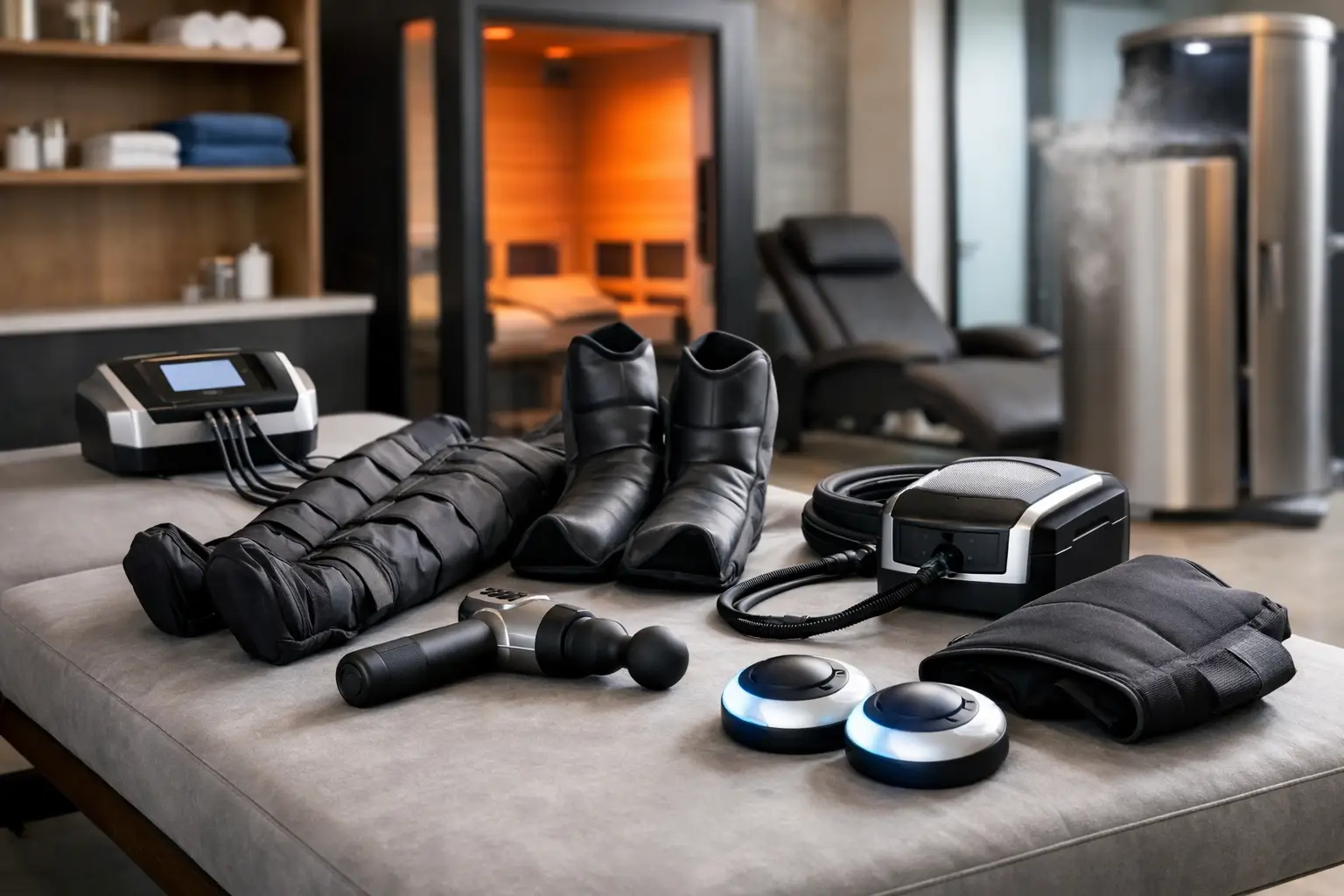
A recovery studio earns repeat visits when clients can feel the difference in their routine, whether they arrive after a hard training block, a demanding workweek, or a long flight. The best recovery studio equipment does more than fill a room with impressive-looking technology. It creates clear treatment pathways, supports a premium client experience, and gives operators multiple reasons to bring members back.
For most studios, the strongest equipment mix is not built around one headline device. It combines complementary modalities that address circulation, relaxation, muscle comfort, rejuvenation, and performance support from different angles. The right investment depends on your market, available square footage, staffing model, and the type of client you intend to serve.
What Makes Recovery Equipment Worth the Investment?
High-ticket wellness equipment needs to work on two levels. It should deliver an experience clients value, and it should operate as a commercially sound part of the business. A device that is difficult to explain, awkward to schedule, or expensive to maintain can lose its appeal quickly, even when the technology is impressive.
Start with treatments that are easy for clients to understand. Compression sessions, infrared heat, red light therapy, and dry floatation all offer an approachable entry point for first-time users. More specialized technologies, such as whole-body cryotherapy, hyperbaric systems, and PEMF, can become powerful differentiators when the team is trained to introduce them confidently and the studio has a clear protocol for use.
Utilization matters as much as the purchase price. Consider session length, turnover time, room requirements, electrical needs, cleaning procedures, and whether an appointment requires hands-on staff involvement. Equipment that can deliver a high-quality session with limited staff attention can be especially valuable in a membership-based recovery model.
The Best Recovery Studio Equipment Categories
Compression therapy systems
Compression therapy is often one of the smartest foundational purchases for a new or expanding recovery studio. Pneumatic compression systems use controlled pressure cycles around the legs, hips, or arms to support circulation and help clients feel refreshed after training, travel, or prolonged time on their feet.
The commercial advantage is straightforward: sessions are familiar, comfortable, and easy to package. Compression can work as a quick standalone service, an add-on before or after another treatment, or a reliable member benefit. Look for professional-grade systems with durable garments, intuitive controls, flexible treatment programs, and a setup that allows efficient sanitation between users.
Red light therapy systems
Red light therapy has earned a central place in modern wellness spaces because it bridges recovery, skin-focused rejuvenation, and whole-body wellness. A full-body system creates a visually powerful studio feature while giving clients a noninvasive session they can fit into a recurring routine.
For operators, red light can appeal to athletes, beauty-minded clients, active adults, and wellness members who want a technology-forward experience without downtime. Quality matters here. Evaluate wavelength design, treatment coverage, cooling, client comfort, controls, warranty support, and the manufacturer’s commercial track record. An all-LED system may carry a higher initial investment than smaller-panel alternatives, but it can provide the premium presentation and throughput a dedicated studio needs.
Whole-body cryotherapy
Cryotherapy remains a high-impact differentiator for performance and recovery businesses. The short, cold-air session has strong visual appeal and can help position a studio as a serious destination for athletic recovery, energy, and rejuvenation.
It is not a universal first purchase. Cryotherapy requires disciplined operational planning, including proper installation, ventilation considerations, staff training, safety procedures, and a clear understanding of the chamber type. Electric cryotherapy chambers can offer an attractive alternative for operators who want to avoid the recurring logistics associated with nitrogen-based systems. The best choice depends on local requirements, facility infrastructure, projected volume, and the service experience you want to deliver.
Infrared sauna
An infrared sauna brings warmth, relaxation, and perceived detox benefits into a recovery menu while fitting naturally with spa and home-wellness audiences. Clients often understand the appeal immediately: a private or shared heat session that can help them unwind, sweat, and build a recovery ritual around their day.
Commercial-grade infrared saunas are particularly effective when positioned as more than a basic amenity. Premium cabins with thoughtful interior design, comfortable seating, low-EMF engineering, entertainment options, and full-spectrum infrared capabilities can support higher-value sessions. They also pair well with compression, red light, and halotherapy, allowing a studio to create longer, more complete wellness appointments.
Dry floatation beds
Dry floatation is a compelling choice for studios built around stress relief, restoration, and luxury wellness. Unlike a traditional float tank, a dry float bed lets clients experience a warm, weightless-style relaxation session without changing clothes or entering water. That convenience can improve accessibility and simplify operational turnover.
This category is especially suited to upscale spas, hotel wellness environments, chiropractic or integrative settings, and recovery concepts that serve professionals as well as athletes. A dry float bed is not always the highest-volume device in the room, but it can become a signature treatment that elevates the overall brand. It is also a natural partner for sound therapy, guided relaxation, and LED-based rejuvenation services.
PEMF therapy devices
Pulsed electromagnetic field, or PEMF, therapy is a flexible modality that can support a recovery-focused menu without requiring the footprint of a large cabin or chamber. Depending on the system, clients may lie on a mat or use targeted applicators as part of a relaxation or performance-support session.
PEMF can work well for studios that want a calm, low-barrier service with potential for repeat use. Because client education is essential, operators should avoid vague promises and instead explain how the session fits into a broader routine centered on relaxation, movement, hydration, sleep, and recovery. A comfortable treatment setting and knowledgeable consultation process will make the technology more approachable.
Hyperbaric chambers
Hyperbaric systems can set a wellness center apart, particularly in markets with affluent clients looking for advanced recovery and optimization services. These chambers provide a pressurized environment in which clients breathe concentrated oxygen according to the system and protocol used.
The opportunity is substantial, but so is the responsibility. Hyperbaric equipment requires careful attention to chamber type, facility layout, operating procedures, training, contraindications, insurance considerations, and applicable regulations. This is a category where choosing a reputable manufacturer and a full-service equipment partner is essential. For the right operator, it can become a premium anchor service rather than an impulse add-on.
Build a Recovery Menu, Not a Collection of Machines
The most successful studios sell outcomes and experiences, not isolated devices. A runner may book compression followed by red light. A busy executive may choose infrared sauna and dry floatation. A high-performance client may build a recurring plan around cryotherapy, PEMF, and compression. Each path should feel intentional, easy to book, and worth repeating.
A practical launch menu usually starts with two to four modalities that serve overlapping audiences. Compression and red light make a strong accessible base. Infrared sauna adds relaxation and broad consumer appeal. Cryotherapy or hyperbaric treatment can provide a premium flagship, depending on the market and operational capability.
Avoid buying equipment solely because it is trending. A full-body chamber can create excitement, but only if your location has enough demand, staffing, and marketing support to keep it active. Conversely, a less dramatic device with consistent daily use may produce better long-term returns. Ask prospective suppliers about installation, service response, maintenance expectations, financing options, used-equipment availability, and trade-in support before making a decision.
Design Matters More Than Many Operators Expect
Recovery is personal. Clients need to feel that the environment is clean, private, calm, and professionally managed before they can fully relax into the experience. Equipment design contributes to that impression, but so do room flow, lighting, sound control, ventilation, and the way staff explain each session.
Give each technology enough space to feel purposeful. Crowding several expensive devices into one room can diminish the premium effect and complicate sanitation. A thoughtfully designed studio can use contrast to its advantage: an energizing cryotherapy zone, a bright red light room, and a quiet heat or floatation area each create a distinct reason to visit.
Sun Spa Wellness helps commercial operators evaluate recovery technologies as long-term business assets, with equipment categories that can support both an elevated service menu and a polished client environment. The goal is not simply to buy more equipment. It is to build a recovery experience clients will choose again when they want to feel restored, recharged, and ready for what comes next.
