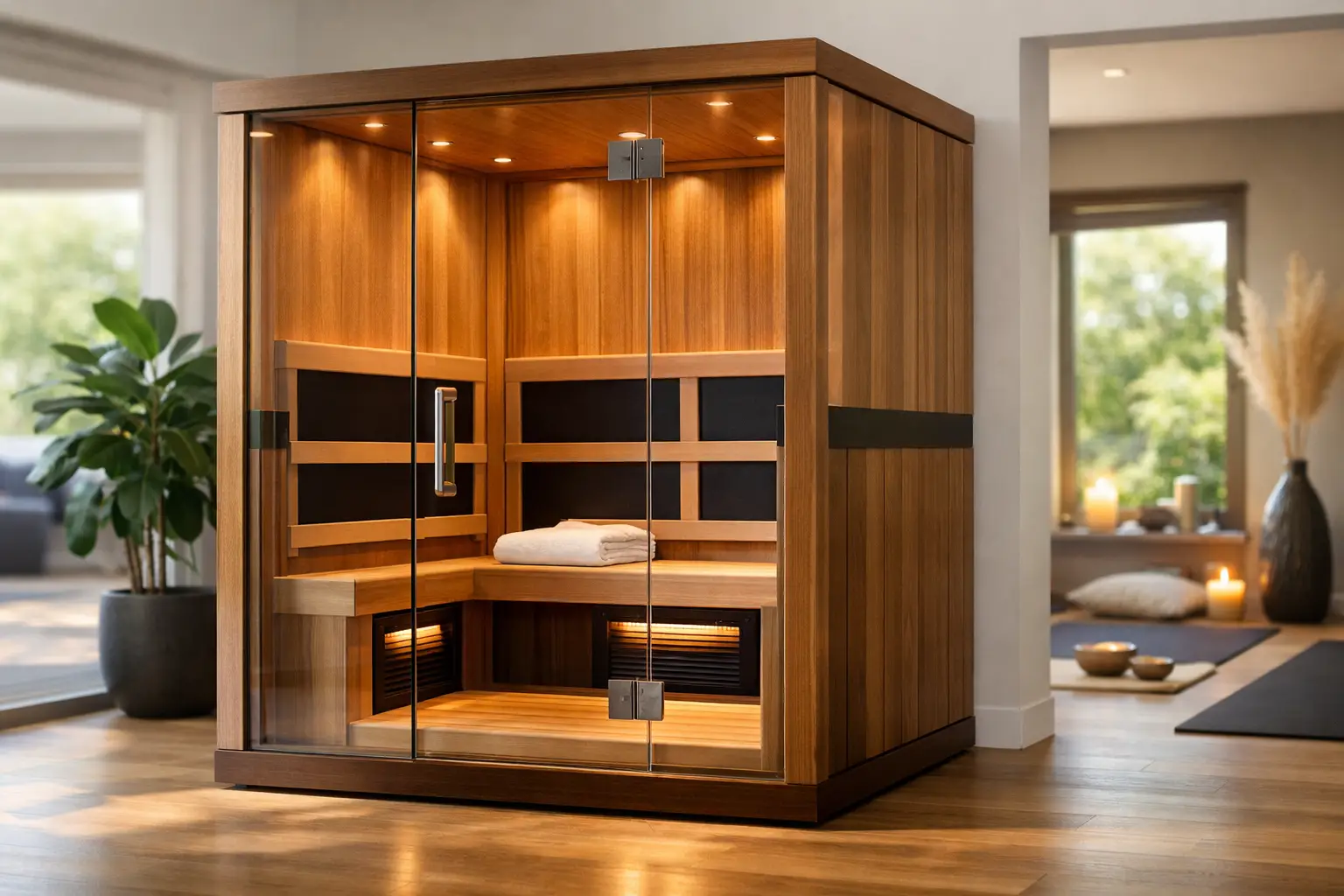
A premium infrared sauna has to do more than get hot. It needs to feel comfortable in daily use, fit the visual standard of a high-end home or wellness business, and deliver a session experience clients will want to repeat. This Clearlight sauna review looks at where the brand performs particularly well, where buyers should look closely at the specifications, and who is most likely to see real value from the investment.
Clearlight occupies the premium end of the infrared sauna market. Its cabins are known for refined design, a strong focus on low-EMF construction, full-spectrum infrared options on select models, and a selection of sizes suited to both private home installations and commercial wellness environments. That positioning makes sense for buyers who see sauna as a core part of their recovery, rejuvenation, and wellness offering rather than an occasional luxury.
Clearlight Sauna Review: What Stands Out
The first impression is build quality. Clearlight saunas are designed to feel like finished wellness furniture, not temporary equipment. Wood selection, interior layout, glass placement, controls, and seating are generally considered carefully, which matters when the unit will sit in a home gym, med spa, recovery lounge, or treatment area where aesthetics influence the overall customer experience.
The infrared approach is another major selling point. Rather than relying on the extreme ambient temperatures of a traditional Finnish-style sauna, infrared systems use radiant heat intended to warm the body directly. Many users prefer this format because it can create a deeply warming, sweat-inducing session at a more tolerable cabin temperature. For clients who find a conventional sauna overwhelming, that lower-temperature experience can make regular use more appealing.
Clearlight offers different heater configurations across its product range. Buyers will see far-infrared systems as well as models with full-spectrum technology, which typically combines near, mid, and far infrared wavelengths. The practical distinction is not that one format is automatically best for everyone. It is that the heater design, panel placement, and intended use case should match the user’s priorities, whether those are relaxation, post-workout recovery, warmth, skin-focused wellness routines, or a premium spa experience.
Comfort is also a meaningful advantage. A sauna can have impressive specifications on paper but still feel cramped, unevenly heated, or difficult to use for a 30- to 45-minute session. Clearlight’s higher-end cabins tend to prioritize usable bench space and a polished interior environment. For residential buyers, that supports consistency. For operators, it can help turn a single sauna appointment into a service clients associate with comfort and quality.
Performance Depends on the Model and Installation
A balanced Clearlight sauna review should avoid treating every model as identical. Cabin size, heater type, electrical requirements, room conditions, and user expectations all affect performance. A compact one-person unit and a larger multi-person cabin are different investments with different heat-up behavior, floor-space demands, and operating requirements.
Full-spectrum models may appeal to buyers seeking the broadest infrared feature set, while far-infrared-focused cabins may be a practical fit for users who prioritize a classic, gentle infrared session. The best choice is not necessarily the model with the longest feature list. In a commercial setting, durability, ease of cleaning, client throughput, and available space may matter more than adding every available upgrade.
Installation deserves attention before the purchase decision. Some units may work with standard household electrical service, while larger or more powerful configurations can require dedicated electrical planning. The room itself needs appropriate dimensions, a level floor, reasonable clearance, and a climate-controlled environment. A sauna placed in a cold garage, poorly ventilated room, or unfinished outdoor structure may not perform the way it would in a properly prepared wellness space.
Commercial operators should also consider traffic flow. A premium sauna experience includes the area around the cabin: a changing area, towels, sanitation procedures, hydration access, and enough privacy for guests to relax. The equipment may be the centerpiece, but the service environment determines whether it feels like a premium recovery offering or simply another amenity.
Low-EMF Design Is a Key Purchase Consideration
Clearlight is frequently evaluated by buyers who place high value on low-EMF construction. This can be a strong differentiator for wellness-focused customers, particularly in markets where clients ask detailed questions about equipment technology and material quality.
Still, buyers should review the manufacturer’s current testing information for the exact model under consideration. EMF readings can depend on where and how measurements are taken, and specifications can differ between product lines. A reputable purchasing process should focus on model-specific documentation rather than broad marketing language alone.
For a spa or recovery studio, communicating the technology clearly can strengthen client confidence. The most effective message is straightforward: the sauna is professionally selected, designed for a comfortable infrared session, and supported by documented product specifications. Overstating wellness claims is unnecessary and can undermine a premium brand position.
Benefits That Matter to Real Users
The appeal of infrared sauna use is easy to understand. A quiet, heat-based session can support relaxation after a demanding day, help users feel looser after training, and create a dedicated period away from screens and constant activity. Many clients incorporate sauna time into broader routines involving red light therapy, compression, hydration, mobility work, or massage.
For commercial businesses, that versatility is valuable. An infrared sauna can complement recovery memberships, premium spa packages, fitness add-ons, and wellness concierge services. It can also provide a lower-staff-touch service than hands-on treatments when scheduling, cleaning, and client protocols are managed properly.
For homeowners, the value is convenience. The ability to step into a private sauna without driving to a club or booking an appointment can make regular use much more realistic. A well-designed two-person cabin can also become a shared ritual for couples or family members who want a focused wellness space at home.
However, sauna equipment should not be positioned as a cure or replacement for medical care. People with medical conditions, cardiovascular concerns, pregnancy, heat sensitivity, or medication-related risks should consult a qualified healthcare professional before beginning a heat-therapy routine. Safe session length, hydration, and listening to the body remain central to a positive experience.
The Trade-Off: Premium Pricing
Clearlight’s quality and design focus come with a higher purchase price than entry-level infrared cabins. That is the clearest trade-off. Buyers shopping solely for the lowest initial cost can find less expensive alternatives, especially in smaller sizes or with simpler controls and materials.
The more useful comparison is long-term value. A lower-priced sauna may be acceptable for occasional residential use, but it may not deliver the fit, finish, technology, warranty confidence, or brand impression expected in a luxury home or professional studio. For businesses, a cabin that looks dated quickly or feels uncomfortable can weaken the perceived value of a paid recovery session.
There are also operating considerations beyond the purchase price. Plan for delivery access, assembly, electrical work if required, routine cleaning, and future service needs. Ask direct questions about warranty coverage, replacement parts, lead times, and who will support the equipment after installation. These details matter as much as the initial showroom appeal when the sauna is a long-term business asset.
Who Should Choose a Clearlight Sauna?
Clearlight is a strong fit for affluent homeowners building a serious wellness room and for operators who need a premium, client-facing infrared offering. It is especially compelling when visual quality, low-EMF priorities, comfort, and a refined brand experience are central to the purchase decision.
It may be less compelling for a buyer with a very tight budget, limited installation flexibility, or a preference for the intense humidity and high temperatures of a traditional heater-and-stone sauna. Infrared and traditional sauna experiences are not interchangeable. The right choice comes down to how the sauna will be used, who will use it, and what experience the buyer wants to create.
For a commercial facility, choose capacity based on actual bookings rather than optimistic assumptions. A single-person or two-person cabin can work well for private recovery appointments, while a larger unit may better support couples services, shared wellness sessions, or a busy membership model. Bigger is not always better if the floor plan, electrical infrastructure, and client flow do not support it.
A Clearlight sauna is best viewed as an experience investment. When the model, installation, and surrounding wellness program are aligned, it can become one of the most-used spaces in a home or one of the most memorable services in a professional recovery environment. The smartest next step is to match the cabin to the way people will actually use it week after week.
