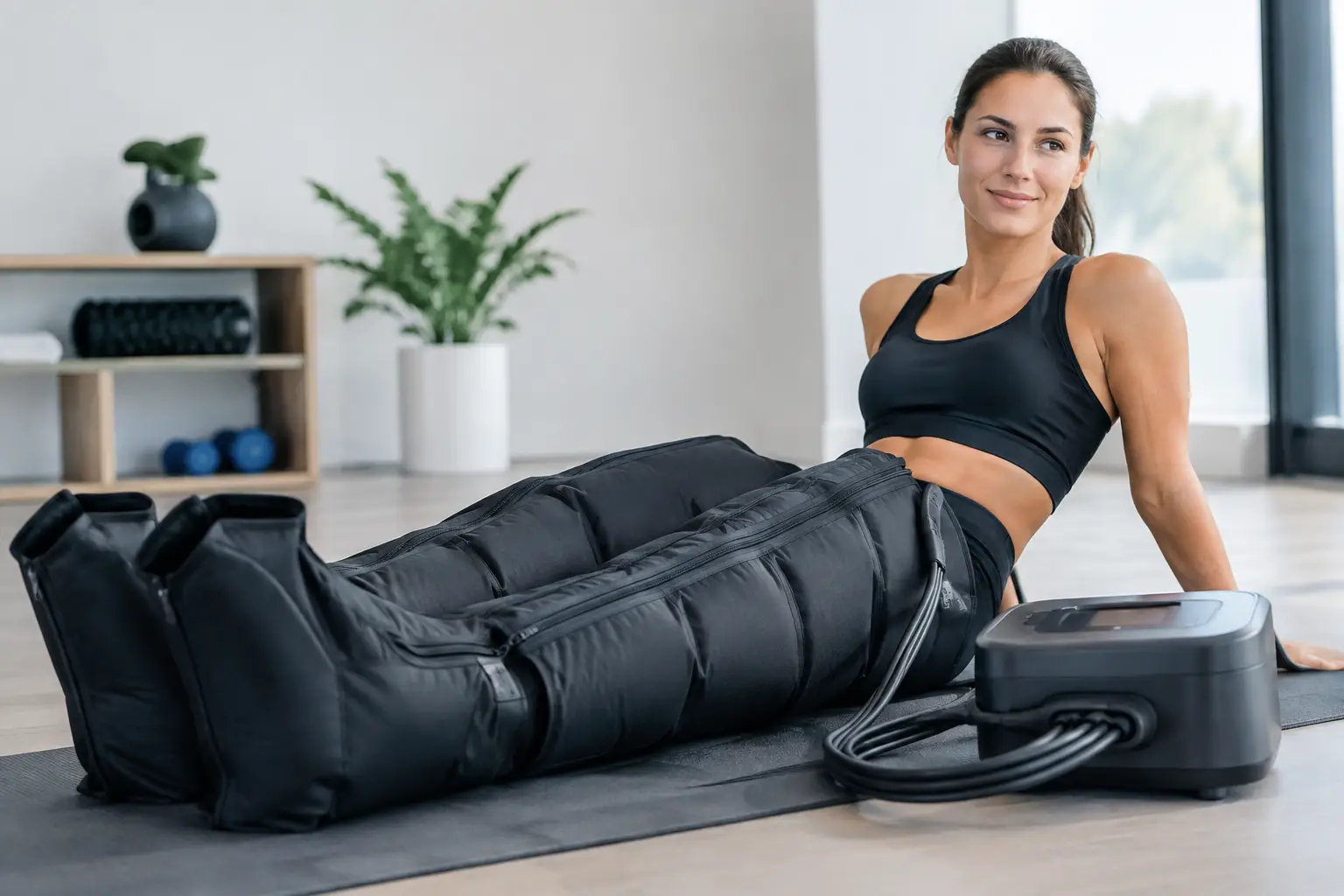
A hard training session does not end when the final rep, mile, or whistle is over. For athletes, the hours that follow often determine how ready the body feels for tomorrow's work. Compression therapy for athletes has become a sought-after recovery modality because it delivers a focused, convenient way to address tired, heavy-feeling legs after demanding activity.
For recovery studios, fitness facilities, med spas, and performance-minded homeowners, pneumatic compression systems can turn recovery into a tangible, premium experience. The appeal is straightforward: athletes want tools that fit into real schedules, feel effective immediately, and complement the training, sleep, nutrition, and mobility habits that drive long-term performance.
What Compression Therapy Does
Pneumatic compression therapy uses inflatable sleeves or boots that fill with air and release in programmed cycles. The chambers apply sequential pressure, commonly beginning at the feet and moving upward through the legs. This rhythmic action is designed to support circulation and the body's natural fluid movement while creating a deeply relaxing post-training experience.
Athletes commonly use compression sessions after running, cycling, strength training, field sports, travel, or long periods on their feet. Many describe a noticeable reduction in leg heaviness and a refreshed feeling after a session. That immediate comfort is one reason the modality works well in both commercial recovery environments and luxury home wellness spaces.
The technology is not a substitute for medical treatment or a shortcut around sensible programming. It is a recovery support tool. Results depend on the athlete's workload, overall health, hydration, sleep, nutrition, and whether they are managing an actual injury. Positioned honestly, compression therapy is valuable because it gives users a low-impact way to prioritize recovery between training demands.
Why Compression Therapy for Athletes Has Momentum
The modern athlete is not limited to the professional locker room. Recreational runners train for marathons, adult league competitors play multiple nights a week, and strength-focused clients often combine lifting with demanding work and travel schedules. Recovery has become part of the performance routine, not an afterthought.
Compression systems answer several practical needs at once. A session requires minimal effort from the user, does not add impact to sore joints, and can be completed while someone relaxes, reads, or prepares for the next appointment. For studios, that makes compression an accessible service for experienced athletes and first-time wellness clients alike.
There is also a clear business case. A well-designed recovery area can broaden a facility's service menu beyond workouts or traditional spa treatments. Compression can be offered as a standalone session, included in a membership tier, packaged with infrared sauna, red light therapy, cryotherapy, or dry floatation, or positioned as an add-on after personal training and bodywork. The right setup creates repeat visits without requiring a high-touch provider for every appointment.
The Experience Matters as Much as the Equipment
Premium compression therapy is not simply about placing a pair of boots in an unused corner. The most successful installations make the session feel intentional. Comfortable seating, easy sanitation procedures, intuitive controls, a calm setting, and staff who can explain the experience all influence whether clients come back.
For residential buyers, the same principle applies. A system earns its place in a home gym or wellness suite when it is easy to use consistently. Consider storage, available seating, noise level, programming options, and how the device fits into an existing recovery routine. Professional-grade equipment should feel refined enough for a dedicated home environment and durable enough for frequent use.
What the Research and Real-World Use Suggest
Compression therapy is widely used in athletic settings, but the evidence should be framed with appropriate care. Research on post-exercise compression has shown mixed results depending on the protocol, sport, outcome measured, and timing of use. Some studies suggest benefits for perceived soreness, fatigue, and recovery of certain performance markers, while others find smaller or less consistent effects.
That does not make the modality ineffective. It means buyers should avoid exaggerated promises. A compression session may help an athlete feel more recovered and ready to move, but it cannot erase the consequences of inadequate sleep, excessive training load, poor fueling, or an untreated injury.
In practice, perceived recovery has real value. When an athlete feels less stiff and more prepared to return to normal movement, they may be more likely to follow through with mobility work, active recovery, and a well-planned next session. For commercial operators, that makes compression a credible component of a broader recovery strategy rather than a one-device cure-all.
Choosing the Right Compression System
The best system depends on who will use it, how often it will run, and the type of environment where it will operate. A home user may prioritize a compact footprint and simple preset programs. A high-traffic recovery studio needs commercial durability, quick turnover, easy cleaning, dependable controls, and a presentation that reinforces a premium service.
When evaluating equipment, look beyond the headline pressure number. Chamber design and sequencing affect how the session feels. Multiple zones can create a more progressive treatment experience, while adjustable settings allow users to tailor intensity to their comfort level. A broad range of programs can also help staff guide different client types, from a first-time wellness guest to an endurance athlete after a long event.
Commercial buyers should also consider operational details before purchasing:
- Expected appointments per day and whether the system is built for that level of use
- Cleaning protocols for boots, liners, seating, and touchpoints between clients
- Available floor space, electrical requirements, and the visual fit within the recovery area
- Staff training, warranty coverage, maintenance access, and service support
Those details protect the investment. A premium device should not only perform well on day one. It should remain a reliable part of the business as memberships grow, client traffic increases, and the wellness menu evolves.
How Athletes Can Use Compression More Effectively
Consistency matters more than chasing the most intense setting. After a demanding workout or event, athletes often use compression when their legs feel fatigued, tight, or heavy. A moderate, comfortable session is usually a better starting point than turning pressure to the maximum. The goal is to create a restorative experience, not another stressor.
Timing is flexible. Some users prefer a session soon after exercise, while others schedule it later in the day as part of their wind-down routine. It can also be useful after travel, particularly for athletes who arrive at an event feeling stiff from extended sitting. The ideal cadence depends on training volume and personal response.
Compression works best alongside fundamentals. Hydration supports normal recovery processes. Sufficient protein and carbohydrate intake can help replenish after hard efforts. Sleep remains one of the most effective performance tools available. Gentle movement, mobility work, and intelligent training progression all matter. Compression can enhance the recovery environment, but it does not replace these essentials.
When Compression Is Not Appropriate
Not every athlete should use pneumatic compression without professional guidance. People with known or suspected blood clots, significant vascular disease, uncontrolled high blood pressure, severe circulation problems, certain heart conditions, active infection, or unexplained swelling should consult a qualified healthcare professional first. The same caution applies after surgery or when an injury involves unusual pain, numbness, color changes, or rapid swelling.
Operators should build sensible screening into the client intake process and train staff to recognize when a referral is the right next step. Responsible positioning protects clients and reinforces the credibility of a recovery business.
Building a Premium Recovery Offering
A compression station can be an entry point to a larger recovery ecosystem. Athletes are often interested in pairing modalities based on their goals: a post-workout compression session, a relaxing infrared sauna visit, a red light therapy session, or a scheduled recovery day that combines several services. Packages should be easy to understand and built around outcomes such as post-training recovery, travel reset, lower-body relief, or competition-week preparation.
The strongest operators do not oversell. They explain what the equipment is designed to do, create an elevated experience, and let the comfort and convenience drive repeat use. Sun Spa Wellness helps businesses and homeowners evaluate professional wellness equipment with the broader installation, financing, and long-term operation in mind.
For athletes, recovery is rarely one dramatic intervention. It is the steady accumulation of smart choices between sessions. Compression therapy can be one of the easiest choices to keep, because taking time to recover should feel as purposeful as training.
