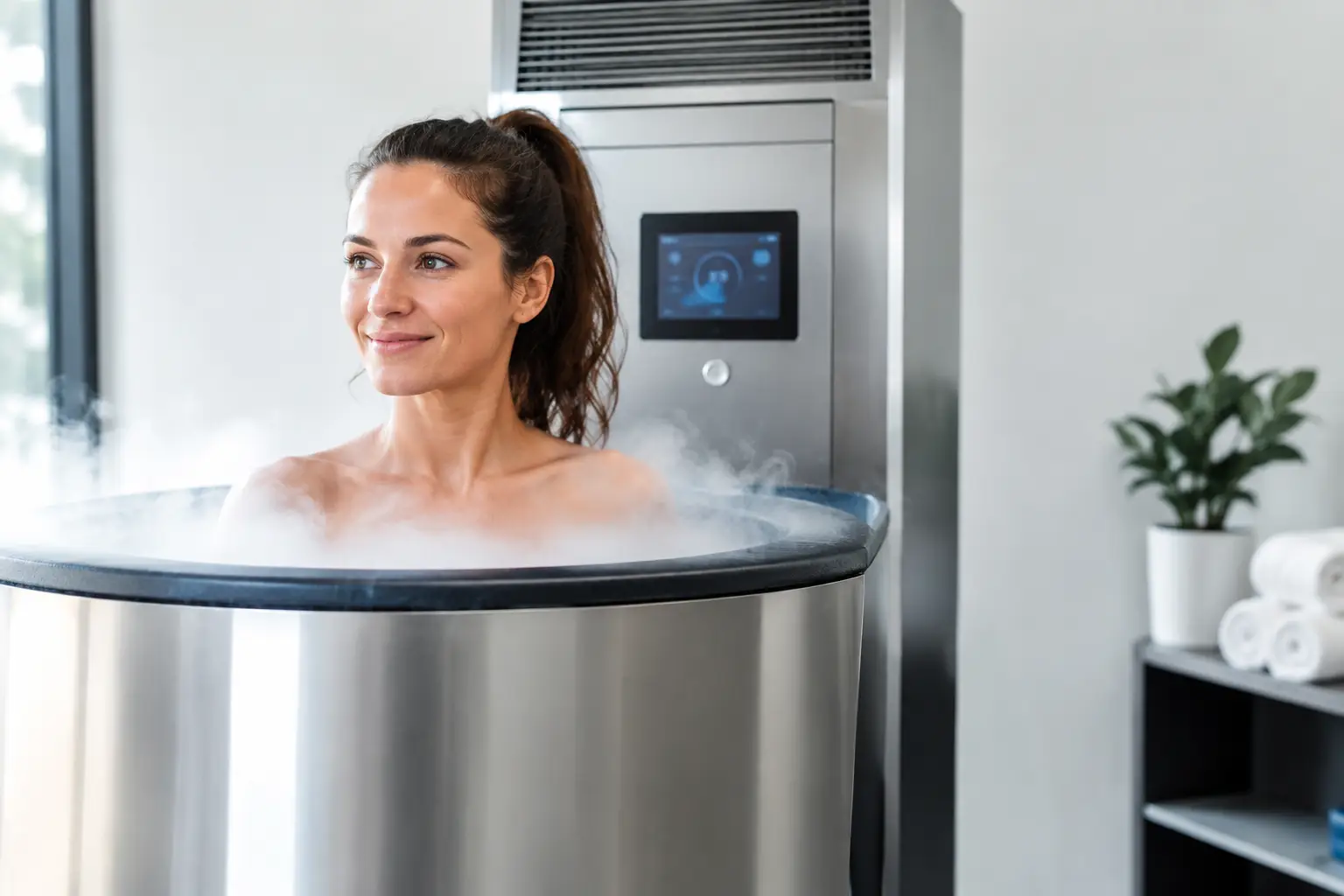
A cryotherapy studio revenue example becomes useful only when it moves past a headline price and accounts for the appointments you can realistically deliver. A whole-body cryotherapy session may take just a few minutes in the chamber, but the business model depends on check-in, consultation, cleaning procedures, staffing, local demand, memberships, and the ability to turn a first visit into a recurring recovery routine.
For an operator adding cryotherapy to a recovery studio, med spa, gym, or wellness center, the appeal is clear: it is a differentiated, premium service with a compact treatment footprint and strong potential for repeat visits. The numbers can be attractive, but they should be built around conservative utilization rather than a best-case launch month.
A Cryotherapy Studio Revenue Example at 35% Utilization
Consider a single-chamber recovery studio operating six days per week. The studio has 10 bookable cryotherapy appointments per day after allowing time for opening duties, client intake, chamber protocols, cleaning, and normal gaps in the schedule. That creates capacity for approximately 260 appointments per month.
At 35% utilization, the studio completes 91 cryotherapy sessions per month. Assume the blended realized rate is $43 per session. That rate is lower than a typical walk-in price because it includes package and membership discounts. Monthly cryotherapy revenue would be:
91 sessions x $43 = $3,913 per month
On its own, that figure may not justify a premium equipment investment. But a 35% utilization rate is often a starting point, not the operating target. Cryotherapy performs differently when it is positioned as part of a complete recovery and performance menu rather than a standalone novelty.
Now consider the same operation at 60% utilization, or 156 sessions per month, with the same $43 blended realized rate:
156 sessions x $43 = $6,708 per month
At 75% utilization, the chamber delivers 195 sessions per month:
195 sessions x $43 = $8,385 per month
These numbers represent gross cryotherapy service revenue before expenses. They also assume that your appointment capacity, pricing, and local market support this volume. A studio in a dense fitness market may exceed these levels, while a newly opened boutique location may need more time and focused outreach to establish repeat traffic.
Pricing Determines More Than the Walk-In Ticket
Many studios publish a single-session cryotherapy price between $35 and $65, depending on geography, brand position, session format, and surrounding competition. Premium med spa and recovery concepts can often command more when the experience includes polished client education, high-end facilities, convenient booking, and complementary services.
The more meaningful number is the blended realized rate. A $55 walk-in price can quickly become a $40 to $45 realized rate when members receive monthly credits or clients purchase multi-session packages. That is not necessarily a problem. Discounted repeat business may produce more predictable revenue, higher utilization, and lower marketing cost per visit than relying on full-price single sessions.
For example, a studio might offer a $55 single visit, a five-session package at $225, and a monthly membership at $149 for four sessions. The package and membership options encourage consistency while preserving a premium reference price for occasional users. The right mix depends on whether the business needs cash flow today, predictable recurring revenue, or a higher average client lifetime value.
The Stronger Model Includes Service Attachments
The most compelling cryotherapy revenue model rarely treats each chamber visit as an isolated transaction. Clients seeking muscle recovery, circulation support, performance enhancement, and a refreshed post-workout feeling are often interested in other wellness services that fit the same visit.
A client who books cryotherapy may also add compression therapy, red light therapy, infrared sauna, PEMF, dry floatation, or body contouring services, depending on the studio's positioning. Not every client will bundle, and operators should never build projections around universal add-ons. Still, even a modest attachment rate changes the economics.
Assume the studio from the 60% utilization example delivers 156 cryotherapy sessions per month. If 25% of those visits add a $25 recovery service, that produces 39 add-on services and $975 in additional monthly revenue. If the studio also converts 12 new clients per month into a $149 membership, recurring revenue begins to build beyond individual appointments.
This is why equipment selection should start with the service menu, not just the chamber specification. A visually impressive cryotherapy system can attract attention, but it should also fit the flow, staffing model, electrical requirements, ventilation plan, maintenance expectations, and revenue strategy of the facility.
Estimate Operating Costs Before You Project Profit
Gross revenue does not equal profit. A credible cryotherapy studio forecast includes fixed and variable costs, even when some expenses are shared across several services.
The direct cost per session may be comparatively low, but the operation still carries chamber financing or lease payments, utilities, maintenance, staff labor, software, merchant processing, insurance, cleaning supplies, rent allocation, and marketing. Nitrogen-based systems and electric systems can have different operating requirements, so prospective owners should review the specific chamber's installation needs and expected ongoing costs before finalizing a model.
For a straightforward example, assume monthly cryotherapy-related expenses total $4,200, including equipment payment, a portion of labor and rent, utilities, service reserves, supplies, and marketing. At $6,708 in monthly gross revenue, the department generates approximately $2,508 before taxes and broader business overhead. At $8,385 in revenue, that contribution rises to about $4,185.
The point is not that every studio will achieve those figures. It is that utilization has an outsized impact when the chamber and facility costs are largely fixed. A few additional appointments per day can materially improve the return on the equipment.
How to Build Demand Without Racing to the Bottom on Price
A low introductory price can bring people through the door, but permanent discounting can weaken the premium recovery position that makes cryotherapy valuable. A better approach is to give first-time clients a clear reason to try the service, then guide them toward a package or membership that matches their routine.
Fitness partnerships can be particularly effective. Personal trainers, boutique gyms, sports performance facilities, running clubs, and competitive youth sports programs already serve clients who value recovery and performance. Corporate wellness relationships may also fit markets with office density and health-conscious employers.
Your sales process matters as much as local promotion. Staff should be able to explain session expectations, appropriate screening procedures, package options, and how cryotherapy fits alongside the rest of the studio menu. Claims should remain responsible and consistent with the equipment's intended use, but the client experience should feel informed, efficient, and premium from the first visit.
Equipment Reliability Protects Revenue
A chamber that is unavailable during peak booking hours does more than delay one appointment. It affects memberships, staff schedules, client trust, and the reputation of the entire studio. For a high-consideration investment, evaluate installation support, training, warranty coverage, preventative maintenance, service responsiveness, and access to parts alongside the purchase price.
Sun Spa Wellness works with commercial operators who need equipment that supports a polished client experience and a practical long-term operating plan. Financing can also help preserve working capital for build-out, launch marketing, staffing, and the complementary services that increase each client's value.
A conservative forecast is the better place to begin: price for your market, model a modest utilization rate, account for every operating cost, and then measure how memberships and service attachments improve the result. When the chamber is chosen for reliability and integrated into a well-designed recovery menu, each booked session can do more than generate revenue - it can give clients a reason to make your studio part of their weekly routine.
