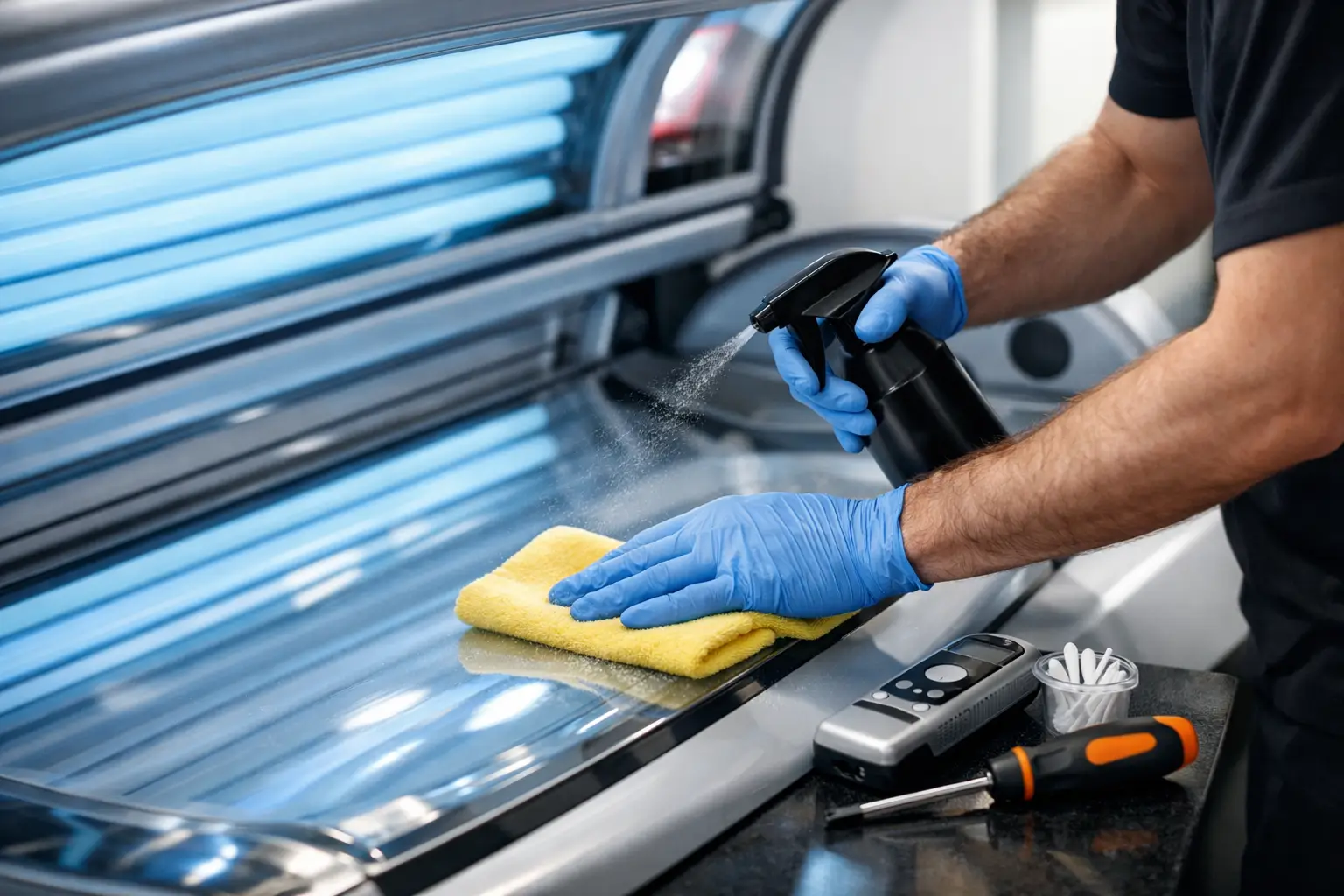
A tanning system earns its place on the floor through consistent results, clean presentation, and dependable uptime. Knowing how to maintain tanning equipment protects all three. For a salon, med spa, or home wellness space, a disciplined maintenance routine helps preserve session quality, reduce disruptive repairs, support client confidence, and extend the useful life of a premium investment.
Maintenance is not one task completed when a bed looks dusty. It is a combination of daily sanitation, scheduled inspections, accurate usage tracking, and prompt professional service when performance changes. The right routine also varies by system. Traditional UV tanning beds, high-pressure units, and all-LED solariums have different components, output profiles, and manufacturer requirements.
How to Maintain Tanning Equipment Day to Day
The highest-value maintenance happens between sessions. After every use, clean the acrylic surface, handles, control panel touchpoints, and any areas a guest may contact. Use a cleaner approved for tanning equipment and acrylics. Harsh chemicals, alcohol-heavy sprays, ammonia, and abrasive cloths can cloud, craze, or weaken acrylic surfaces over time. A damaged acrylic is more than a cosmetic concern - it can affect comfort, cleanliness, and light transmission.
Apply cleaner to a soft cloth rather than spraying directly into vents, seams, fans, or electronic controls. This keeps moisture away from components that should remain dry. Use separate clean cloths as needed to avoid spreading lotion residue from one surface to another.
At closing, inspect the unit visually. Look for streaks on the acrylic, residue around handles and hinges, unusual gaps, cracked panels, loose trim, or blocked ventilation openings. A two-minute check makes it easier to catch a minor issue before it becomes an out-of-service call.
For commercial operators, the most reliable approach is accountability. Assign the cleaning process to each staff member by shift, then have a manager verify that closing checks are completed. Residential owners can use the same standard by keeping approved cleaning supplies close to the unit rather than storing them elsewhere.
Protect Acrylics, Lamps, and LED Components
Acrylic surfaces deserve special attention because they sit between the user and the system’s light source. Inspect them regularly for cracks, deep scratches, discoloration, or flexing. Acrylics have a service life, and replacement timing depends on the specific unit, usage volume, cleaning products, and manufacturer guidance. Do not assume an acrylic is fine simply because it has not broken.
For UV systems, lamp performance should be tracked by operating hours, not by appearance. Lamps can still illuminate while delivering reduced output or producing an inconsistent session experience. Maintain a log of lamp installation dates, hours accumulated, performance observations, and replacement dates. This gives a business owner a clear record for planning service and maintaining a consistent tanning experience.
Use only the lamp type, wattage, reflector configuration, and compatible components specified for the equipment. Substituting a less expensive lamp without confirming compatibility can compromise output, heat management, electrical performance, and the intended session design. When lamps are replaced, it is often best to replace the full set or the manufacturer-recommended group together to avoid noticeable variation across the tanning surface.
All-LED solariums change the maintenance conversation, but they do not eliminate it. LEDs typically offer longer operating life and more stable output than conventional lamps, reducing the frequency of relamping. They still require clean surfaces, unobstructed cooling, correct power conditions, and professional evaluation if a section dims, flickers, or stops responding. Do not attempt to open sealed LED modules or diagnose internal electrical issues without qualified service support.
Keep Cooling and Ventilation Clear
Heat is one of the most common threats to tanning equipment performance. Every system needs proper airflow to protect lamps or LEDs, electronics, acrylics, and internal wiring. When filters, vents, fan guards, or room air pathways become clogged, the unit can run hotter than designed. That may shorten component life, create noise, trigger shutdowns, or lead to uneven performance.
Vacuum external vents and accessible fan guards on a regular schedule, following the manufacturer’s instructions. Clean or replace filters at the recommended interval, and inspect the surrounding room. Boxes, décor, laundry, or storage placed too close to a tanning bed can restrict airflow even when the unit itself is clean.
The room environment matters as much as the equipment. A high-traffic salon may need more frequent ventilation checks because of dust, hair, towels, and airborne product residue. In a home installation, ventilation may be challenged by a smaller room, closed doors, or an HVAC system that was not designed for the equipment’s heat load. If the room feels unusually hot, the unit sounds louder than normal, or sessions are being interrupted, treat airflow as a priority.
Inspect Electrical, Mechanical, and Safety Features
Tanning equipment should be stable, level, and connected according to its electrical requirements. During routine inspections, check visible power cords, plugs, exterior wiring, hinges, lift mechanisms, gas shocks, handles, and fasteners for signs of wear or damage. Do not continue using equipment with frayed cords, loose electrical connections, damaged housings, or a lid that does not open and close smoothly.
Test timers, emergency stop functions, cooling controls, audio features, and display panels as part of your recurring checklist. For commercial locations, staff should know what normal operation looks and sounds like. A buzzing ballast, repeated breaker trip, delayed startup, burning odor, fan rattle, or error code should be documented and addressed promptly rather than worked around.
There is a practical line between routine care and technical repair. Cleaning, visual checks, and approved filter service are appropriate for trained staff or owners. Electrical work, internal component replacement, lamp wiring, ballast service, control board diagnosis, and structural repairs should be handled by qualified technicians. Attempting a quick fix on specialized equipment can create a safety risk and turn a manageable repair into a more expensive one.
Create a Maintenance Schedule That Matches Usage
A premium tanning system benefits from a schedule that reflects its workload. A busy salon needs more frequent inspections than a residential unit used a few times per week. Rather than relying on memory, create a simple maintenance log with dates, staff initials, operating hours, service notes, and parts replaced.
A practical schedule may include the following:
- After each session: sanitize approved contact surfaces and remove lotion residue.
- Daily: inspect acrylics, controls, handles, exterior panels, and ventilation openings.
- Weekly: vacuum accessible vents and fan guards, check for unusual noise, and review operation logs.
- Monthly: inspect filters, hinges, lift supports, visible cords, room airflow, and equipment leveling.
- By operating hours or manufacturer interval: evaluate UV lamp output, replace specified components, and schedule preventive professional service.
Usage-based maintenance is especially valuable for multi-unit salons. It lets operators compare performance across rooms, anticipate lamp or component needs, and avoid taking several beds offline at once. It also makes budgeting more predictable - a meaningful advantage when equipment supports daily revenue.
Manage Lotions, Cleaning Products, and Client Habits
Many avoidable maintenance issues begin with product residue. Tanning lotions, oils, cosmetics, and fragrances can build up on acrylics and surrounding surfaces. Encourage guests to remove makeup when appropriate, use products intended for indoor tanning, and follow the facility’s pre-session preparation standards. This supports hygiene while reducing cleanup time and surface wear.
Product policies should be firm but reasonable. Outdoor tanning oils or mineral oil-based products may leave difficult residue and can be unsuitable for certain equipment surfaces. At the same time, overly aggressive cleaning can do as much damage as residue. The goal is an approved product system: compatible client products, compatible cleaners, soft cloths, and consistent staff procedures.
Know When to Schedule Professional Service
Preventive service is a performance strategy, not merely a repair expense. A qualified technician can inspect internal connections, cooling systems, power components, lamp assemblies, timers, and other parts that are not part of routine operator maintenance. This is particularly useful before a busy season, after a move, or when buying used equipment.
Call for service when output seems inconsistent, lamps or LEDs flicker, fans become noticeably noisy, controls behave unpredictably, the unit overheats, or an error appears repeatedly. Keep the unit’s model information, serial number, maintenance log, and a clear description of the issue available. Those details help service teams diagnose concerns efficiently.
For operators building a premium wellness menu, equipment maintenance protects more than the unit itself. It preserves the polished experience clients expect, supports reliable scheduling, and safeguards the investment behind every session. Sun Spa Wellness customers can approach maintenance as part of a larger operating plan - one that keeps advanced tanning technology performing confidently for years to come.
