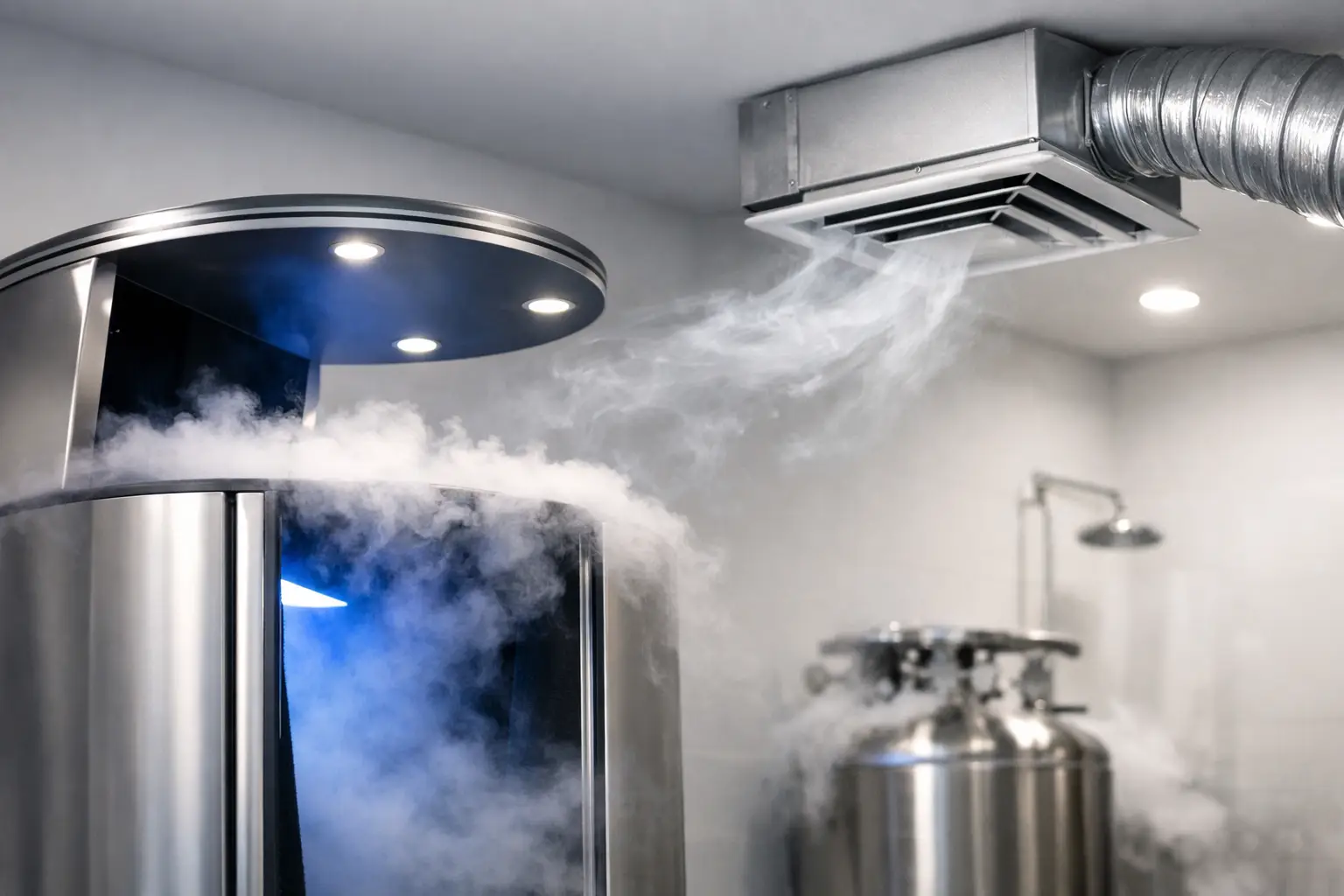
A cryotherapy room can look sleek and compact, but its ventilation design cannot be an afterthought. Knowing how to ventilate cryotherapy room spaces correctly is essential for protecting clients, staff, equipment, and the long-term viability of your wellness business. For liquid nitrogen cryotherapy systems, the primary concern is oxygen displacement. Nitrogen is not toxic or strongly scented, which means an unsafe condition may not be obvious before it becomes serious.
A professional installation should treat ventilation as part of the cryotherapy system itself, not as a general building upgrade. The right approach depends on the chamber design, room size, nitrogen consumption, occupancy, local code requirements, and the manufacturer's installation specifications.
Start With the Type of Cryotherapy System
Ventilation requirements are very different for an electric cryotherapy chamber and a liquid nitrogen-powered unit. Electric whole-body chambers typically do not release nitrogen into the treatment area during normal operation. They may still need adequate HVAC capacity for occupant comfort, heat generated by equipment, and humidity management, but they do not create the same oxygen-deficiency risk.
Liquid nitrogen cryotherapy chambers, on the other hand, require a dedicated safety strategy. During operation, nitrogen gas is released as liquid nitrogen expands and warms. If that gas accumulates in an enclosed or poorly ventilated room, it can reduce the available oxygen level. This is especially relevant in smaller treatment rooms, lower-level suites, converted offices, and residential wellness spaces where the existing HVAC system was never designed for cryogenic equipment.
Before selecting fans, duct sizes, or monitor locations, review the chamber manufacturer's installation manual. Its requirements should guide the project alongside local mechanical, fire, building, and workplace safety rules. A licensed mechanical engineer and qualified HVAC contractor should confirm the final design for the specific site.
How to Ventilate a Cryotherapy Room for Safety
The central goal is simple: remove displaced air and nitrogen from the treatment space while bringing in sufficient replacement air. In practice, this requires a dedicated mechanical exhaust system, a controlled source of makeup air, and safety monitoring that can alert staff before oxygen levels fall outside the acceptable range.
General comfort HVAC alone is rarely enough for a liquid nitrogen chamber. Many standard systems recirculate air, operate intermittently, or lack the exhaust capacity and control logic needed to respond to a cryogenic release. A dedicated exhaust path moves air outdoors rather than transferring it to neighboring treatment rooms, hallways, locker rooms, or common areas.
The exhaust system should operate whenever the chamber is in use and, depending on the equipment manufacturer and engineered plan, may run before and after each session as well. The objective is not simply to make the room feel fresh. It is to prevent nitrogen-rich air from lingering where clients and employees may breathe it.
Exhaust Placement Requires Real Engineering
It is tempting to assume all nitrogen exhaust should be placed at floor level. The reality is more nuanced. Nitrogen gas is slightly lighter than room air once it reaches normal temperature, but a cryogenic release begins extremely cold and can behave differently as it mixes, settles, rises, and moves around equipment. Ceiling height, supply-air locations, doors, room shape, and chamber discharge points all affect airflow patterns.
For that reason, exhaust grille placement should follow the chamber manufacturer's guidance and an engineered airflow assessment. In some installations, more than one pickup point may be appropriate to prevent stagnant zones. What matters is that the design captures and removes gas effectively under expected operating conditions, not that it follows a one-size-fits-all rule.
Avoid routing exhaust into a return-air plenum or tying it into a system that could distribute nitrogen to other occupied areas. The discharge should terminate outdoors in an approved location, away from air intakes, doors, windows, and areas where people gather.
Makeup Air Is Not Optional
Exhaust cannot perform properly if replacement air has nowhere to come from. A room placed under excessive negative pressure can make doors difficult to open, pull unconditioned air through gaps, disrupt chamber performance, and reduce the actual exhaust flow your design depends on.
Makeup air may come from a dedicated supply source or through a planned transfer-air path, depending on the facility layout and local requirements. It should be clean, conditioned where practical, and sized to support the exhaust system. The room should feel controlled, not drafty or pressurized.
This balance matters for premium wellness environments. Clients expect a quiet, comfortable, polished experience, while your operation needs a room that remains safe through repeated appointments. Proper airflow design supports both.
Install Oxygen Monitoring and Audible Alarms
A fixed oxygen monitor is a critical layer of protection in a liquid nitrogen cryotherapy room. It continuously measures the oxygen concentration in the space and provides a visible and audible alarm if levels drop below the configured safety threshold.
The monitor should not be treated as a replacement for ventilation. It is a safeguard that confirms whether the room environment remains safe and gives staff an immediate warning if there is a ventilation failure, unusual release, or equipment issue.
Monitor placement should be based on the chamber design and anticipated airflow, not convenience. Installers should also plan for routine calibration, sensor replacement, functional testing, and staff response training. An oxygen monitor with a dead battery, expired sensor, muted alarm, or poor location offers false confidence.
A well-designed system may also use interlocks. Depending on the equipment and local requirements, the chamber can be configured so operation is restricted when ventilation is not running or an oxygen alarm condition is present. This adds protection during busy shifts, when staff may be focused on client flow rather than mechanical status.
Design the Room Around Safe Operation
Ventilation works best when the room itself supports the safety plan. Keep the cryotherapy room dedicated to its intended use rather than using it for chemical storage, laundry supplies, boxes, or maintenance materials. Obstructed grilles and crowded mechanical access areas can compromise airflow and make routine service more difficult.
Door placement and room access also deserve attention. Staff should be able to enter and exit without navigating a cramped space, and emergency procedures should be clear. A simple posted protocol can identify what to do when an oxygen alarm activates: stop treatment, assist occupants out of the area, avoid reentry until conditions are confirmed safe, and contact the appropriate service or emergency resources when necessary.
For commercial operators, it is wise to document training for every team member who may operate the chamber, clean the room, change supplies, or work nearby. The best equipment investment is only as dependable as the procedures surrounding it.
Do Not Rely on Open Doors or Portable Fans
Opening a door between appointments may improve the feeling of airflow, but it is not a ventilation system. It is inconsistent, difficult to verify, and may allow displaced air to move into adjacent occupied areas. Portable fans have similar limitations. They can stir air without removing it from the building and may create unpredictable movement around the chamber.
Likewise, do not assume a standard bathroom exhaust fan or a residential HVAC return can handle a commercial cryotherapy application. The right exhaust rate, duct material, fan selection, controls, termination point, and makeup-air plan must be determined for the equipment and room in question.
Plan for Commissioning, Testing, and Maintenance
A ventilation plan is not finished when the installer turns the system on. Commissioning verifies that equipment operates as designed. Your contractor should confirm airflow performance, control operation, alarm response, and the interaction between the exhaust system and the chamber.
Maintenance should include scheduled checks of fans, belts where applicable, duct connections, grilles, electrical controls, oxygen sensors, and alarm functions. If your facility changes the room layout, adds walls, changes HVAC equipment, or relocates the cryotherapy chamber, have the ventilation design reviewed again. Small remodels can alter airflow more than operators expect.
For a new recovery studio, med spa, salon, fitness facility, or home wellness suite, bringing ventilation planning into the purchase process prevents expensive corrections later. Sun Spa Wellness can help buyers consider equipment requirements early, so the room is positioned to support a premium cryotherapy experience from day one.
A cryotherapy room should feel calm and high-performance to the client, but behind that experience should be a carefully engineered safety system. When ventilation, makeup air, oxygen monitoring, and staff procedures work together, your cryotherapy offering is better prepared to deliver the recovery and rejuvenation experience clients expect.
