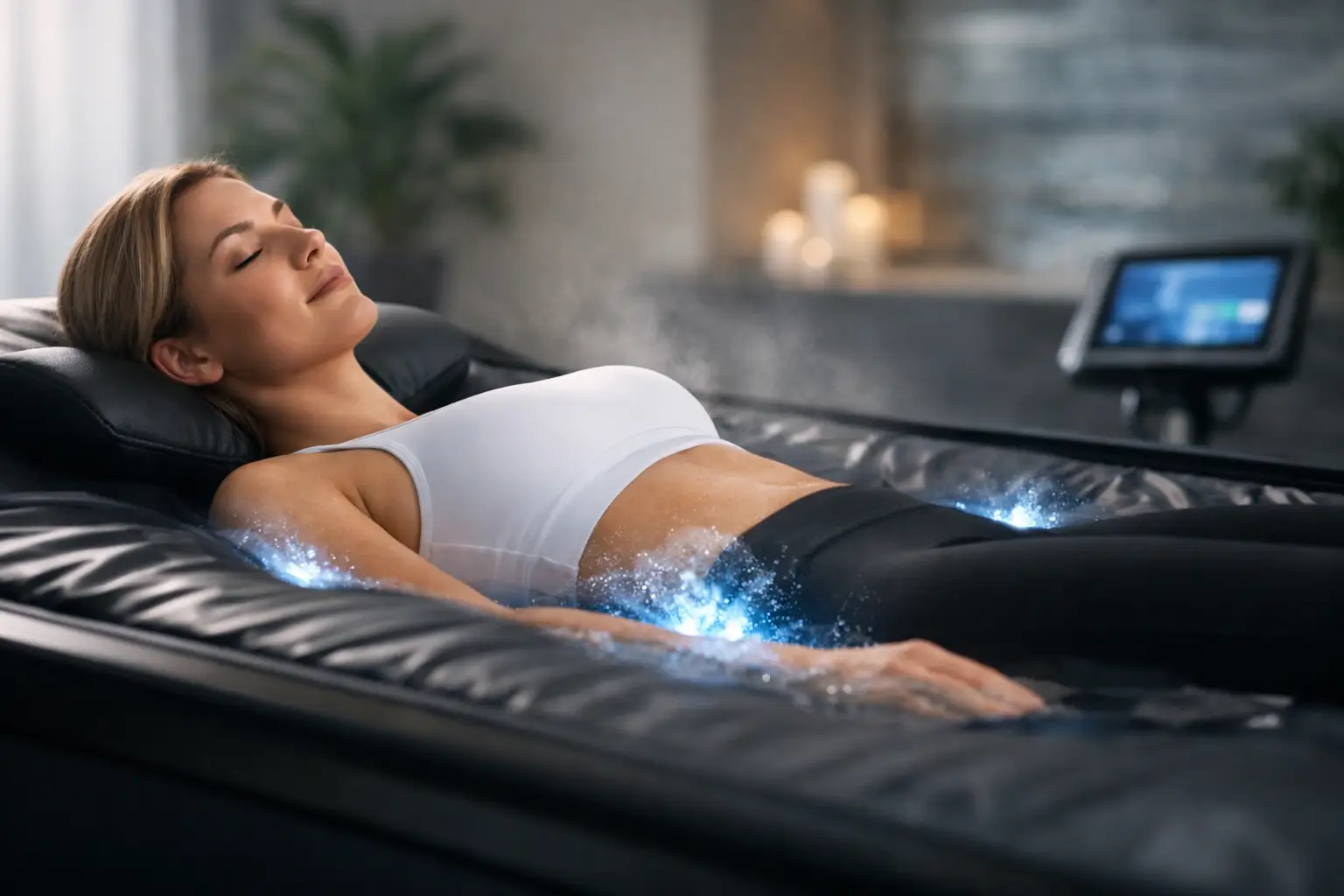
A packed service menu can look impressive on paper, but the treatments that earn repeat bookings usually have one thing in common - clients feel the benefit right away. Hydromassage therapy fits that standard well. It offers a fast, approachable recovery and relaxation experience that does not require a private treatment room, a therapist on staff, or a major learning curve for the end user.
For wellness operators, that combination matters. For residential buyers, it matters just as much. A technology-driven treatment that helps reduce stress, support circulation, and ease everyday muscle tension has broad appeal, especially when it can be delivered in a clean, modern format that feels premium from the first session.
What hydromassage therapy actually does
Hydromassage therapy uses heated water pressure to deliver a massage effect across the body. In many modern systems, the user lies on a waterproof barrier while jets of warm water move beneath the surface, targeting the back, shoulders, hips, and legs without direct skin contact. That design keeps the experience dry, easy to reset, and simple to integrate into commercial or residential wellness spaces.
The appeal is straightforward. Water pressure creates a consistent, adjustable massage pattern that can help relax tight muscles, encourage circulation, and provide a calming full-body experience in a relatively short session. For clients who want something restorative but less hands-on than traditional massage, hydromassage can fill an important gap.
That does not mean it replaces every other recovery modality. It serves a different role. A deep tissue massage from a skilled practitioner offers a level of manual specificity that machine-based therapy cannot fully replicate. But hydromassage therapy brings speed, convenience, and scalability that many businesses and homeowners value more in day-to-day use.
Why hydromassage therapy works in modern wellness settings
The strongest equipment categories are the ones that solve more than one business problem at a time. Hydromassage does that well because it sits at the intersection of recovery, relaxation, and operational efficiency.
In a spa, salon, med spa, recovery studio, or fitness facility, it can expand the service menu without creating the staffing requirements of therapist-delivered treatments. That matters when labor costs are high and scheduling bottlenecks affect revenue. A hydromassage system gives operators a treatment that feels elevated and premium while remaining highly manageable from an operations standpoint.
For clients, the value is equally practical. Some want post-workout recovery. Others want stress relief during a lunch break. Some are dealing with general soreness from travel, desk work, or active lifestyles. Because the treatment is noninvasive and easy to understand, it attracts a wide audience instead of a narrow niche.
Residential buyers often see the same advantage from a different angle. They want professional-grade wellness equipment that delivers results without requiring complex setup or frequent oversight. Hydromassage fits well in a home wellness room because it offers regular use, broad household appeal, and a familiar comfort factor. People understand massage. Adding water-based delivery and customizable pressure simply makes the experience more refined.
The most common benefits users look for
The best way to evaluate hydromassage is not to treat it as a miracle device. It is more useful to see it as a versatile wellness tool with several strong applications.
Muscle relaxation is usually the first draw. Warm water pressure can help loosen areas of tension, especially in the back, neck, and legs. That makes the treatment attractive after exercise, after long workdays, or during periods of accumulated physical stress.
Circulation support is another common reason people use it. Rhythmic pressure and warmth may promote blood flow, which many users associate with reduced stiffness and a more refreshed feeling after the session. For recovery-oriented businesses, that perceived benefit can be a strong part of the treatment story.
Stress reduction is just as important, even if it is harder to measure. Many clients are not only looking for pain relief. They want a treatment that helps them mentally reset. A short hydromassage session can deliver that sense of pause without requiring a long appointment window.
There is also the convenience factor, which is often underestimated. Clients are more likely to book and repeat services that fit easily into their schedule. A fast, dry massage experience is easier to say yes to than a more complicated treatment flow.
Who should consider hydromassage therapy
Commercially, hydromassage makes sense for operators who want a broad-use treatment with strong consumer appeal. Recovery studios can position it as part of an athletic performance and restoration package. Spas and salons can use it to add a modern body wellness option that complements beauty and relaxation services. Fitness businesses can integrate it into member recovery programs. Med spa owners may find it useful as a noninvasive add-on that broadens the guest experience, even if it is not a clinical service.
At home, the ideal buyer is usually someone building a dedicated wellness space rather than making a casual purchase. This is a category for people who already value recovery technologies, relaxation equipment, or premium self-care routines. They want commercial-grade design, dependable performance, and a treatment they will actually use consistently.
It also works well for households with more than one likely user. Unlike highly specialized equipment, hydromassage tends to have broad crossover appeal. One person may use it after exercise, another for stress management, and another simply because it feels good at the end of the day.
What to look for in hydromassage equipment
Not all systems deliver the same experience, and buyers should evaluate equipment with both performance and business practicality in mind.
Jet control matters because users expect customization. Pressure that is too weak can feel underwhelming, while pressure that is too aggressive may limit the audience. Adjustable intensity and targeted programming help make the system useful across different body types and preferences.
Build quality matters just as much. In a commercial setting, a hydromassage unit is not just a treatment device. It is part of the brand experience. The design should feel clean, contemporary, and durable enough to support repeated use. Premium aesthetics are not a bonus in this category. They affect perceived value and client confidence.
Ease of cleaning and maintenance should also stay high on the checklist. Operators need equipment that supports efficient turnover and dependable uptime. Residential buyers want the same reliability for a different reason - they are investing in convenience and do not want a system that becomes a maintenance project.
Footprint is another consideration. A larger, more feature-rich unit may offer stronger visual presence and treatment flexibility, but available floor space, traffic flow, and installation requirements still matter. The right fit depends on the environment.
Hydromassage therapy as a revenue and retention tool
For commercial buyers, treatment quality is only part of the equation. The equipment also needs to make business sense.
Hydromassage can support revenue in several ways. It works as a standalone session, as an add-on to existing services, or as part of a membership or package model. That flexibility is valuable because different businesses monetize wellness technology differently. A recovery studio might emphasize frequency and memberships, while a spa may use it to increase ticket size and improve the guest journey.
Retention is where the category becomes especially interesting. Services that are quick, pleasant, and easy to repeat tend to support stronger client habits. When clients can step in for a short session and leave feeling noticeably better, repeat use becomes easier to justify. That pattern can strengthen memberships and improve overall visit frequency.
There is a trade-off, of course. Hydromassage equipment is a capital investment, so buyers should think beyond the initial appeal of the treatment. They need to consider usage volume, pricing strategy, space allocation, and service positioning. The strongest returns usually come when the equipment is integrated into a broader business model rather than treated as a novelty.
Where hydromassage fits in a broader wellness strategy
Hydromassage performs best when it is positioned as part of a complete recovery and rejuvenation offering. It pairs naturally with categories like infrared sauna, compression therapy, red light therapy, cryotherapy, and dry floatation because each serves a slightly different need. Some clients want stimulation and performance support. Others want decompression and calm. Hydromassage sits comfortably between those goals.
That makes it a smart addition for businesses building a layered service environment and for homeowners creating a serious wellness room. A premium setup is rarely about one device doing everything. It is about combining technologies that work together and keep users engaged over time.
For buyers who value accessible recovery, high-end presentation, and broad consumer appeal, hydromassage therapy remains one of the more practical ways to add comfort-driven wellness to a commercial or residential space. The right system does more than fill a room. It gives people a reason to come back, slow down, and feel the difference after each session.
