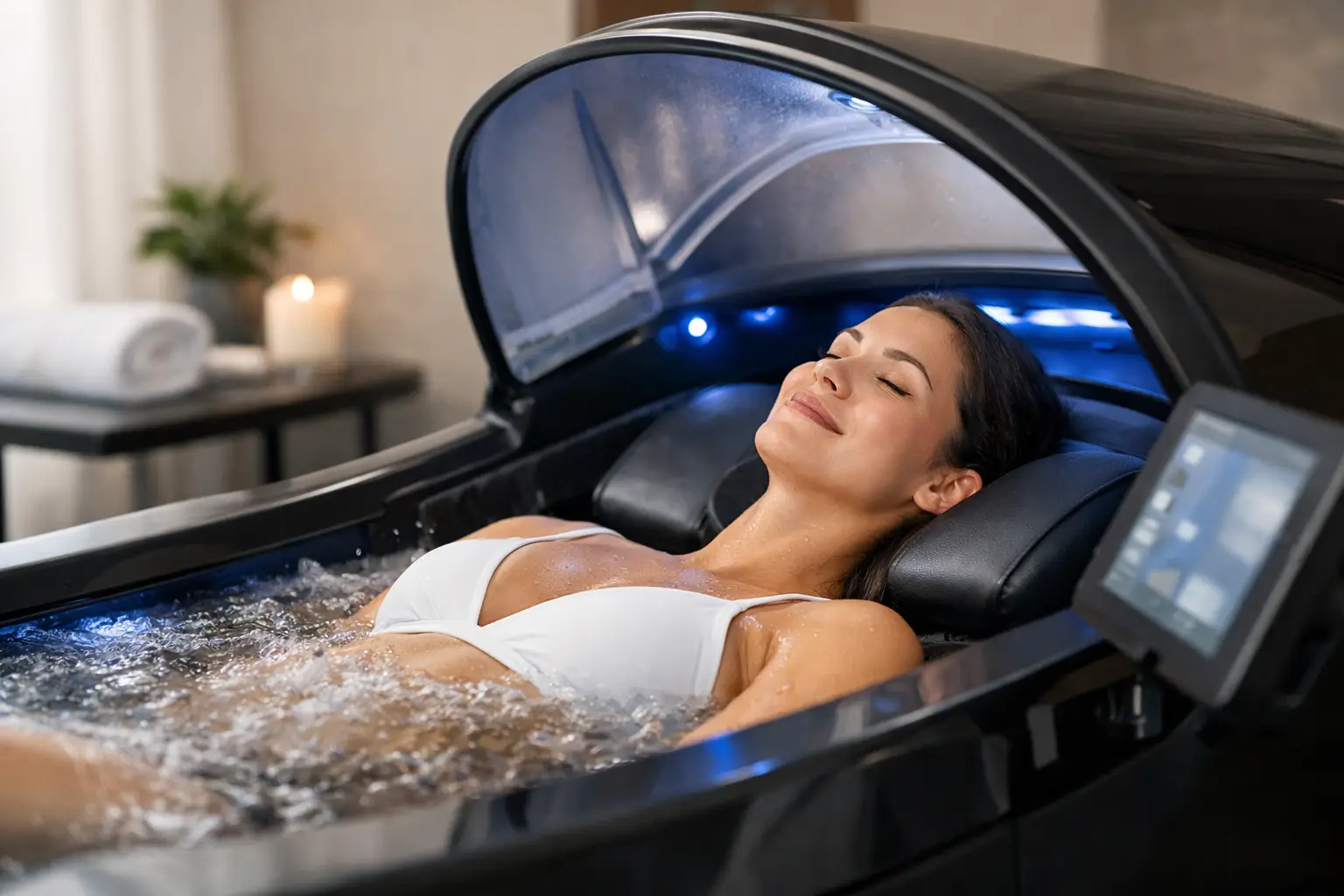
When a client wants recovery, relaxation, and visible value in under 20 minutes, hydromassage therapy services are hard to ignore. They fit the way modern wellness businesses operate - high demand for efficient treatments, limited staffing, and constant pressure to offer something that feels premium without slowing down the schedule.
That combination is exactly why hydromassage continues to gain traction across spas, recovery studios, fitness facilities, and high-end home wellness spaces. It delivers a full-body experience that feels therapeutic and indulgent, but it does so with a business model that can be much easier to scale than labor-heavy services.
Why hydromassage therapy services keep expanding
The appeal starts with accessibility. Traditional massage has clear value, but it also depends on therapist availability, room turnover, licensing requirements, and appointment coordination. Hydromassage therapy services offer a different lane. The user gets a targeted, relaxing treatment through heated water pressure, usually while remaining fully clothed, and the operator can serve more people with less operational friction.
For commercial buyers, that matters. A service that supports recovery and stress relief while reducing dependence on hands-on labor can improve throughput and broaden your menu without creating the same staffing challenges as manual bodywork. In a wellness business, every square foot and every labor hour has to justify itself.
For residential buyers, the value is convenience. Professional-grade wellness equipment at home is no longer just about luxury. It is about frequency and consistency. If someone wants regular recovery support after workouts, long workdays, or travel, a hydromassage system can make that routine realistic.
What clients are really buying
People rarely walk in asking for water pressure patterns or internal pump specifications. They are buying outcomes. They want muscle relief, a sense of decompression, better relaxation, and a treatment that feels substantial without asking much of their time.
That distinction is useful when deciding whether hydromassage belongs in your space. The strongest operators do not position it as a generic add-on. They position it as a recovery and rejuvenation tool with broad appeal. That can include post-workout recovery, stress reduction, daily wellness maintenance, or a premium pre- or post-treatment complement to services like infrared sauna, compression therapy, red light therapy, cryotherapy, or dry floatation.
The commercial upside is in that versatility. A single technology can serve athletes, busy professionals, beauty clients, and wellness-first consumers who may not be ready to book a longer or more expensive service.
How hydromassage therapy services fit a modern wellness menu
Hydromassage works best when it is not treated as an isolated machine in the corner. It performs better, both experientially and financially, when it is integrated into a clear service strategy.
In a recovery studio, it can sit naturally beside compression, cryotherapy, PEMF, or infrared services. In a day spa or med spa, it can help create a lower-barrier entry point for clients who want relaxation and body comfort without committing to a longer appointment. In a salon or wellness center, it can increase dwell time and ticket value while giving clients another reason to return between major treatments.
That said, it depends on the clientele. If your audience is highly treatment-driven and focused on measurable recovery, your messaging should emphasize circulation support, muscle relaxation, and convenience. If your audience is more beauty and lifestyle oriented, the better angle may be stress relief, premium comfort, and the feeling of full-body rejuvenation.
The equipment is the same. The positioning is what changes.
Choosing hydromassage therapy services for business use
Not every hydromassage setup is right for every location. A busy commercial environment needs equipment that looks premium, performs consistently, and can withstand repeated daily use. Buyers should think beyond the treatment itself and consider whether the system supports the way the business actually runs.
Capacity matters. So does session length, ease of cleaning, reliability, footprint, and how intuitive the controls are for both staff and clients. If a system requires too much staff intervention, the labor advantage starts to shrink. If it feels dated or underwhelming, it may not command premium pricing even if the treatment quality is solid.
This is where equipment selection becomes more strategic than many buyers expect. A well-chosen hydromassage unit can operate as a revenue-generating service, a membership retention tool, or a package enhancer. A poorly matched unit can become a low-use asset that takes up valuable floor space.
Commercial buyers should also think about client flow. Is hydromassage intended as a stand-alone booking, a recovery circuit component, or an upgrade attached to another service? The answer influences everything from placement to pricing to how much training your team will need.
The at-home case for hydromassage therapy services
Residential demand is rising for the same reason premium home saunas, red light systems, and recovery tools have grown. Homeowners want professional-grade wellness without the scheduling limitations of outside appointments.
For this buyer, hydromassage therapy services make the most sense when convenience is the priority. A treatment that can be used regularly, in a private setting, without changing clothes or booking time with a provider is attractive for people who value consistency. It also fits well in luxury home gyms, dedicated wellness rooms, and recovery-focused environments where multiple modalities work together.
Still, expectations should be realistic. Home buyers should not choose hydromassage because it sounds trendy. They should choose it because they know they will use it often. Frequency is what makes premium wellness equipment feel justified over time.
What affects ROI with hydromassage therapy services
The strongest return usually comes from smart packaging, not from the equipment simply existing on the floor. Businesses that build a clear offer around hydromassage tend to perform better than those that leave it as an undefined option.
A short express session can work well as an entry-level service. Bundled recovery circuits can raise perceived value. Monthly memberships can turn hydromassage into a repeat-use retention tool. It may also support premium upsells for clients already investing in broader wellness and beauty services.
Pricing depends on market, positioning, and treatment format. In some locations, hydromassage works best as an accessible volume service. In others, it performs better as part of a premium recovery or rejuvenation package. There is no universal pricing formula, which is why equipment buyers should evaluate local demand and service mix before assuming revenue potential.
There are trade-offs. A lower-priced service may drive more usage and membership appeal, but it can cheapen the perceived value if the presentation is weak. A higher-priced service may improve margins, but only if the environment, branding, and equipment quality support that premium.
Where equipment quality changes the client experience
Hydromassage is one of those categories where build quality shows up quickly. Clients notice comfort, noise, consistency, heat, pressure feel, and how polished the entire treatment looks. Operators notice downtime, maintenance demands, and whether the equipment still presents well after heavy use.
That is why supplier support matters almost as much as the machine itself. Financing options, service access, maintenance guidance, and long-term equipment support can have a direct effect on ownership experience. For commercial buyers making a capital investment, those factors are not extras. They are part of the buying decision.
This is especially true for operators expanding beyond one modality. If you are building a more complete recovery or wellness menu, working with a partner that understands adjacent technologies can simplify growth. Sun Spa Wellness is built around that broader equipment ecosystem, which matters when buyers want solutions that work together rather than one-off purchases.
Is hydromassage the right fit?
Hydromassage makes the most sense when your goal is to offer high-perceived-value recovery and relaxation in a format that is efficient, scalable, and appealing to a wide range of users. It is a strong fit for businesses that want to expand service capacity without adding equivalent hands-on labor. It is also a smart option for residential users creating a more complete home wellness environment.
But fit still depends on the business model. If your client base only wants highly specialized manual treatment, hydromassage may be better as a complement than a centerpiece. If your audience values convenience, recovery, and premium self-guided experiences, it can become a standout part of the offering.
The most successful buyers usually ask a simple question before they purchase: will this equipment create repeat use, not just initial interest? If the answer is yes, hydromassage can be more than an attractive amenity. It can become one of the most practical ways to deliver modern wellness at scale.
As client expectations continue to move toward faster, smarter, and more flexible treatments, hydromassage therapy services sit in a very attractive position - easy to understand, easy to use, and capable of bringing real value to both a commercial floor and a home wellness space.
