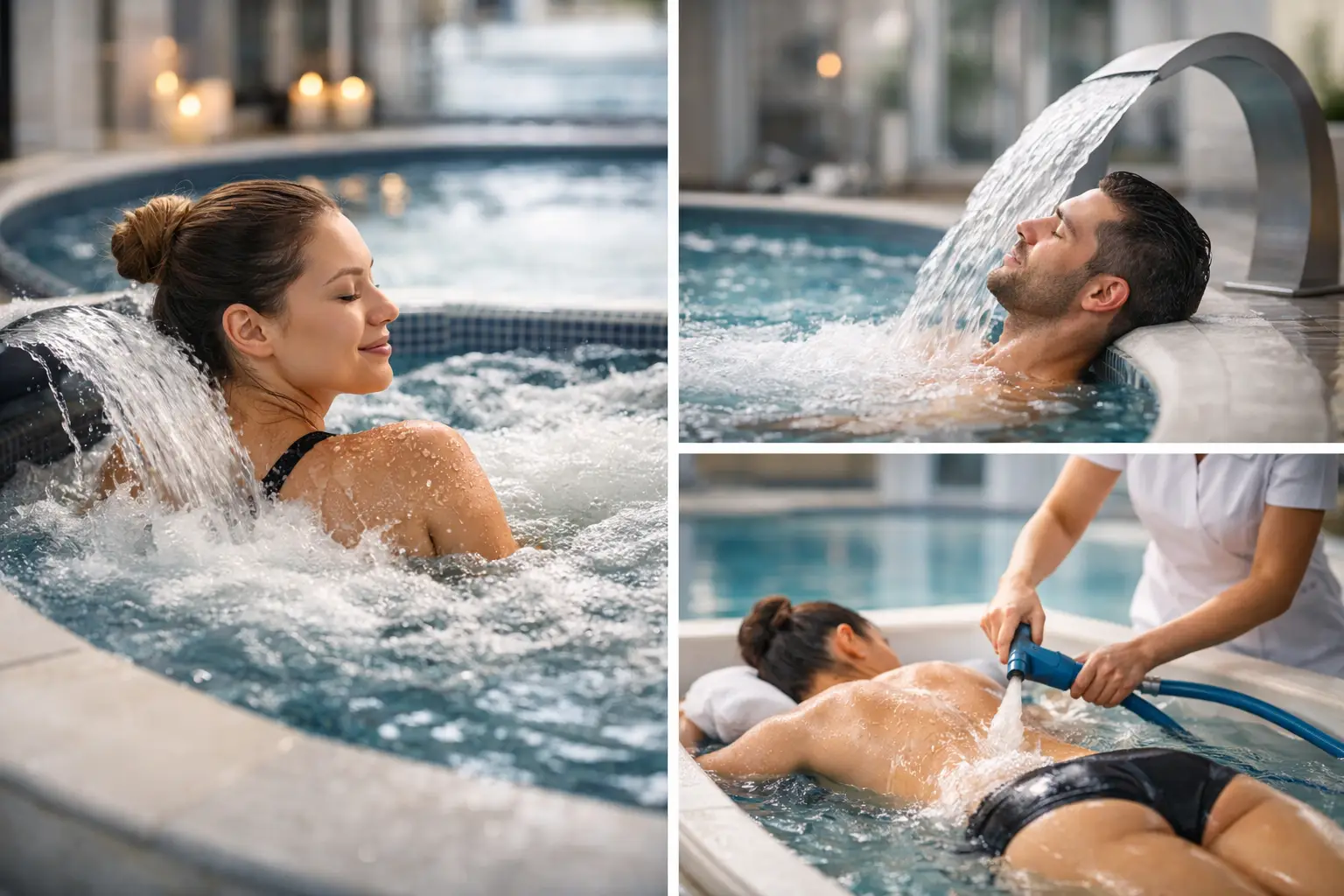
A client walks in with tight shoulders, swollen legs, post-workout fatigue, or pure mental overload. They are not looking for another generic wellness add-on. They want something they can feel quickly. That is where hydrotherapy services stand out. When they are delivered with the right equipment and positioned the right way, they become more than a relaxing extra. They become a credible recovery and rejuvenation offering that clients return for and operators can build around.
Why hydrotherapy services still matter in a crowded wellness market
Wellness menus have expanded fast. Red light therapy, cryotherapy, infrared, compression, PEMF, and dry float systems all compete for attention. Hydrotherapy has held its place because water-based treatment speaks to something clients understand immediately. Heat, buoyancy, pressure, and circulation support are easy to explain and even easier to experience.
For commercial operators, that matters. Services that require too much education often slow the sales process at the front desk. Hydrotherapy services are different. Most clients already associate warm water and targeted water pressure with stress relief, muscle relaxation, and physical recovery. That built-in familiarity helps shorten the path from interest to booking.
That does not mean every hydrotherapy setup performs the same. Basic wet-area offerings can feel dated if the equipment looks old, the experience feels hard to schedule, or the treatment lacks a clear outcome. Modern buyers, especially in premium wellness settings, expect better design, better consistency, and stronger service positioning.
What clients expect from modern hydrotherapy services
Today’s client is not only buying a treatment. They are buying an environment, a result, and a standard of care. In a high-end spa, recovery studio, or home wellness room, hydrotherapy services need to feel intentional. The equipment should look premium, operate reliably, and support a treatment experience that feels controlled rather than improvised.
The strongest hydrotherapy experiences usually center on a few high-value outcomes. Recovery is one. Athletes, active adults, and fitness clients respond well to services that can help reduce soreness and support circulation. Stress reduction is another. Clients dealing with long workdays, poor sleep, or high physical tension want services that can calm the nervous system and create a noticeable reset. Beauty and body-focused clients may also respond when hydrotherapy is positioned alongside detox, body contouring support, or skin-focused wellness rituals.
This is where service design matters. If the treatment description is vague, clients treat it like a low-priority luxury. If the outcome is clear, it becomes easier to sell. “Recovery support for sore muscles and heavy legs” performs better than “water wellness session.” “Deep relaxation and circulation support” is more compelling than “hydro experience.” Buyers want a reason to add the service, and clients want a reason to choose it.
Choosing hydrotherapy services for a commercial setting
For a business owner, the question is not whether hydrotherapy sounds appealing. It is whether the service makes sense operationally. That depends on space, staffing, local demand, treatment goals, and how the equipment fits your wider menu.
A spa may use hydrotherapy services as part of a relaxation journey, pairing them with massage, halotherapy, or sauna sessions. A recovery studio may position them around post-training recovery, circulation, and body decompression. A med spa or wellness center may use them as a lower-intensity complement to more advanced therapies.
The right choice often comes down to whether you want hydrotherapy to be a headline service or a supporting one. If it is a headline service, the equipment needs strong visual appeal and enough treatment value to justify repeat bookings on its own. If it is supporting the menu, it should integrate smoothly into packages, memberships, and pre- or post-treatment routines.
There are trade-offs. Larger hydrotherapy equipment can create a strong client impression, but it also requires more planning around installation, sanitation, water access, and floor layout. More compact systems may be easier to operate and fit into existing rooms, but they need careful positioning so they do not feel secondary or underpowered.
The equipment side of hydrotherapy services
Not all hydrotherapy equipment creates the same business case. Commercial buyers need to look beyond the general promise of water-based wellness and focus on consistency, user experience, maintenance demands, and perceived value.
A premium system should support repeatable sessions with clear settings and dependable performance. If the treatment feels great one day and inconsistent the next, clients notice. If sanitation is cumbersome or maintenance interrupts the schedule too often, staff notice. Over time, both issues affect profitability.
That is why equipment selection should be grounded in more than brochure-level features. Consider how quickly a room can turn between appointments. Consider whether the treatment is staff-assisted or largely self-contained. Consider whether the design fits a premium brand image. A unit that delivers decent function but looks dated can drag down the perceived quality of the entire room.
Professional buyers also need to think in terms of service life. Hydrotherapy services can be attractive because they sit at the intersection of recovery, relaxation, and wellness, but only if the equipment remains reliable under regular use. Long-term support, service access, and financing options matter more with specialty equipment than many first-time buyers expect.
Hydrotherapy services for residential wellness spaces
The home market has changed. Many affluent homeowners are no longer looking for a simple luxury feature. They want professional-grade wellness equipment that supports recovery, stress management, and daily performance without leaving the house. Hydrotherapy services, adapted for residential use, can fit that shift very well.
For a home buyer, convenience is a major advantage. The ability to step into a recovery-focused or relaxation-focused treatment on demand is appealing, especially for busy professionals, fitness-focused households, and homeowners building complete wellness suites. Hydrotherapy also pairs naturally with infrared sauna, red light, compression, and other in-home modalities.
Still, the same principle applies. The experience has to feel elevated. Residential buyers at the premium end do not want equipment that feels like a compromise version of a commercial treatment. They want strong design, durable components, and a clear wellness benefit. They also need realistic guidance about installation, maintenance, and how often they will actually use the equipment.
How to position hydrotherapy services so they sell
A common mistake is treating hydrotherapy as self-explanatory. Water-based wellness feels familiar, but familiar does not always mean urgent. If you want the service to perform commercially, it needs a clear role in your menu.
The best positioning usually ties hydrotherapy services to a specific customer need. Recovery clients want relief, circulation support, and muscle decompression. Spa clients want stress reduction and relaxation. Beauty-focused clients may respond to detox-oriented language or body-focused rituals when the service is paired with complementary technologies.
Pricing strategy matters too. If hydrotherapy is priced too low, it can look basic. If it is priced too high without a premium environment or a strong result story, it becomes harder to book. Many operators do best when they use hydrotherapy as part of a package, series, or membership where the treatment supports retention instead of relying only on one-time sessions.
Staff language also shapes performance. Front desk and treatment staff should be able to explain who the service is for, what it feels like, and when to recommend it. That sounds simple, but it is often the difference between a passive menu item and a booked-out treatment room.
Where hydrotherapy services fit in a premium wellness business
Hydrotherapy works best when it is part of a broader wellness strategy, not a random add-on. In the right environment, it strengthens your menu by giving clients an accessible, high-satisfaction service that complements more specialized equipment.
That is one reason equipment partners matter. Businesses that are expanding into advanced wellness categories often need more than a single product. They need a mix that makes sense commercially and operationally. A supplier like Sun Spa Wellness fits that model because the conversation is not limited to one modality. Buyers can evaluate how hydrotherapy services may work alongside recovery, relaxation, detox, and performance technologies in one cohesive offering.
For some businesses, hydrotherapy will be a high-frequency recovery service. For others, it will support luxury spa rituals or round out a home wellness environment. The key is alignment. The strongest results come when the equipment, the audience, and the service story match.
Hydrotherapy is not new, but the right delivery still feels current. When the equipment is premium, the outcome is clear, and the experience is positioned with purpose, hydrotherapy services earn their place very quickly - not as filler on a treatment menu, but as a service people genuinely want to come back for.
