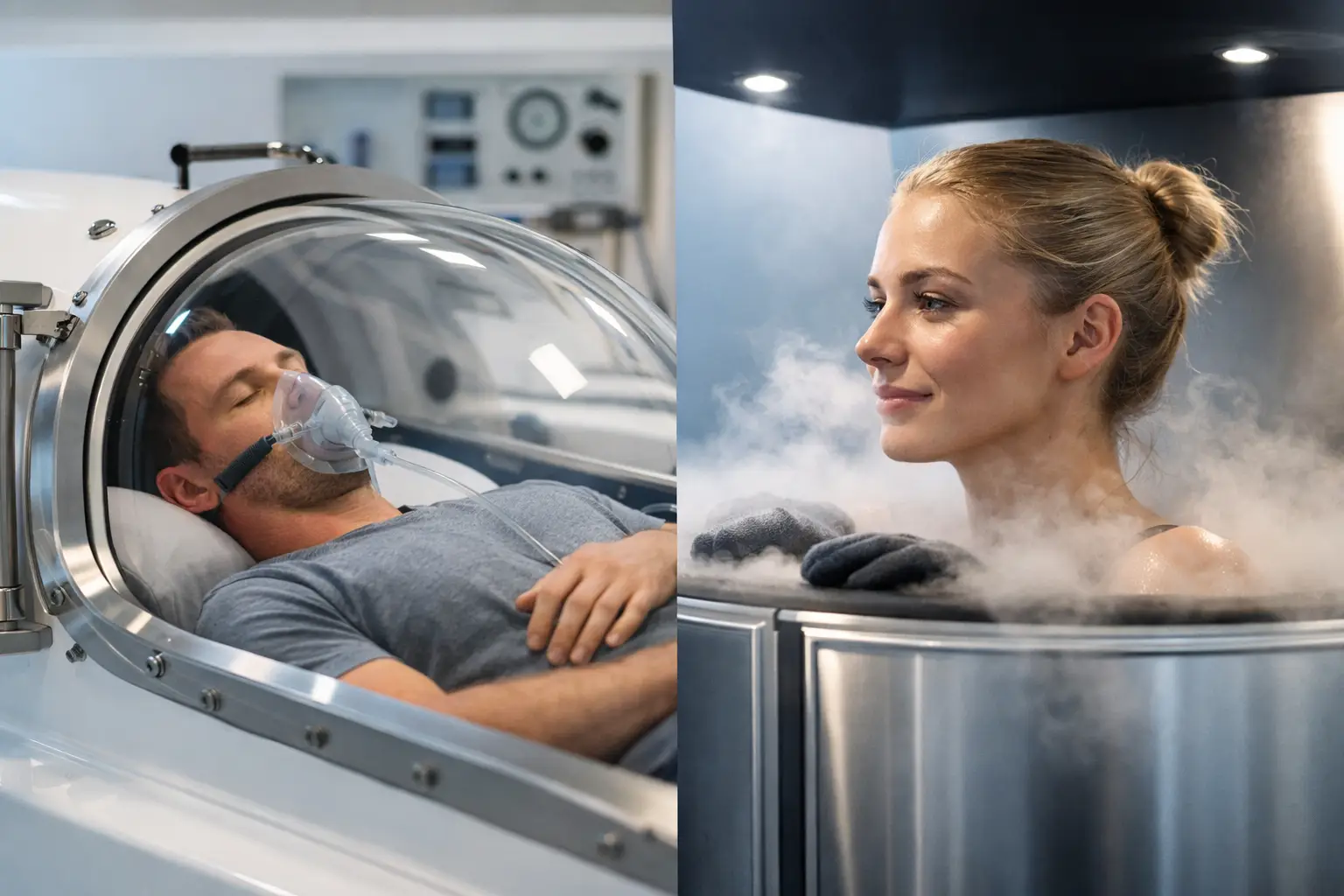
A client finishes a demanding workout, wakes up sore after travel, or wants a more advanced recovery routine than a massage chair can provide. That is where the hyperbaric chamber vs cryotherapy decision becomes meaningful. Both modalities create a premium recovery experience, but they do so through very different physiological approaches, session formats, staffing needs, and business models.
For wellness operators, the better choice is rarely about which technology is more impressive. It is about the clients you serve, the outcomes they expect, the space you have available, and the kind of service menu you want to build. For a home wellness buyer, it comes down to whether a calm, restorative oxygen session or a fast, invigorating cold exposure better fits daily life.
Hyperbaric Chamber vs Cryotherapy: The Core Difference
Hyperbaric therapy uses increased ambient pressure to help the body take in more oxygen. During a session, the user rests inside a pressurized chamber and breathes normally or, depending on the system and protocol, receives oxygen through a concentrator or mask. The experience is quiet, enclosed, and generally relaxing. Many clients use hyperbaric sessions as part of a broader routine focused on recovery, circulation, relaxation, and performance support.
Cryotherapy takes the opposite route. A whole-body cryotherapy chamber exposes the body to extremely cold air for a brief period, commonly two to three minutes. The experience is energizing rather than restful. Clients typically enter standing, follow safety instructions, and emerge feeling alert, refreshed, and ready to continue their day.
Neither modality is a substitute for medical diagnosis or treatment. Clinical hyperbaric oxygen therapy is used for specific FDA-cleared medical indications under medical supervision, while many wellness facilities operate non-medical mild hyperbaric systems. Cryotherapy is also a wellness service, and operators should avoid promising that it cures injuries or medical conditions. Clear client screening, informed consent, training, and appropriate referral procedures protect both the client and the business.
What Clients Feel During Each Session
The treatment experience strongly influences repeat bookings. Hyperbaric sessions usually last 60 to 90 minutes, allowing clients to rest, listen to audio, meditate, or simply disconnect. As the chamber pressurizes, users may notice ear pressure similar to an airplane descent. Equalizing techniques are simple for most people, but staff should explain them before each session.
This longer, quieter format appeals to clients who value stress relief, recovery after intense training, and a dedicated period of uninterrupted rest. It also creates a natural opportunity for premium memberships, recovery packages, or add-on services before or after a session.
Cryotherapy is designed for speed. After changing into required protective gear, clients spend only a few minutes in the chamber. The cold is intense, but the short duration is part of the appeal. It can be an excellent fit for athletes between training sessions, busy professionals, fitness members, and clients who want a high-impact wellness experience without committing an hour of their schedule.
For many studios, cryotherapy also has visual appeal. A modern chamber creates a memorable first impression and can become a conversation-driving feature in a recovery lounge, med spa, or upscale fitness center.
Recovery Goals and Wellness Positioning
Both systems can support a performance-oriented wellness menu, but the messaging should reflect their distinct strengths.
Hyperbaric chambers are often positioned around oxygen support, recovery, relaxation, circulation support, and rejuvenation. The modality pairs naturally with red light therapy, PEMF, compression therapy, infrared sauna sessions, and dry floatation. A client might book a longer recovery block that combines compression followed by hyperbaric relaxation, creating a high-value experience that feels individualized and restorative.
Cryotherapy is commonly positioned around post-workout recovery, temporary relief of minor muscle soreness, energy, and a refreshed feeling. It can pair effectively with body contouring, compression, red light, infrared, or fitness recovery programming. Because appointments are short, it is especially well suited to recurring memberships and quick-service packages.
The right choice depends on the promise your brand can credibly make. A recovery studio serving endurance athletes and strength-training clients may benefit from both modalities. A luxury day spa with a quiet, restorative identity may find hyperbaric therapy more aligned with its environment. A high-traffic gym, on the other hand, may get more immediate utilization from cryotherapy.
Space, Throughput, and Daily Operations
From an operational standpoint, cryotherapy generally delivers higher client throughput. A well-organized workflow can accommodate multiple short appointments each hour, although operators must build in time for intake, protective gear, cleaning, and safety checks. Staffing is active: a trained team member should supervise sessions and verify that each client is an appropriate candidate.
Hyperbaric therapy has lower hourly throughput because sessions are longer. However, a chamber can support a premium price point and a more relaxed operational rhythm. Once the client is safely settled and the session is underway, staff may be able to perform other appropriate duties, depending on the equipment, facility protocols, and supervision requirements.
Space planning matters for both. Cryotherapy chambers need room for the unit, changing flow, ventilation considerations, and a safe, comfortable check-in area. Hyperbaric systems require thoughtful placement, clearance around the chamber, electrical planning, and strict adherence to manufacturer guidance. The chamber type also matters. Soft-sided mild systems, hard-sided mild systems, and clinical-grade units have different footprints, pressure capabilities, installation needs, and use cases.
Before purchasing either technology, confirm local zoning, building requirements, insurance expectations, and state-specific rules. This is especially important if your business operates alongside medical providers or plans to make health-related claims.
Safety Is Part of the Premium Experience
Advanced wellness equipment earns trust when safety is built into every step of the client journey. For cryotherapy, screening should address cold sensitivity, cardiovascular concerns, neuropathy, pregnancy, uncontrolled hypertension, and other contraindications identified by your protocols and equipment manufacturer. Clients need dry skin, proper protective gear, continuous communication, and supervision throughout the session.
Hyperbaric screening should consider ear and sinus issues, certain lung conditions, fever or respiratory illness, recent surgery, medications, and other factors that may affect suitability. Fire safety is non-negotiable. Facilities must follow chamber-specific protocols for clothing, personal items, electrical devices, oxygen handling, cleaning products, and emergency procedures.
In both cases, the equipment purchase is only one part of the investment. Staff education, documented procedures, maintenance schedules, client records, and liability planning help turn a premium device into a dependable long-term service.
Cost and Revenue Potential
Cryotherapy may be the stronger first investment when your business needs frequent, fast appointments and a service that is easy for prospective clients to understand. It can generate repeat traffic through memberships, fitness partnerships, introductory offers, and recovery bundles. Its short session time supports volume, but volume only becomes profitable when intake, scheduling, and staffing remain efficient.
A hyperbaric chamber can justify a different revenue strategy. Longer sessions support premium single-service pricing, multi-session plans, and elevated wellness packages. The audience may be narrower than cryotherapy's broad fitness appeal, yet client loyalty can be strong when the experience is comfortable, consistent, and integrated into a personalized recovery plan.
Residential buyers should also think beyond the purchase price. Cryotherapy is ideal for households that want a quick, invigorating ritual and have the space and operational readiness for professional equipment. A home hyperbaric chamber can be more compelling for buyers who prioritize quiet recovery, regular relaxation, and a dedicated wellness room. In either setting, selecting equipment from a supplier that can support installation guidance, service, maintenance, financing, and future upgrades is a practical advantage.
Which Equipment Fits Your Business?
Choose cryotherapy when your concept depends on energy, speed, athletic recovery, and high appointment turnover. It is particularly effective for gyms, performance centers, busy recovery studios, and modern wellness businesses looking for a highly visible differentiator.
Choose a hyperbaric chamber when your clients want extended recovery sessions, relaxation, and a higher-touch wellness experience. It is a strong fit for premium spas, recovery lounges, longevity-focused environments, and home wellness spaces built around consistent self-care.
For established operators with the right footprint and demand, the most compelling answer may be both. Cryotherapy brings clients in quickly; hyperbaric therapy gives them a reason to stay longer and return for a more complete recovery routine. The smartest investment is the one that matches your client journey, your operational capacity, and the premium experience you intend to deliver.
