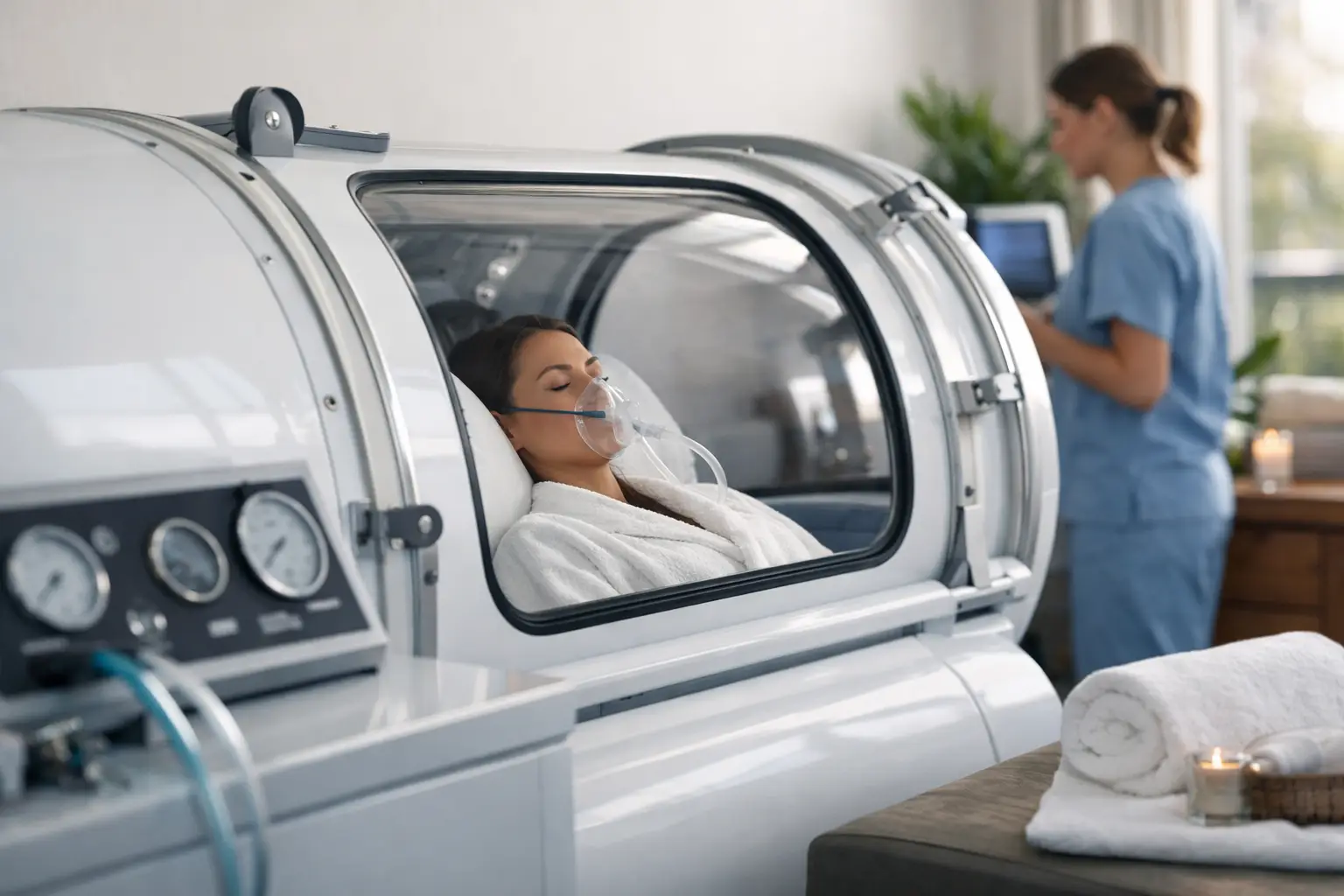
A recovery studio with a hyperbaric chamber on its floor is making a visible statement: performance, comfort, and premium wellness are part of the experience. For operators, the opportunity is not simply to add another service. It is to create a private, high-value recovery offering that can complement red light therapy, compression, cryotherapy, infrared, and other results-driven modalities.
For homeowners, hyperbaric chambers bring a similar advantage: access to a controlled, restorative environment without leaving the property. The right system depends on how it will be used, who will oversee it, the available space, and the level of pressure and oxygen delivery required.
What Hyperbaric Chambers Do
Hyperbaric chambers create an environment with air pressure above normal atmospheric pressure. During a session, the user rests comfortably inside the chamber while pressure is gradually increased and later returned to normal. Depending on the chamber design and protocol, oxygen may be delivered through a mask, hood, or another approved system.
The basic idea is straightforward. Higher pressure changes how gases behave in the body and can increase the amount of oxygen carried in plasma when medical-grade oxygen is used under appropriate conditions. This is why hyperbaric oxygen therapy has established medical uses for specific conditions when prescribed and supervised by qualified clinicians.
In a wellness setting, many clients seek hyperbaric sessions as part of a broader routine focused on recovery, relaxation, circulation support, post-training comfort, and performance optimization. Those goals should be presented responsibly. A commercial operator should never position a chamber as a cure or make medical claims outside the equipment's intended use, regulatory status, and the scope of its clinical oversight.
Medical Hyperbaric Therapy vs. Wellness Use
This distinction matters for both business planning and client communication. Medical hyperbaric oxygen therapy typically involves higher pressures, medical-grade oxygen, defined treatment protocols, and clinical supervision. It may be used in hospital or specialized medical environments for conditions recognized by medical authorities.
Wellness-focused systems are often incorporated into recovery studios, spas, athletic facilities, and private home environments. They may operate at different pressure ranges and use different oxygen-delivery configurations. A premium chamber can still be an impressive asset, but its marketing, staffing, intake process, and safety procedures must match the actual system and the setting.
For a wellness business, the strongest message is often the most credible one: offer a calm, technology-forward recovery experience that fits an active lifestyle. Clients understand the appeal of a quiet session after training, travel, demanding workweeks, or other stressors. They also appreciate a facility that takes comfort and safety seriously.
Choosing the Right Chamber Configuration
Not every chamber is built for the same environment. The first decision is whether the equipment is intended for a commercial program, a medically supervised practice, or a residential wellness space.
Hard-Shell and Soft-Sided Systems
Hard-shell chambers typically provide a more permanent, professional installation and may support higher operating pressures, depending on the model. They are often chosen by facilities that want a refined client experience, durable construction, and a treatment room that feels aligned with a premium service menu.
Soft-sided chambers are generally more flexible in placement and can be appealing for home users or facilities with limited build-out options. Their lower profile does not mean that planning can be casual. Buyers still need to evaluate pressure capability, chamber dimensions, entry style, ventilation, oxygen compatibility, fire-safety requirements, and service access.
The best choice is not automatically the largest or highest-pressure model. A recovery studio may benefit most from a system that is comfortable, easy to schedule, visually polished, and simple for trained staff to operate. A homeowner may prioritize a compact footprint, quiet operation, and a configuration that fits naturally into a dedicated wellness room.
Monoplace and Multiplace Capacity
A monoplace chamber is designed for one person at a time. For many wellness businesses, this supports a private, appointment-based model that feels exclusive and easy to manage. It can also make room planning more efficient.
Multiplace chambers accommodate more than one person, but they introduce a different level of operational complexity. They require greater attention to staffing, protocols, occupancy, safety systems, and overall facility design. For a business evaluating return on investment, more capacity is only valuable when demand, staffing, and workflow can support it.
Planning a Commercial Hyperbaric Service
A chamber performs best as part of a deliberate experience, not as a standalone piece of equipment placed in an unused corner. The room should feel private, clean, and purpose-built. Consider the client journey from check-in to consultation, session preparation, chamber entry, monitoring, and post-session transition.
Space planning should account for more than the chamber itself. Operators need clearance for entry and emergency access, room ventilation, electrical requirements, any oxygen equipment, seating for staff or guests, and access for routine service. Ceiling height, doorway width, floor loading, and local building requirements can affect which models are practical.
Staff readiness is equally important. Team members need manufacturer training and written operating procedures, including client screening, communication during a session, pressurization and depressurization steps, cleaning, maintenance checks, and emergency response. A polished customer experience depends on knowledgeable staff who can explain the process without overstating benefits.
From a revenue perspective, hyperbaric sessions can work as individual appointments, membership benefits, packages, or recovery bundles. Pairing a chamber session with compression therapy, red light therapy, dry floatation, or infrared sauna services can create a more complete recovery menu. The right bundle depends on appointment length, room turnover, staffing capacity, and the preferences of the local market.
Safety Is Part of the Premium Experience
Hyperbaric equipment deserves disciplined operation. Pressure changes can affect the ears and sinuses, so clients must be able to equalize comfortably. Certain medical conditions, medications, respiratory concerns, recent procedures, and implanted devices may require medical clearance or make participation inappropriate. A thoughtful intake process protects clients and the business.
Fire safety is especially critical whenever oxygen is involved. Facilities should follow the manufacturer's instructions, applicable codes, and established oxygen-safety practices. That includes controlling prohibited items, avoiding oils and flammable materials where required, maintaining the equipment correctly, and ensuring staff understand exactly what is permitted in and around the chamber.
A well-run program also sets realistic expectations. Some clients may find sessions deeply relaxing; others may need time to get comfortable with the enclosed environment or pressure sensation. Clear pre-session education, dependable communication, and a calm room design can make a meaningful difference.
Questions to Ask Before You Buy
A high-quality purchase starts with operational questions rather than a product brochure. Ask what pressure range the system provides, how oxygen is delivered, what electrical and ventilation needs apply, and what daily cleaning protocol is required. Confirm the chamber's dimensions, entry configuration, warranty coverage, installation expectations, and preventive maintenance schedule.
Commercial buyers should also ask how the manufacturer and supplier support the equipment after delivery. Specialty wellness technology is a long-term investment. Access to training, service coordination, replacement parts, financing options, and knowledgeable guidance can be as valuable as the chamber specification itself.
For residential buyers, the discussion should include practical lifestyle details. Is there a dedicated room with appropriate clearance? Can the household follow the required safety procedures consistently? Will a qualified professional be involved when oxygen or medical considerations are part of the intended use? A home chamber can be a compelling addition to a serious wellness environment, but it should be selected with the same care as any other premium recovery system.
Building a Recovery Offering Clients Remember
Hyperbaric chambers can give a wellness business a clear point of differentiation, particularly when the experience is designed around comfort, professionalism, and responsible education. They appeal to clients who value advanced recovery technology and want more than a basic spa appointment.
The most successful installations are not defined by bold promises. They are defined by the right equipment, thoughtful protocols, trained staff, and a space that makes every session feel intentional. Whether the goal is a high-performing recovery studio or a refined home wellness suite, choose a chamber and support partner that can help the investment perform well long after installation day.
