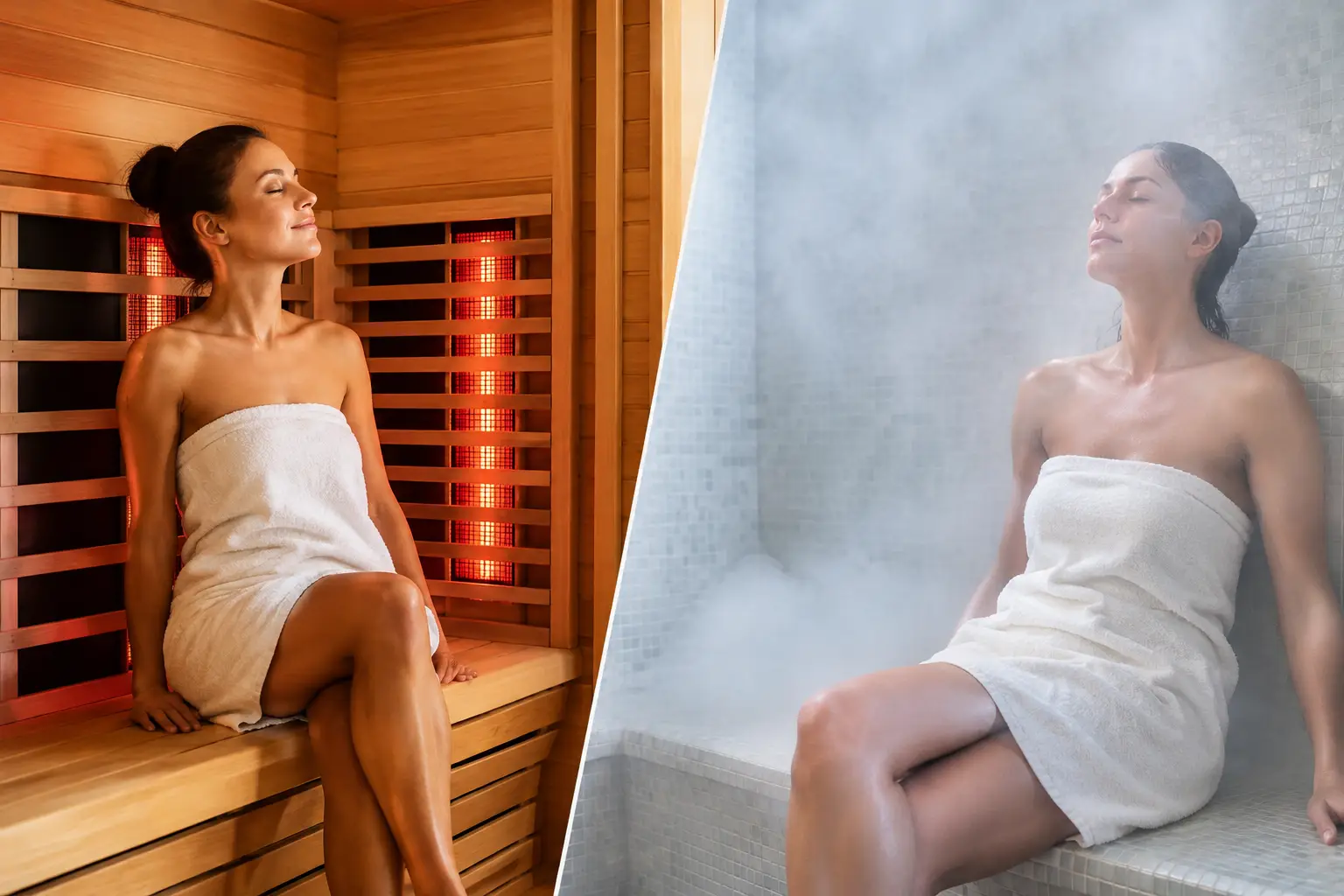
A recovery studio may have room for one heat-based centerpiece. A homeowner may be deciding what belongs beside a cold plunge or home gym. In either case, the infrared sauna versus steam room decision is not simply about which option feels hotter. It affects installation, maintenance, client comfort, operating costs, service positioning, and the type of wellness experience you want to deliver.
Both can support relaxation, post-workout routines, and a premium self-care environment. Their heat is delivered very differently, however. That difference matters when you are choosing equipment designed to perform reliably for years.
Infrared Sauna Versus Steam Room: The Core Difference
An infrared sauna uses infrared heaters to warm the body more directly while keeping the surrounding air relatively dry. Depending on the system and setting, temperatures are commonly lower than those of a traditional dry sauna, yet the user can still experience substantial warmth and perspiration. Many users find this environment more approachable because breathing can feel easier in dry heat and sessions may feel comfortable at a more moderate air temperature.
A steam room heats water to create a humid, vapor-filled environment. The air temperature is generally lower than a traditional sauna's, but humidity approaches 100 percent. That moisture changes the entire sensory experience: skin feels damp immediately, the air can feel dense, and the room takes on the familiar atmosphere of a spa steam bath.
Neither experience is automatically better. The stronger investment is the one that fits your clients, facility, home environment, and operational capacity.
How the Experience Changes for Clients and Homeowners
Infrared sauna sessions are often positioned around relaxation, recovery, circulation support, and a deep, comfortable sweat. They appeal to guests who want a quieter, more personal wellness ritual, particularly after training, body contouring treatments, red light therapy, or a demanding workday. Premium cabins also make a strong visual statement in a recovery lounge, upscale fitness facility, or residential wellness suite.
Steam rooms deliver a more immersive sensory experience. The humidity can feel soothing for some people, especially those who enjoy moist heat after a workout or spa service. It is a natural fit for facilities with locker rooms, hydrotherapy circuits, and established wet areas. For clients who equate a spa visit with eucalyptus-scented vapor and tile-lined heat, steam can be a powerful amenity.
Comfort is highly individual. A client who dislikes dry heat may prefer steam. Another who feels claustrophobic in dense humidity may leave a steam room quickly but enjoy infrared sessions regularly. Commercial operators should consider the experience their current clientele already expects, rather than treating heat therapy as a one-size-fits-all upgrade.
Installation Is Where the Decision Gets Real
For many buyers, installation is the deciding factor. Infrared saunas are generally more straightforward to place because they do not require a steam generator, plumbing lines, floor drain, vapor-tight construction, or the same level of moisture management. A properly specified electrical connection, ventilation considerations, adequate clearance, and a stable indoor location are still essential, but the overall buildout is usually less complex.
That can make infrared a practical choice for treatment rooms, recovery studios, salon expansions, fitness businesses, and homes where adding a wet room would require major construction. It can also reduce the timeline between purchase and revenue-generating use.
Steam rooms demand more from the space. They need waterproof surfaces, a sloped ceiling to manage condensation, sealed doors, drainage, appropriate ventilation, and access for generator maintenance. Materials and construction details cannot be treated as cosmetic decisions. Improper vapor barriers, grout, or ventilation can lead to moisture damage and expensive remediation.
For a new luxury build, this may be entirely worthwhile. For a retrofit, it often changes the budget significantly. Consult qualified contractors and follow all local building, electrical, plumbing, and ventilation requirements before committing to a steam installation.
Operating and Maintenance Considerations
A premium wellness amenity should create repeat use, not recurring headaches. Infrared cabins tend to have a lower day-to-day cleaning burden because they are dry environments. Operators still need clear sanitation procedures, surface cleaning between users when appropriate, regular inspection of heaters and controls, and a schedule for preventative service. Commercial traffic calls for commercial-grade thinking: document maintenance, train staff, and plan for downtime before it becomes a problem.
Steam rooms require more frequent attention because moisture is part of the design. Surfaces must be cleaned and dried according to a disciplined schedule. Steam generators need water-quality awareness, periodic flushing or descaling as recommended, and inspection of components that operate under high heat and humidity. Tile, benches, seals, drains, and ventilation all need regular review.
The difference is not merely labor. A steam room's wet environment can raise the stakes of missed maintenance. For an operator without the staff systems to manage a wet amenity every day, infrared may be the more dependable business choice.
| Decision factor | Infrared sauna | Steam room | |---|---|---| | Heat environment | Dry, radiant heat | Moist, humid heat | | Typical installation | Cabin-based, lower construction demand | Custom wet-room construction and plumbing | | Daily upkeep | Surface cleaning and equipment inspection | Intensive cleaning, moisture control, generator care | | Best fit | Recovery suites, studios, home wellness rooms | Spas, clubs, and facilities with wet-area infrastructure | | Guest appeal | Private, modern, recovery-focused ritual | Classic spa atmosphere and humid heat |
Revenue Potential and Positioning for Commercial Operators
For commercial wellness businesses, the equipment choice should connect to a clear service strategy. An infrared sauna can be offered as a standalone session, paired with compression therapy, red light therapy, cryotherapy, or fitness recovery programming, or included in a premium membership. Its private-cabin format supports booked appointments, controlled session timing, and an elevated one-on-one feel.
That flexibility is valuable for salons, med spas, and recovery studios adding a differentiated service without rebuilding their entire facility. A modern infrared cabin can also photograph well, reinforce a technology-forward brand, and create a strong reason for clients to extend their visit.
Steam rooms often work best as an amenity rather than a tightly scheduled treatment. They can enhance membership value in a high-end gym, resort spa, athletic club, or large wellness center where showers, lockers, and wet-area staffing already exist. Their value is real, but it is frequently tied to the overall facility experience instead of direct per-session revenue.
Consider utilization honestly. A beautiful steam room that is difficult to maintain or rarely used will not deliver the return of a smaller infrared system that stays booked. Conversely, a well-designed steam room may be exactly what a destination spa needs to complete its hydrotherapy circuit.
Wellness Claims Require a Smart Approach
Heat-based wellness is commonly associated with relaxation, temporary relief of muscle soreness, perspiration, and a sense of rejuvenation. Those are meaningful benefits to clients. Still, equipment marketing should avoid presenting either modality as a cure, medical treatment, or guaranteed method for eliminating toxins, losing weight, or treating disease.
Sweating is a normal cooling response, and a session can be part of a broader recovery or wellness routine. It does not replace hydration, sleep, movement, medical care, or sound nutrition. Encourage users to drink water, limit session duration, exit if they feel unwell, and seek medical guidance before using heat therapy if they are pregnant, have cardiovascular concerns, take medications that affect heat tolerance, or have another relevant health condition.
Clear client education protects your business and builds trust. Premium equipment deserves premium operating standards.
Which Option Is Right for Your Space?
Choose an infrared sauna when you want a polished, recovery-focused offering with more flexible placement, manageable maintenance, and strong potential for private appointments or home use. It is especially compelling for operators building a modern wellness menu around performance enhancement and rejuvenation without the cost and disruption of a full wet-area buildout.
Choose a steam room when humid heat is central to your brand experience and you have the construction budget, infrastructure, and staff discipline to support it. It can be an exceptional feature in a larger spa or athletic facility where guests already expect showers, hydrotherapy, and communal amenities.
For buyers evaluating premium equipment, Sun Spa Wellness can help frame the decision around the practical questions that protect the investment: available space, electrical requirements, client volume, service model, and long-term maintenance expectations. The best heat experience is the one your guests will use often, your team can maintain confidently, and your business can turn into a lasting advantage.
