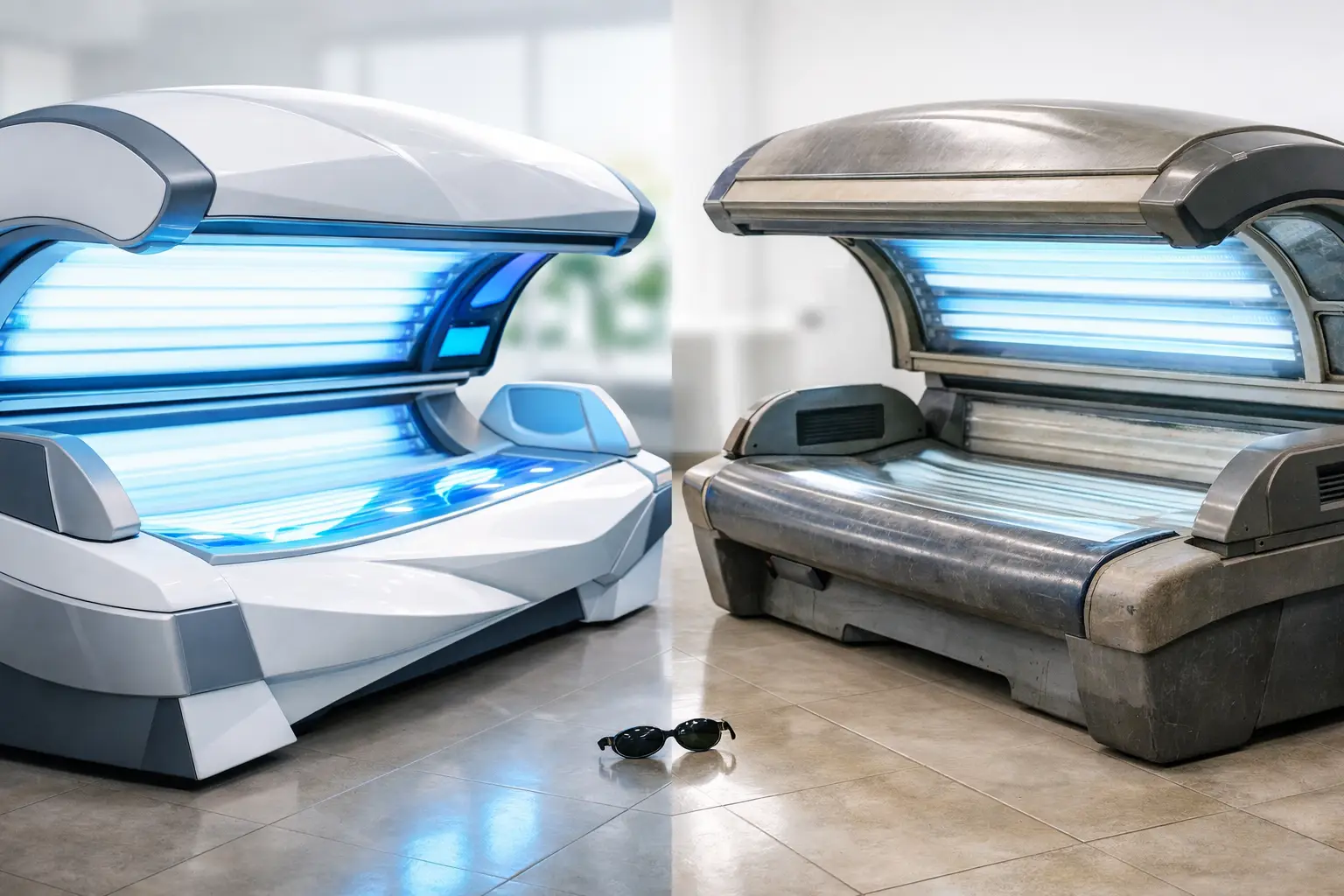
A tanning bed that looks like a bargain can become expensive fast when it creates downtime, needs hard-to-source parts, or fails to deliver the experience clients expect. The choice between new vs used tanning beds is not simply about the purchase price. It is a decision about uptime, operating costs, appearance, technology, serviceability, and the role the equipment will play in your salon, spa, wellness center, or home.
For a commercial operator, the right unit should support revenue and reinforce the quality of your brand. For a residential buyer, it should fit the space, usage habits, and level of convenience you expect from a premium home wellness environment. Both new and used equipment can make sense, but only when the condition, support, and total investment align with the way you plan to use it.
New vs Used Tanning Beds: Start With Total Value
The lowest upfront price is rarely the clearest measure of value. A used tanning bed may cost substantially less than a new model, but its real cost includes remaining lamp life, possible acrylic replacement, electrical requirements, delivery, installation, maintenance history, and the availability of qualified service.
A new unit typically costs more at the outset, yet it provides predictable performance from day one. It also gives buyers access to current design, updated control systems, energy-conscious engineering, factory warranty coverage, and professional support. These advantages can be especially valuable for businesses where a single out-of-service bed means missed appointments and lost revenue.
Used equipment can be a smart capital-saving move when it has been carefully inspected, professionally reconditioned, and priced fairly for its age and condition. The key is to evaluate it as operating equipment, not as a piece of furniture. Cosmetic condition matters, but lamp hours, internal components, cooling performance, electronics, and service records matter more.
Why New Tanning Beds Command a Premium
New tanning beds are designed for buyers who want certainty. Commercial operators launching a new location, upgrading an aging salon floor, or positioning themselves at the premium end of the market often benefit from equipment with a full warranty and a known performance baseline.
Modern systems can also enhance the client experience. Depending on the model, that may include refined ventilation, ergonomic acrylics, digital controls, Bluetooth audio, adjustable facial settings, enhanced lighting design, and a polished exterior that supports a high-end facility aesthetic. These features are not just visual upgrades. They can help a business differentiate its service menu and give clients a more comfortable, memorable visit.
New equipment also makes planning easier. You know the lamp condition, expected maintenance schedule, electrical specifications, and manufacturer support path before installation. That predictability matters when you are building financial projections, training staff, or opening a facility on a deadline.
For home buyers, a new system can deliver similar peace of mind. You are less likely to inherit someone else's maintenance issues, and you can select a size, style, and feature set that fits your home wellness space rather than settling for what happens to be available in the used market.
There is a trade-off: new equipment requires a larger capital commitment. Financing can make that investment more manageable, particularly when the equipment is expected to produce revenue or serve as a long-term home wellness asset. Still, buyers should choose features based on actual goals, not simply because a model has the longest list of options.
When Used Tanning Beds Make Financial Sense
A used tanning bed can be a practical option for an established salon expanding capacity, a startup managing its initial capital, or a homeowner who wants professional-grade equipment at a lower entry point. The best used units are often well-maintained models from reputable manufacturers with documented service histories and parts that remain available.
For commercial use, a used bed may be especially attractive as a secondary unit, a replacement for an older entry-level system, or an addition that allows you to serve more clients during busy hours. It can free up capital for other revenue-generating upgrades such as red light therapy, recovery equipment, body contouring, or improved reception and retail areas.
The risk rises when equipment is purchased solely because it is inexpensive. Older models may have tired lamps, worn acrylics, outdated electronics, ventilation issues, or discontinued components. Even if the bed powers on, it may not perform efficiently or create the professional experience your clients associate with your business.
A used unit can also bring hidden logistics costs. Freight, placement, electrical work, reassembly, replacement lamps, repairs, and sanitation can narrow the gap between a used purchase and a newer, supported model. Before committing, ask for the complete cost to get the equipment installed, operational, and ready for its first session.
Compare Reliability, Technology, and Revenue Potential
For a business, reliability is revenue protection. A premium new tanning bed may carry a higher payment, but it can be easier to market, maintain, and schedule with confidence. Current equipment may also offer a stronger visual presence, which matters when your facility competes on design, service quality, and elevated wellness experiences.
A used unit can still perform well, but its reliability depends on how it was used and maintained. A bed that operated lightly in a private residence may have a very different wear profile than one that ran continuously in a high-volume salon. Age alone does not tell the full story. Usage, maintenance, storage conditions, and prior repairs are more revealing.
Technology also affects perceived value. Clients and homeowners increasingly expect comfort-focused features and clean, modern equipment. If your brand is built around premium rejuvenation and performance enhancement, an outdated unit with faded surfaces and limited controls may work against the atmosphere you are trying to create.
That does not mean every buyer needs the newest flagship model. The better question is whether the equipment supports your positioning. A well-maintained used unit from a respected brand can be more compelling than a low-quality new alternative. Quality, support, and fit should outweigh the appeal of a low price tag.
What to Inspect Before Buying Used Equipment
Never evaluate a used tanning bed based on photos alone. Request clear information about the model, age, prior ownership, usage level, service history, and current operating condition. If possible, have the equipment assessed by a qualified technician before it is moved.
Pay particular attention to these areas:
- Lamp condition and hours: Lamps are a consumable cost. Confirm their age, usage, and replacement requirements rather than assuming they are new or near-new.
- Acrylics and structure: Look for cracks, discoloration, warping, weak hinges, damaged latches, and signs of stress around the canopy or base.
- Electrical components: Fans, ballasts, control boards, timers, wiring, and power connections should be tested for proper operation.
- Cooling and cleanliness: Adequate airflow helps support comfort and equipment longevity. Inspect filters, vents, internal dust buildup, and the overall sanitation condition.
- Parts and service access: Confirm that replacement components and knowledgeable service support are available for that specific make and model.
A professional inspection may add cost, but it can prevent a far larger repair bill after delivery. It also provides a clearer basis for negotiating price when lamps, acrylics, or components need attention.
Commercial Requirements Deserve Extra Attention
Salon and wellness operators should evaluate more than the bed itself. Check local regulations, facility requirements, electrical capacity, ventilation needs, insurance considerations, staff training procedures, and client screening protocols. UV tanning equipment carries health risks associated with ultraviolet exposure, so responsible operation, informed client communication, and compliance with applicable rules are essential.
Think about placement as well. A large tanning system may need specific clearance for delivery, assembly, cleaning access, and customer comfort. Equipment that looks affordable before purchase can become complicated if it cannot be moved into the intended room or requires expensive electrical upgrades.
Also consider your long-term service menu. If you are creating a modern wellness destination, a tanning bed should complement the rest of the client journey. Pairing premium tanning with non-UV options such as red light services, recovery therapies, or infrared experiences can create more reasons for clients to return while broadening your business beyond one category.
The Better Choice Depends on Your Buying Strategy
Choose new when you need dependable uptime, modern features, a polished customer-facing appearance, manufacturer-backed protection, and a predictable ownership experience. It is often the stronger choice for new salon builds, luxury upgrades, high-traffic locations, and homeowners who want a long-term installation with minimal uncertainty.
Choose used when the unit has been vetted thoroughly, the brand and parts support remain strong, and the savings are meaningful after installation and likely maintenance costs. It can be a disciplined investment for buyers who understand the equipment, have access to service, and are willing to prioritize condition over cosmetic appearance.
Sun Spa Wellness can help buyers evaluate equipment around performance, support, financing, and the role it will play in a larger wellness strategy. Whether you choose new or used, buy the system that can perform reliably in your space, reflect the level of experience you want to offer, and remain a smart asset long after the delivery truck leaves.
