A client who leaves a hard training session sore, spends a day on their feet, or simply feels worn down is not looking for another generic spa add-on. They want a clear path to relief, relaxation, and better performance. The right recovery devices give wellness businesses a practical way to meet that demand with premium services that feel modern, results-focused, and worth returning for.
For studio owners, med spas, salons, fitness facilities, and home wellness buyers, recovery equipment is no longer a niche category. It is a strategic investment in a more complete wellness environment. The opportunity is not just to add technology to a room. It is to create experiences that support circulation, muscle recovery, stress management, rejuvenation, and elevated daily routines.
Why Recovery Services Have Strong Staying Power
Recovery has broad appeal because it serves people with different goals. Athletes may want help managing post-workout fatigue. Busy professionals may be looking for a reset between demanding workdays. Older clients may value comfort, mobility support, and relaxation. Beauty-minded clients often respond to the connection between circulation, restorative care, and a healthier-looking appearance.
That range makes recovery equipment especially valuable for businesses building recurring revenue. A client may book a single service after a workout, but a thoughtfully designed recovery menu can also support memberships, packages, and multi-service visits. Compression therapy paired with red light, an infrared sauna session followed by dry floatation, or a cryotherapy visit incorporated into a fitness routine gives clients a reason to build wellness into their schedules.
For residential buyers, the value is convenience. Professional-grade equipment can turn a dedicated home space into a true recovery retreat, reducing the friction of traveling to appointments while making restorative practices easier to maintain.
The Recovery Devices Worth Evaluating
There is no single device that fits every business model. The best equipment mix depends on your clientele, available space, staffing, budget, and the type of outcome you want your facility to be known for. Still, several categories consistently stand out for their ability to strengthen a recovery offering.
Compression Therapy Systems
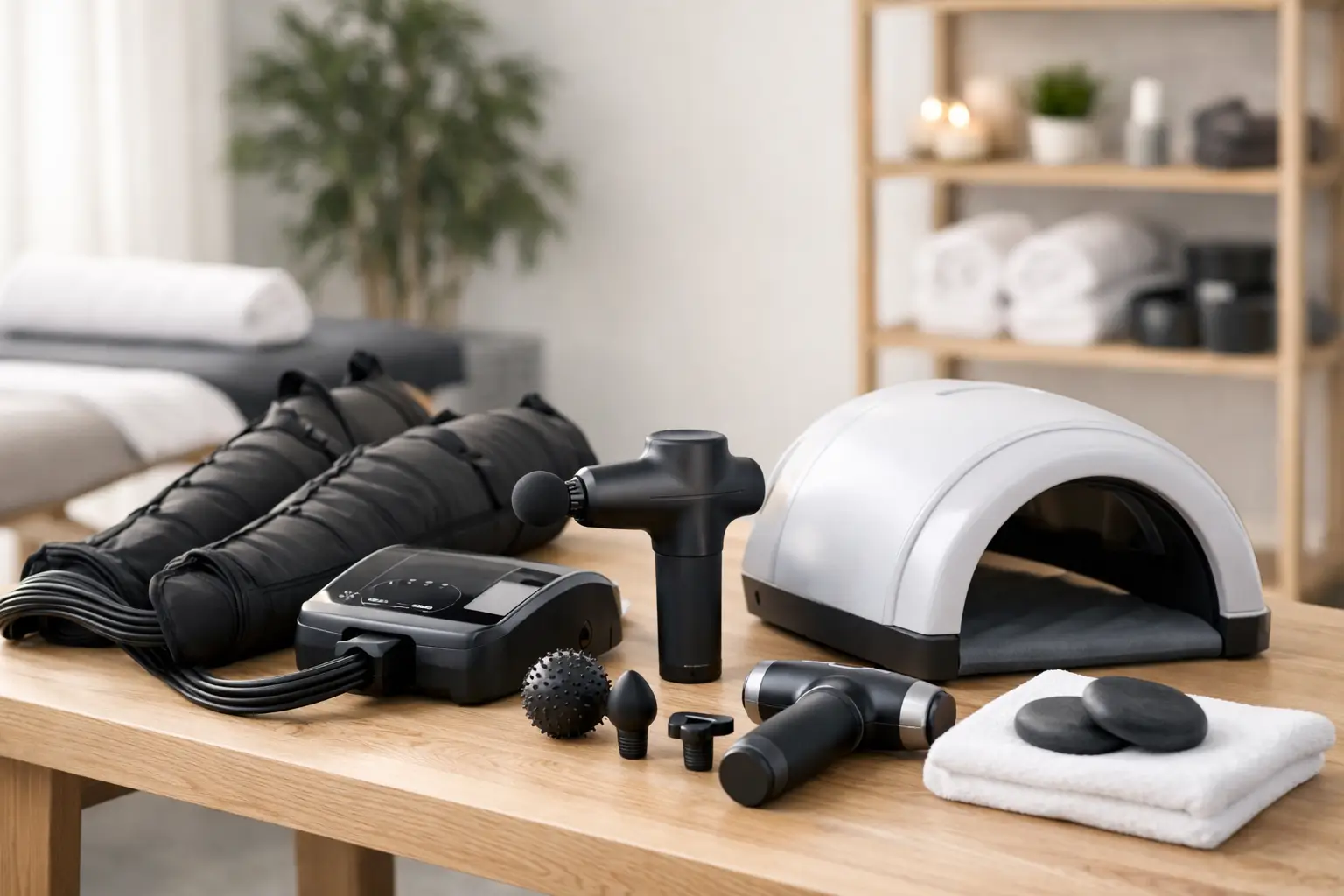
Compression therapy systems use controlled air pressure to create a rhythmic massage effect across the legs, hips, or arms. They are widely used in recovery-focused settings to support circulation, help clients feel less heavy or fatigued, and provide a comfortable, low-effort wellness experience.
From an operating perspective, compression is approachable. Sessions are easy to explain, can fit into a range of treatment durations, and work well as a stand-alone service or an add-on. It is also a strong choice for facilities serving active adults, runners, fitness members, and clients who spend long hours standing or traveling.
Cryotherapy Chambers
Cryotherapy offers a high-impact, performance-oriented experience that can help differentiate a recovery studio or wellness center. Whole-body cold exposure is commonly sought by clients who want a fast, invigorating session as part of a routine focused on exercise recovery, energy, and resilience.
This category carries a higher level of operational consideration. Space planning, ventilation requirements, client screening, staff protocols, and equipment selection all matter. The payoff is a service that has strong visual appeal, clear market positioning, and the potential to become a signature offering for the right facility.
Red Light Therapy Systems
Red light therapy has become a popular category because it can bridge recovery, rejuvenation, and beauty. Clients are drawn to sessions that support skin appearance while also fitting naturally into a wellness routine focused on relaxation and physical restoration.
For operators, all-LED systems can be particularly attractive because they offer a clean, modern visual presentation and a simple user experience. Red light is often a smart fit for salons, med spas, gyms, and home wellness rooms where buyers want a versatile modality rather than a single-purpose treatment.
Infrared Saunas and Dry Floatation
Infrared saunas create a warm, restorative environment that many clients associate with relaxation, sweating, and post-exercise recovery. They can become a cornerstone of a broader detox and wellness menu, especially when paired with recovery services that address physical tension and stress.
Dry floatation brings a different kind of value. It creates a deeply calming experience without requiring clients to enter a traditional water tank. For spas and wellness centers that want to emphasize stress relief, rest, and sensory escape, it can add a premium dimension that feels distinct from a standard treatment room.
PEMF and Hyperbaric Equipment
PEMF devices and hyperbaric chambers appeal to buyers building advanced wellness environments. These categories can support a more technology-forward recovery identity and may be especially relevant for high-end recovery studios, integrative wellness facilities, and private home installations.
They also demand careful consideration. The purchase decision should account for client education, intended use, compliance requirements, room configuration, and the level of operational support available after installation. Premium technology should feel dependable in practice, not just impressive during a sales presentation.
Choose Equipment Around the Client Journey
A common mistake is selecting equipment based only on what is trending. A better approach is to map the experience your client should have from arrival to departure.
A performance-focused gym may build a fast recovery circuit around cryotherapy, compression, and red light. A luxury spa may prioritize infrared sauna, dry floatation, and gentle compression to create a slower, restorative experience. A med spa may use red light and body contouring technologies to connect recovery with aesthetic goals. A home buyer may choose an infrared sauna or red light system that delivers professional-level comfort without requiring a large footprint.
Think about what happens before and after the session as well. Is there a comfortable consultation area? Can clients easily understand the benefit of each service? Does your team know how to recommend a session based on a client’s stated wellness goals without making medical claims? A polished client journey increases perceived value and encourages repeat bookings.
Evaluate the Business Case, Not Just the Device
Premium equipment should be assessed as a business asset. Purchase price matters, but it is only one part of the equation. Consider the expected session price, realistic utilization rate, maintenance needs, warranty coverage, training, utility requirements, and whether the device can support packages or memberships.
A lower-cost device is not always the better investment if it lacks the reliability, appearance, or support your business needs. Conversely, the most advanced system may not be the right first purchase if your staff has limited capacity to educate clients or your market is not ready for a premium price point.
Financing can help operators acquire the right equipment without putting excessive pressure on working capital. Service, maintenance, and access to experienced equipment guidance also matter over the life of the investment. A recovery room cannot generate revenue when a key system is offline.
Safety, Expectations, and Professional Positioning
Recovery equipment should be presented as wellness support, not a substitute for medical diagnosis or treatment. Clear client intake practices and manufacturer operating guidelines are essential. Certain clients may need clearance from a qualified healthcare professional before using specific modalities, particularly those involving cold exposure, heat, pressure, or hyperbaric environments.
The strongest marketing is specific without overpromising. Rather than claiming to cure pain or treat a condition, focus on the experience and commonly sought benefits: relaxation, temporary muscle comfort, circulation support, post-workout recovery, skin rejuvenation, and stress relief. This approach protects your business while building trust with clients.
Build a Recovery Menu Clients Can Understand
Complexity can slow down sales. Your service menu should make it easy for clients to choose an experience based on how they feel and what they want from the visit. A “Post-Workout Reset,” “Relax and Recharge,” or “Performance Recovery” package communicates more clearly than a list of technical device names.
Staff education is central here. Your team does not need to turn every interaction into a technical lecture, but they should be able to explain what the session feels like, who it is designed for, how long it takes, and what clients can reasonably expect. When recommendations are confident and clear, high-end equipment becomes more approachable.
For businesses ready to expand, Sun Spa Wellness can help align premium recovery technology with your available space, service model, and long-term growth plans. The right equipment should do more than fill a treatment room. It should give clients a reason to make recovery part of their routine.
