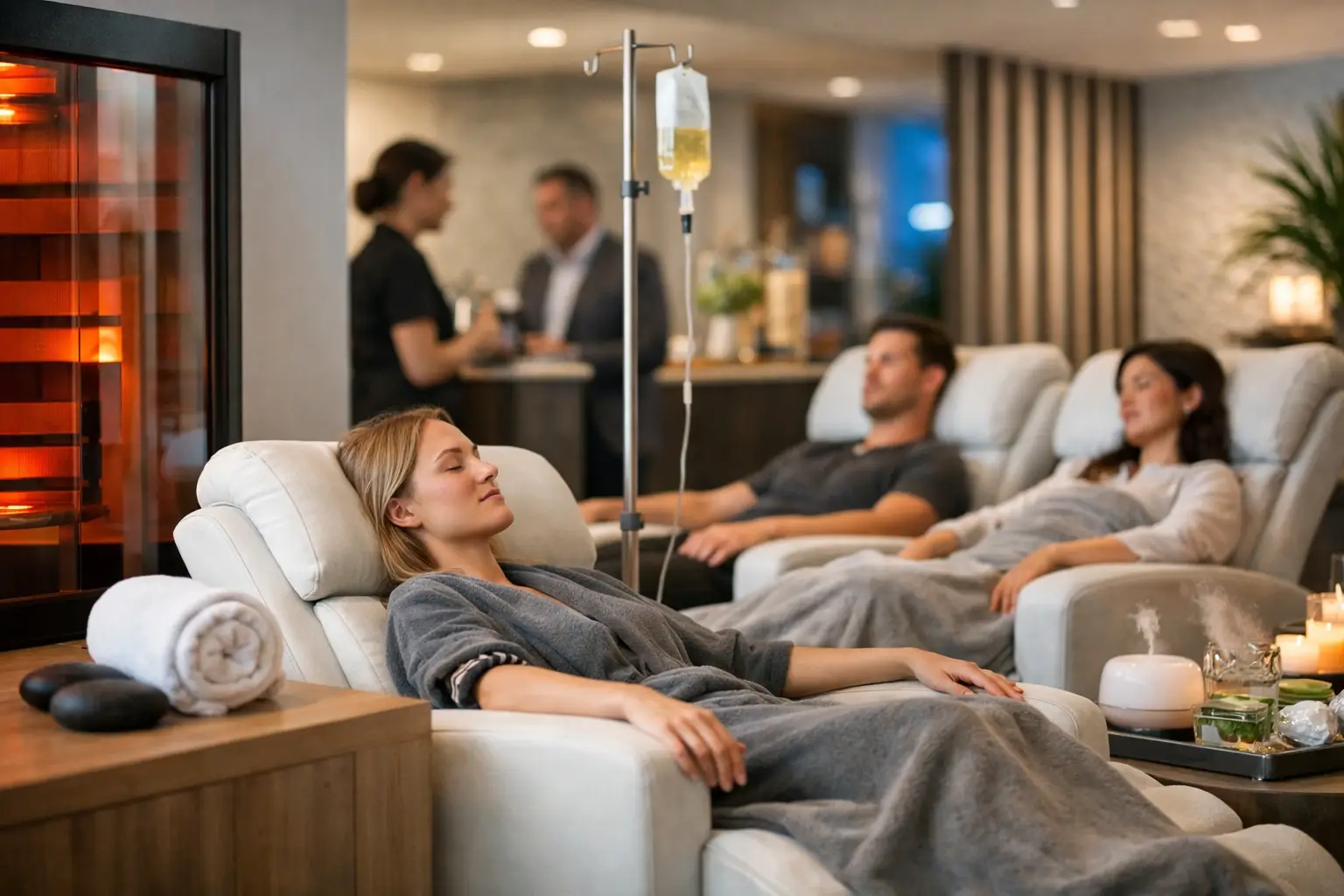
A recovery lounge can look exceptional and still underperform if the guest journey, equipment mix, and revenue model were not planned together. Effective recovery lounge planning turns premium wellness technology into an experience clients understand, return for, and recommend. For operators, that means designing more than a beautiful room. It means building a high-functioning service environment that supports recovery, rejuvenation, relaxation, and measurable business growth.
Start With the Experience You Intend to Sell
Before selecting equipment, define what clients should feel they are buying. A performance-focused recovery studio may center its offer on muscle relief, circulation support, and post-training restoration. A med spa may position recovery services as an elevated add-on to body contouring, skin enhancement, or anti-aging programs. A luxury residential lounge may prioritize privacy, convenience, and daily wellness rituals.
The distinction matters because equipment should support a clear promise rather than create a catalog of unrelated services. A client who books a 30-minute athletic recovery session expects a different environment than someone seeking quiet detox and relaxation. Both can be profitable, but their layouts, protocols, staffing needs, and marketing messages should be different.
Start by identifying the primary client: athletes, busy professionals, beauty and med spa guests, aging-well consumers, or high-end homeowners. Then decide whether your lounge will sell individual sessions, memberships, packages, or a combination. The best model depends on local demand, your existing client base, and how frequently clients can realistically use each modality.
Recovery Lounge Planning Begins With a Smart Equipment Mix
A premium recovery lounge does not need every available device on day one. It needs complementary technologies that create a compelling session, fit the available square footage, and provide multiple paths to revenue.
Compression therapy is often a strong entry point because it is approachable, efficient, and easy to package with fitness recovery, lymphatic support, or relaxation services. Red light therapy can add a technology-forward option for clients interested in skin appearance, wellness support, and recovery. Infrared sauna systems create an immersive detox and relaxation experience, while dry floatation can become a high-value signature service in a quieter, more spa-oriented concept.
Cryotherapy, PEMF, hyperbaric systems, halotherapy, and advanced body shaping equipment can further differentiate a location, but they require more deliberate planning. Their ideal role depends on your staff training, local market, operational capacity, and the level of clinical oversight required for the services you intend to provide. Do not present wellness equipment as a substitute for medical diagnosis or treatment. Clear client screening, informed consent, and appropriate operating protocols protect both the guest experience and the business.
A balanced opening lineup often includes one anchor experience, one fast-turn service, and one add-on modality. For example, an infrared sauna or dry float room can anchor a premium appointment, compression can serve clients in shorter sessions, and red light therapy can increase the value of a package. This structure gives guests choices without forcing staff to explain too many disconnected offerings.
Build Sessions, Not Just Service Menus
Clients may understand a massage or sauna immediately, but advanced recovery technologies can require more context. Sessions make the value easier to grasp. Instead of selling separate appointments with technical names, offer a focused concept such as a post-workout reset, travel recovery session, detox ritual, or performance recharge.
The session should have a logical sequence. A client might begin with compression, move into infrared heat, and finish with red light therapy. Another may use a dry float session as a stand-alone restorative experience. Keep transitions simple and avoid stacking modalities merely because they are available. The best combinations feel intentional, comfortable, and easy to repeat.
Design the Floor Plan Around Flow and Privacy
The floor plan determines whether a recovery lounge feels premium or improvised. Begin with the path from entry to check-in, consultation, treatment, cleanup, and exit. Clients should never feel exposed while changing, waiting, or moving between services. Staff should be able to reset rooms, sanitize equipment, and monitor the environment without disrupting appointments.
Place quieter, longer-duration services such as dry floatation, halotherapy, and infrared sauna away from louder reception areas and high-traffic corridors. Compression chairs may work well in a semi-private recovery zone, especially when the concept encourages social, quick-turn visits. Cryotherapy and other specialized systems should have sufficient clearance, ventilation, safety procedures, and access for service technicians.
Space planning must also account for the realities that are easy to overlook during initial design: electrical requirements, dedicated circuits, ventilation, drainage where applicable, ceiling height, door widths, flooring, ADA considerations, and delivery access. Equipment that fits on a showroom floor may be difficult to move through a narrow hallway or install in an upper-level suite.
A supplier that understands professional wellness equipment can help evaluate these requirements before a purchase is finalized. Sun Spa Wellness supports operators with premium equipment options as well as financing, service, maintenance, and acquisition guidance, helping reduce costly surprises after the build-out begins.
Make Staffing and Operations Part of the Investment
Advanced equipment should reduce friction, not create a staffing burden that limits profitability. Consider how each modality will be checked in, prepared, monitored, cleaned, and reset between clients. A room that generates strong revenue but takes 20 minutes to reset can create scheduling bottlenecks. Conversely, a quick service with minimal hands-on staff time can strengthen membership value and keep utilization high.
Create a written operating playbook before opening. It should cover client intake, contraindication screening, equipment settings permitted by your protocols, sanitation steps, incident response, room turnover, and escalation procedures. Staff should know how to describe benefits in confident, accurate language without making unsupported claims.
Training also affects conversion. A front-desk team that can explain why a client may pair compression with a sauna session is more likely to guide guests into packages and return visits. They do not need to sound overly clinical. They need to communicate clear, practical outcomes such as relaxation after travel, recovery support after training, or a more complete self-care appointment.
Price for Repeat Use, Not One-Time Curiosity
Recovery lounges earn loyalty when clients build the services into their routine. Introductory offers are useful, but the long-term model should encourage repeat visits without discounting the brand into a commodity.
Individual appointments are essential for first-time guests and premium signature experiences. Memberships work especially well for accessible, repeatable modalities such as compression, red light therapy, sauna, or halotherapy. Multi-service packages can increase average ticket value when the pairing is meaningful and easy to schedule.
Watch utilization closely during the first 90 days. If prime-time appointments fill quickly while mid-day rooms sit empty, use targeted membership access, off-peak packages, or corporate wellness offers to improve the schedule. If clients repeatedly book one modality and ignore another, revisit the offer, the staff explanation, or the equipment placement. Sometimes the issue is not demand. It is visibility or a confusing menu.
Plan for Reliability After the Grand Opening
High-ticket wellness equipment is a long-term operating asset, not a one-time design purchase. Service access, preventive maintenance, warranty support, replacement parts, and technician availability should be part of the buying decision. A beautiful lounge loses revenue quickly when a core system is down for days or weeks.
Ask practical questions before committing: Who installs the equipment? What does routine maintenance require? How quickly can service be scheduled? What training is included? Is financing available? Can the equipment be upgraded, traded in, or supported as your concept expands? These details may not be as exciting as selecting finishes, but they directly affect uptime and client confidence.
The strongest recovery lounges give clients a reason to return before they leave the first appointment. Build each room, protocol, and package around that next visit, and your space will feel less like a collection of devices and more like a destination for ongoing performance and rejuvenation.
