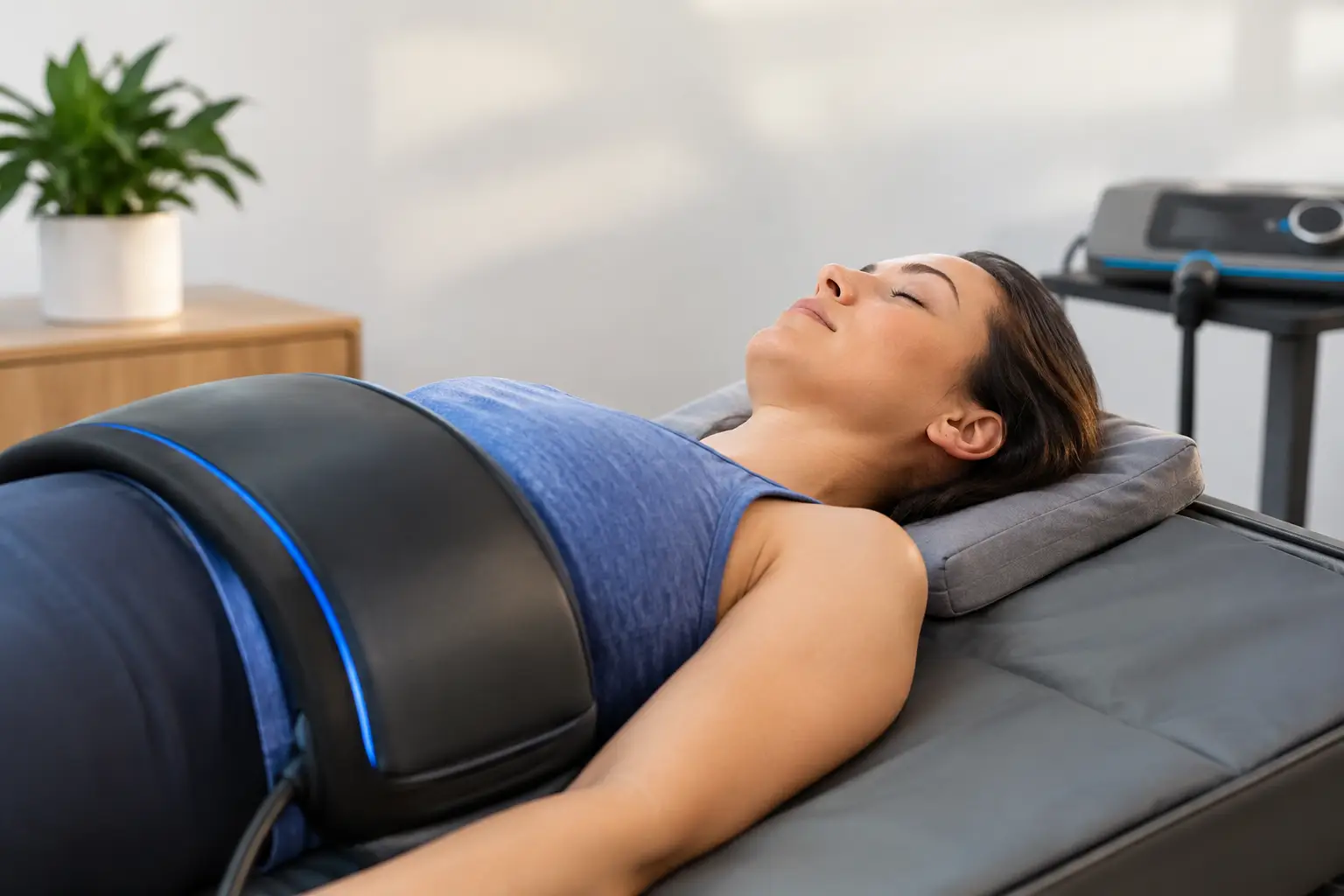
A recovery studio client finishes a demanding workout, a busy salon customer wants a quiet reset between appointments, and a homeowner wants an easier way to prioritize daily wellness. In each case, the question is the same: what does PEMF therapy do? Pulsed electromagnetic field therapy uses carefully controlled electromagnetic pulses to support the body's natural recovery processes, promote relaxation, and create a restorative wellness experience without invasive treatment or downtime.
For wellness businesses, PEMF can also be more than another device on the floor. It can become a differentiated, low-labor service that complements red light therapy, compression, infrared heat, dry floatation, and other recovery-focused offerings. The strongest results come from positioning it accurately: as a supportive wellness modality, not a replacement for medical evaluation or treatment.
What Does PEMF Therapy Do in the Body?
PEMF stands for pulsed electromagnetic field. A PEMF system produces electromagnetic pulses that pass through the body while the user rests on a mat, pad, lounger, or other applicator. These pulses are designed to interact with electrically active cells and tissues.
The body already relies on electrical activity. Nerves transmit signals electrically, muscles contract through electrical impulses, and cells use ion movement across their membranes as part of normal function. PEMF therapy aims to influence this environment with external, low-frequency electromagnetic fields. Depending on the device and its settings, users may feel nothing at all, or they may notice a gentle pulsing sensation.
The practical goal is typically to support relaxation, temporary relief of minor aches and discomfort, circulation, mobility, and post-exercise recovery. Experiences vary by individual. A professional athlete managing training fatigue may use PEMF differently than a client looking for stress relief or a homeowner building a personal recovery routine.
PEMF is often discussed in connection with cellular energy and circulation. While these mechanisms are an active area of interest, wellness operators should avoid promising that a session will cure injuries, repair disease, or deliver guaranteed medical outcomes. The quality of the equipment, the program selected, the client’s health status, and consistency of use all matter.
Common Reasons Clients Use PEMF Therapy
Most clients are not looking for a lecture on electromagnetic fields. They want to know how a session may fit into how they feel, move, rest, and recover. In a premium wellness setting, PEMF therapy is commonly positioned around several practical benefits.
Recovery support after activity
Fitness clients and active adults often choose PEMF after strength training, running, sports, or physically demanding work. A relaxing session can support a recovery routine by encouraging downtime, easing the sense of muscular tightness, and helping clients transition out of a high-stress training state.
It works especially well as part of a recovery circuit. Compression may be used for a targeted lower-body session, while PEMF offers a full-body rest period. Pairing it with red light or infrared services can create a premium package built around performance enhancement and rejuvenation, rather than a single standalone appointment.
Relaxation and stress management
A PEMF session gives clients permission to stop moving. That alone has real value in a service environment built around constant demands, screens, travel, training, and long workdays. Many users describe the experience as calming, particularly when it is delivered in a quiet, comfortable room with thoughtful lighting and supportive positioning.
For spas and salons, this makes PEMF a versatile addition to relaxation-focused service menus. It can serve clients who may not want heat-based services or who are looking for a restorative option that fits comfortably into a 20- to 40-minute visit.
Comfort, mobility, and everyday wellness
Some users turn to PEMF to support temporary relief from everyday stiffness and minor discomfort associated with activity or normal aging. Others use it before exercise as part of a mobility routine or after travel when they feel sluggish and tense.
That does not mean every person will respond the same way. Some clients report noticeable benefits after a session, while others find value only after repeated sessions integrated into a broader wellness plan. Setting that expectation protects credibility and helps clients evaluate their experience realistically.
What a PEMF Session Feels Like
A typical PEMF session is straightforward. The client lies down or sits comfortably while the system runs a selected program for a designated period. There are no needles, no recovery window, and generally no need to change clothing unless the facility’s setup calls for it.
The sensation depends on the system. Some machines create a subtle rhythmic feeling, while others are barely perceptible. The more visible outcome is often the setting itself: a dedicated space that feels private, restorative, and intentional.
For commercial operators, that experience matters. Premium equipment should not be treated as an afterthought in an unused corner. A well-designed PEMF area can elevate perceived value through comfortable furnishings, clear service protocols, sanitation procedures, and staff who can explain what clients can reasonably expect.
How PEMF Therapy Fits Into a Wellness Business
PEMF is particularly valuable because it can expand a service menu without requiring a hands-on provider for the entire appointment. Once a trained team member completes intake, explains the session, and selects the appropriate program within the device’s intended use, the client can relax independently. This can help operators create efficient revenue opportunities while preserving a high-touch client experience.
It also gives businesses a compelling entry point for memberships and packages. A client who comes in for a recovery session may be interested in combining PEMF with compression, red light therapy, cryotherapy, or infrared sauna use. The best combinations depend on the client’s goals, available space, appointment flow, and the capabilities of each system.
There is a trade-off, however. PEMF is not usually a dramatic, instantly visual treatment in the way a body contouring service may be. Its value is more experiential and routine-based. Operators should market it around comfort, recovery support, relaxation, and consistent wellness habits rather than exaggerated before-and-after promises.
For residential buyers, professional-grade PEMF equipment offers a different advantage: convenience. A home wellness room can make recovery more accessible after exercise, long workdays, or travel. The right system should fit the available space, intended frequency of use, electrical requirements, and desired experience, whether that means a compact mat or a more substantial lounger-style setup.
Choosing a PEMF System That Supports Your Goals
Not all PEMF devices are built for the same environment. Buyers should consider pulse settings, intensity range, applicator size, session programming, user controls, warranty coverage, and service support. Commercial settings also need to account for durability, client turnover, cleaning protocols, and the visual design of the equipment.
A device that is simple enough for staff to operate consistently can be more valuable than one with complicated settings that are rarely used. At the same time, premium operators may want greater programming flexibility to tailor sessions around relaxation, recovery, or targeted wellness goals.
Sun Spa Wellness works with buyers who are building recovery rooms, expanding spa menus, and designing elevated home wellness spaces. The right PEMF investment should support the broader business model, not simply add another technology category. Consider where the system will sit in the client journey, how sessions will be priced, and which complementary services will make the experience more compelling.
Safety Considerations and Appropriate Expectations
PEMF therapy is noninvasive, but that does not mean it is appropriate for every person. Clients with implanted electronic devices, including pacemakers, should seek medical guidance before use. Pregnancy, active medical conditions, recent procedures, medications, and other individual factors can also affect whether PEMF is suitable.
A clear intake process is essential for commercial operators. Staff should follow the manufacturer’s instructions, screen clients appropriately, and refer people to a qualified healthcare professional when there is any uncertainty. Claims should also match the device’s regulatory status and intended use. FDA clearance for a specific indication is not the same thing as broad FDA approval for every wellness claim.
The strongest PEMF programs combine premium equipment with responsible communication. Tell clients what the session is designed to support, explain that results differ, and make comfort and safety the priority. That approach builds trust far more effectively than promising a cure.
A well-positioned PEMF service gives clients something increasingly rare: protected time to rest, recover, and return to their day feeling more supported. For operators and homeowners alike, that can make it a meaningful part of a modern wellness environment.
