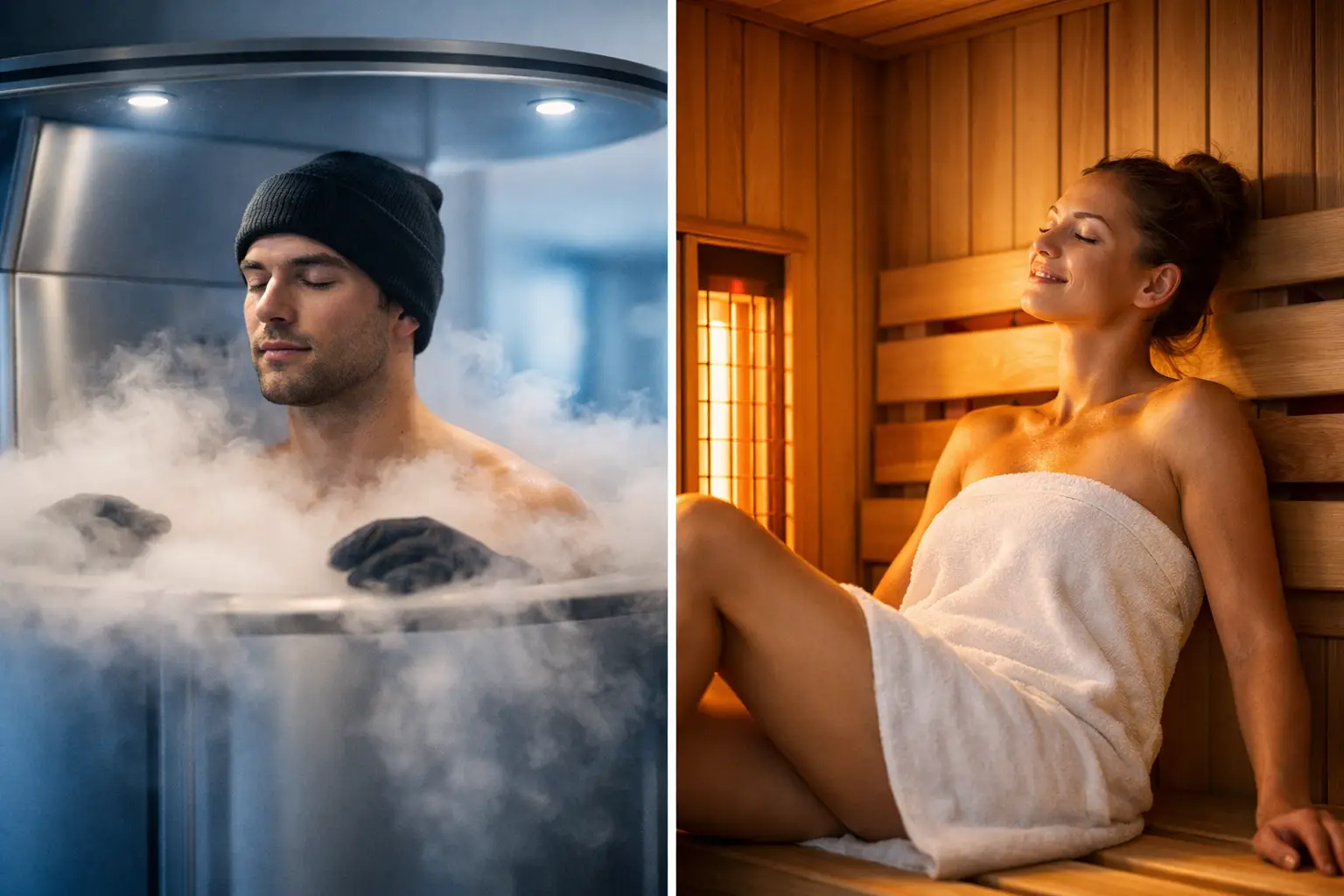
A client walks in asking for faster recovery, less inflammation, better sleep, and a treatment that feels worth talking about. That is where the cryotherapy vs infrared sauna decision gets practical. Both are premium wellness modalities with real demand, but they create very different experiences, fit different business models, and serve different goals.
If you are building a recovery studio, expanding a med spa menu, or upgrading a home wellness space, this is not a small choice. Cryotherapy and infrared sauna both sit in the performance and rejuvenation category, yet one uses extreme cold for a short, high-impact session while the other uses penetrating heat for a longer, more restorative treatment. The best option depends on who will use it, what outcomes matter most, and how you want the equipment to perform day after day.
Cryotherapy vs Infrared Sauna: The Core Difference
Cryotherapy is built around cold exposure. In a whole-body system, users step into a chamber for a brief session, typically just a few minutes, while their skin is exposed to very low temperatures. The appeal is speed and intensity. People often choose cryotherapy for post-workout recovery, temporary pain reduction, inflammation management, and the energized feeling that can follow cold exposure.
Infrared sauna works in the opposite direction. Instead of heating the air around the body the way a traditional sauna does, infrared technology uses light waves to warm the body more directly. Sessions usually last much longer than cryotherapy, often 20 to 45 minutes. The experience is quieter, more meditative, and often associated with relaxation, circulation support, sweating, muscle relief, and general wellness routines.
That difference matters commercially. Cryotherapy tends to feel performance-driven and cutting edge. Infrared sauna feels restorative, premium, and broadly approachable. One is a quick-service recovery tool. The other is often a destination treatment.
What Results Are People Usually Looking For?
The overlap between these modalities is real. Both can support recovery and help users feel better after training, stress, or physical tension. Both also carry strong lifestyle appeal, which matters when you are offering services people want to repeat and recommend.
The distinction is in the type of result people expect.
Cryotherapy is often chosen by athletes, fitness clients, and high-performance users who want fast turnaround. If someone is focused on reducing soreness after intense training, managing inflammation, or adding a high-impact recovery service to a tight schedule, cryotherapy has a strong fit. The short session length is part of the value. It feels efficient.
Infrared sauna tends to attract a wider audience. It can appeal to fitness users, but it also resonates with clients who want stress relief, warmth, relaxation, detox support through sweating, and a calmer recovery experience. For residential buyers, that broader lifestyle value often makes infrared sauna easier to integrate into a regular weekly routine.
This is where operators need to think carefully. If your clientele is heavily performance-focused, cryotherapy may be the stronger lead service. If your audience includes wellness seekers, beauty-conscious clients, busy professionals, or homeowners building a complete self-care space, infrared sauna may have broader day-to-day usage.
The User Experience Matters More Than It Seems
Equipment decisions are not only about outcomes. They are also about compliance, comfort, and repeat use.
Cryotherapy is memorable. It has a strong wow factor, and that can be a major asset for studios trying to stand out. It photographs well, creates conversation, and feels modern. For some clients, that novelty drives repeat visits. For others, the cold can be intimidating, even if the session is brief.
Infrared sauna has a different kind of appeal. It is easier for many users to enjoy immediately because warmth tends to feel familiar and comforting. Clients can sit, decompress, and associate the session with a premium wellness ritual. That often leads to longer appointments and a more luxurious perception of value.
For business owners, this can affect retention. A modality that users love in theory but avoid in practice can become harder to monetize. A modality that fits naturally into someone’s routine may generate more consistent usage, even if it feels less dramatic on day one.
Cryotherapy vs Infrared Sauna for Business Models
For commercial operators, the cryotherapy vs infrared sauna comparison should include throughput, staffing, floor space, and service positioning.
Cryotherapy has an advantage in session speed. Because appointments are short, it can support higher client turnover in the right environment. That can work well in recovery studios, sports performance facilities, and wellness businesses that want express services clients can stack with compression, red light, or body contouring.
Infrared sauna usually requires longer session windows, so throughput is lower. But lower turnover does not automatically mean lower value. Sauna sessions can command premium pricing because they deliver private, extended relaxation time. They also fit naturally into membership models, spa packages, and higher-end residential installations where the equipment is part of a complete wellness lifestyle rather than a single quick treatment.
There is also a branding angle. Cryotherapy often signals advanced recovery and innovation. Infrared sauna signals luxury, restoration, and wellness consistency. Neither is inherently better. The stronger choice is the one that aligns with the customer base you want to attract and the experience your brand promises.
Space, Installation, and Operational Reality
The best equipment purchase is not the one that looks best on paper. It is the one that fits your space, workflow, and maintenance expectations.
Cryotherapy systems can be highly attractive for businesses that want a standout modality with efficient session times, but they come with operational considerations. Training, safety protocols, and day-to-day management are part of the equation. For serious operators, that is not a drawback as much as a reminder that premium equipment should come with proper support.
Infrared saunas are often easier for clients to understand and easier for some operators to integrate into a broader wellness floor. They fit comfortably in both commercial and residential settings, and they tend to complement other relaxation and recovery services well. The user journey is straightforward, which can reduce friction during onboarding.
Home buyers should weigh this just as carefully as commercial owners. If you want a treatment you can use often without much preparation, infrared sauna may feel more natural. If you are specifically pursuing athletic recovery, fast sessions, and a more performance-driven setup, cryotherapy may be worth the stronger learning curve.
Which One Has Broader Audience Appeal?
If the goal is mass appeal, infrared sauna usually reaches a wider audience. Heat-based wellness feels familiar, and the benefits are easy to communicate. Relaxation, sweating, muscle relief, and a spa-like experience translate well across age groups and client profiles.
Cryotherapy often has sharper positioning. It can be a powerful differentiator, especially in markets where recovery services are growing and clients actively seek advanced technologies. But it may require more education at the point of sale. Some people are immediately interested. Others need reassurance about comfort, safety, and expected outcomes.
That does not make cryotherapy niche in a negative sense. In the right market, niche can be profitable. A recovery studio near gyms, sports training centers, or high-income wellness consumers may benefit from exactly that kind of edge.
Should You Choose One or Offer Both?
For some operators, the best answer is not either-or. Cryotherapy and infrared sauna can complement each other well because they serve different moods, different recovery styles, and different customer motivations. One is brisk and energizing. The other is grounding and restorative.
If budget and space allow, offering both can strengthen a menu by giving clients options. It also helps protect revenue across seasons and user preferences. Some clients will always choose heat. Others will always choose cold. Many will try both when they trust the equipment and understand the value.
This is where working with an experienced equipment partner matters. A business investing in premium wellness technology needs more than a product spec sheet. It needs guidance on fit, use case, service support, and long-term performance. That is especially true when you are balancing client demand, design expectations, and return on investment.
How to Make the Right Call
Choose cryotherapy if your priority is fast recovery sessions, high visual impact, performance positioning, and a treatment that supports quick client turnover. It makes particular sense for recovery-focused concepts, athletic environments, and operators who want advanced technology to act as a clear market differentiator.
Choose infrared sauna if your priority is broad wellness appeal, longer relaxation-based sessions, premium lifestyle positioning, and a modality that feels equally strong in a spa setting or luxury home installation. It is often the easier fit for users seeking consistency, comfort, and a more versatile self-care ritual.
If you are still weighing the decision, focus less on trend appeal and more on user behavior. The right equipment is the one your clients will book repeatedly, your team can support confidently, and your space can present at a premium level. When the experience matches the audience, both cryotherapy and infrared sauna can be powerful assets. The smart move is choosing the one that fits your business model or home wellness goals as clearly as it fits the room.
