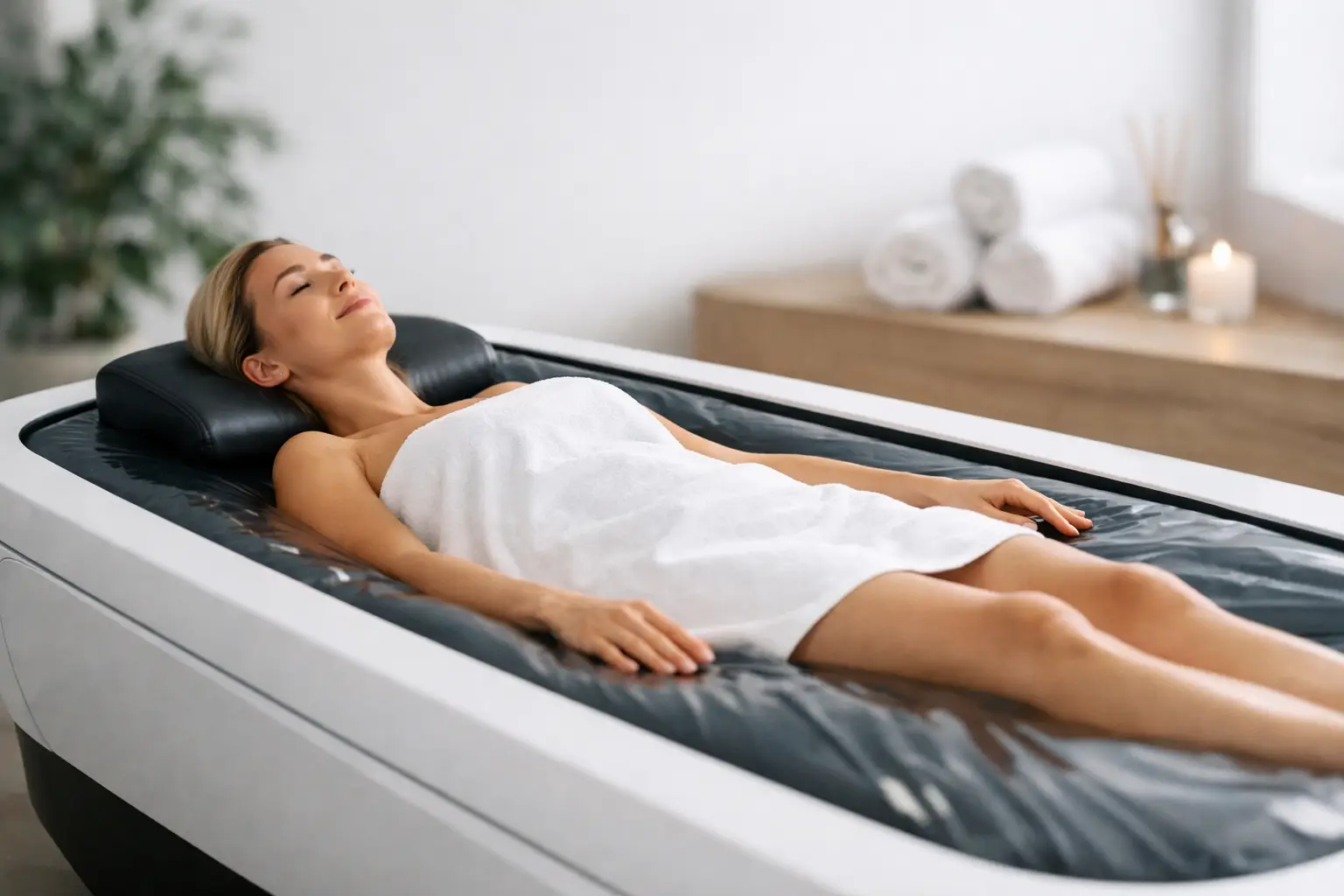
A premium wellness menu needs services people can feel in one session and want to book again. That is exactly why interest in dry floatation bed benefits keeps growing among spa owners, recovery studios, and homeowners building serious wellness spaces. It delivers deep relaxation without the mess, setup, or skin contact of a traditional float tank, which makes it easier to offer and easier to use.
What makes dry floatation different
A dry floatation bed creates a near-weightless experience while the user remains fully dry. Instead of entering a tank of water, the body rests on a waterproof membrane with warm water moving underneath. That design matters because it removes one of the biggest barriers to float therapy - not everyone wants the enclosed, wet, high-maintenance experience of a traditional pod.
For commercial operators, this translates into broader appeal. Clients who are curious about floating but hesitant about salt water, showering, or sensory deprivation often find dry floatation more approachable. For residential buyers, it means professional-grade relaxation and recovery without dedicating an entire room to a full float tank environment.
The core dry floatation bed benefits users actually notice
The strongest benefit is fast, full-body relaxation. When the body is supported evenly and pressure points are reduced, users often feel muscular tension begin to ease within minutes. That can create a powerful reset for clients dealing with stress, overstimulation, physical fatigue, or poor recovery habits.
Another of the most sought-after dry floatation bed benefits is the sense of physical decompression. Because the body is cradled in a way that reduces loading on joints and soft tissue, the session can feel restorative after workouts, long workdays, travel, or repetitive physical strain. It is not a replacement for medical care or physical therapy, but it can complement a broader recovery routine.
Sleep support is another reason these beds attract repeat users. Many people leave a session feeling calmer, quieter, and less wired. That shift can be valuable in both spa and home settings, especially for people whose nervous systems rarely seem to power down.
There is also a strong mental wellness angle. Dry floatation creates a short window where external demands drop away. In a commercial setting, that can position the bed as more than a relaxation add-on. It becomes a premium recovery experience tied to stress management, mood support, and overall wellness optimization.
Recovery benefits for performance-focused clients
For fitness studios, athletic recovery businesses, and wellness centers, dry floatation can fit naturally into a performance-driven service mix. Clients who train hard are not only looking for intensity. They are also looking for tools that help them recover well enough to train again.
By encouraging muscular relaxation and reducing the sensation of body weight pressing into contact points, a dry floatation session can feel especially helpful after demanding workouts. Many users describe less stiffness, a lighter body feel, and a smoother transition out of post-training fatigue. That makes the bed appealing alongside compression therapy, infrared sauna, PEMF, cryotherapy, or red light systems.
The trade-off is that results are often more subtle than high-impact modalities. Cryotherapy feels dramatic. Compression feels active. Dry floatation is quieter. For some businesses, that is the advantage. It gives clients a recovery option centered on nervous system downshifting rather than stimulation.
Why spas and salons like the business case
The business value goes beyond the treatment itself. Dry floatation is easy to explain, easy to market, and easy for first-time clients to try. Those three factors matter more than many operators realize. A service can be excellent on paper and still underperform if it feels complicated or intimidating.
Dry floatation beds generally require less client preparation than wet float experiences. That can support smoother scheduling, less room turnover complexity, and a more polished guest flow. In busy commercial environments, operational efficiency matters almost as much as treatment appeal.
There is also strong menu flexibility. A dry floatation session can stand alone as a premium relaxation service, but it also works well in packages. Operators can pair it with massage, halotherapy, red light therapy, infrared sauna, or body contouring depending on the business model. That kind of bundling can increase ticket value while creating a more complete wellness experience.
From a design standpoint, dry floatation equipment often fits the modern, high-end look buyers want. That matters in competitive markets where aesthetics support perceived value. Clients respond to equipment that looks advanced, clean, and intentional.
Dry floatation bed benefits for home wellness buyers
Residential demand is rising for a simple reason: affluent wellness consumers want professional-grade recovery at home, not just basic self-care products. A dry floatation bed fits that shift well because it offers a premium, spa-level experience without the complexity of water handling associated with traditional float tanks.
For homeowners, convenience may be the biggest advantage. You can use the system without changing your entire routine, and that lowers the friction that often gets in the way of regular wellness habits. The easier a modality is to access, the more likely it is to become part of weekly life.
Privacy is another factor. Some users relax more deeply at home than they do in a commercial setting. Others want a dedicated recovery option after training, travel, or high-stress workdays without leaving the house. In those cases, the value of a dry floatation bed is not just comfort. It is consistency.
Still, the right fit depends on space, budget, and goals. Buyers building a full home wellness suite may see strong value. Someone looking for a single all-purpose recovery system may need to compare it against infrared saunas, massage chairs, or compression systems based on how they plan to use it.
Who benefits most from dry floatation
The best candidates are usually people seeking relaxation, stress relief, recovery support, and a more restorative wellness routine. That includes spa clients who want a premium escape, athletes and active adults managing fatigue, busy professionals trying to reduce physical and mental tension, and homeowners creating dedicated recovery spaces.
It is also a smart option for clients who are uncomfortable with enclosed wet float tanks. Dry floatation removes that barrier while keeping the core appeal of weightless support and warm, calming immersion-like sensation.
That said, expectations matter. If a client is looking for an intense detox sweat, visible body sculpting change, or aggressive therapeutic intervention, dry floatation may not be the lead service. It performs best when positioned honestly - as a high-value relaxation and recovery experience with broad appeal.
How to position dry floatation in a premium wellness menu
The strongest positioning is usually not as a novelty. It should be presented as a practical, high-end service that supports recovery, rejuvenation, and stress reduction. That language lands well with both wellness consumers and commercial operators because it connects the experience to outcomes people already value.
For spas, it can elevate the relaxation category. For recovery studios, it adds a lower-intensity service that balances more aggressive modalities. For med spa or salon operators expanding into wellness, it offers a modern entry point that feels credible and differentiated. For home buyers, it signals a serious investment in personal performance and restoration.
Sun Spa Wellness serves this market well because buyers often need more than a machine. They need guidance on where the equipment fits, how it supports revenue or lifestyle goals, and what kind of long-term value it can deliver.
What to consider before buying
The most important question is not whether dry floatation sounds appealing. It is whether it fits your business model or wellness routine. If your clients want low-friction relaxation with premium presentation, it makes sense. If your facility thrives on high-volume, quick-turn recovery services, you will want to think carefully about session length and room allocation.
For home buyers, the decision usually comes down to usage frequency. Premium equipment performs best when it becomes part of regular life, not an occasional luxury. The more consistently it will be used, the stronger the return on the investment.
Equipment quality, service support, and supplier expertise also matter. In high-ticket wellness categories, buying confidence comes from knowing the product is built for performance and backed by real operational support.
Why dry floatation keeps gaining traction
Wellness buyers are becoming more selective. They want equipment that looks premium, feels immediate, and fits real-world routines. That is where dry floatation stands out. It offers a calming, body-lightening experience that feels sophisticated without being complicated, and that combination works in both commercial and residential settings.
If you are evaluating new wellness equipment, the best opportunities are often the ones clients understand quickly and return to consistently. Dry floatation earns its place there by offering a clean, modern answer to one simple question: how do you help people feel better the moment the session starts?
