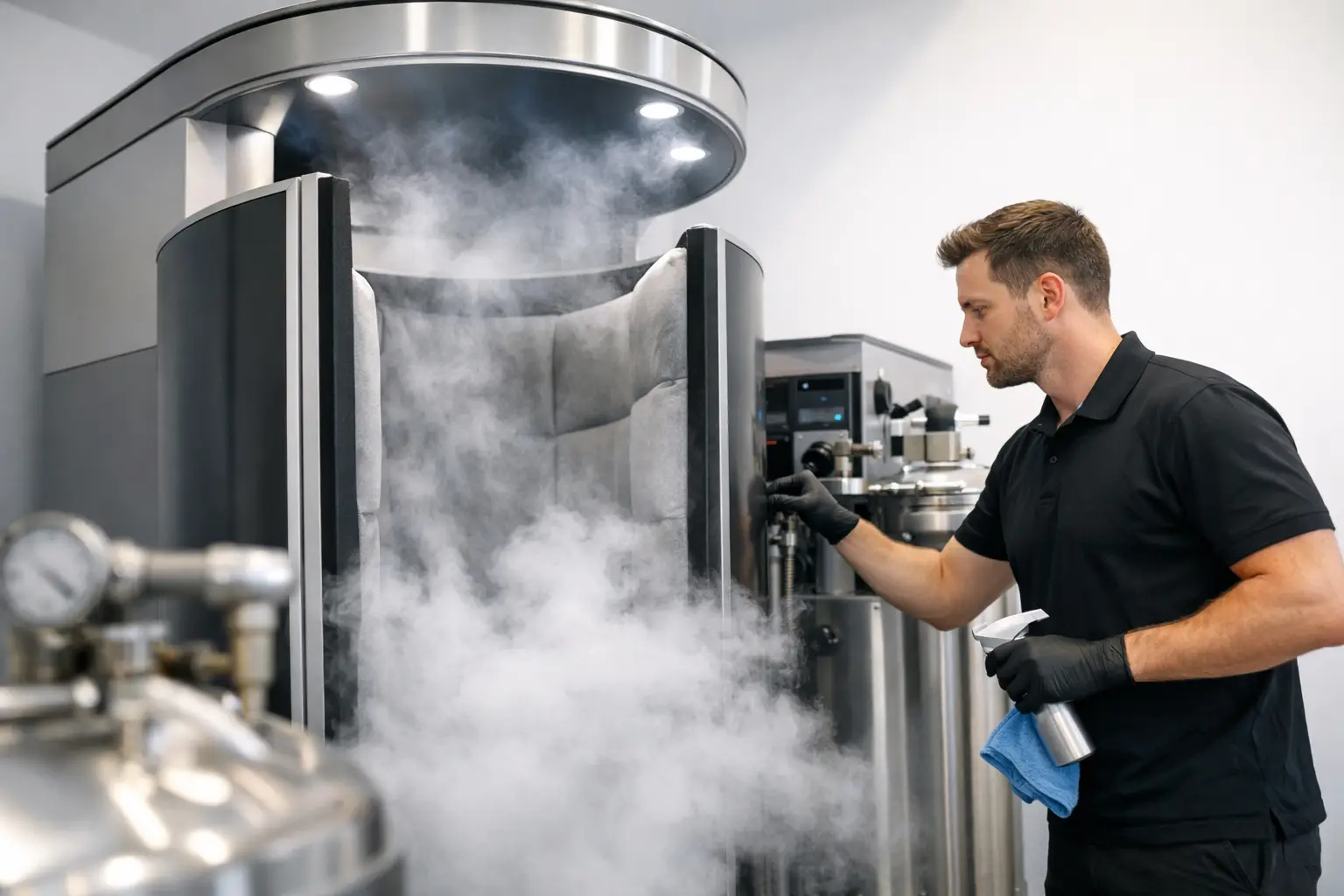
A cryotherapy chamber earns its place on the floor by delivering a fast, premium recovery experience session after session. But the same equipment that can elevate a recovery studio, med spa, or high-performance home wellness space also requires disciplined care. Knowing how to maintain cryotherapy chamber equipment protects client safety, preserves treatment consistency, and helps prevent costly downtime during your busiest hours.
Maintenance is not a one-size-fits-all task. A whole-body electric cryotherapy chamber has different service needs than a liquid nitrogen-powered system, and every manufacturer’s manual takes priority over general guidance. Still, a well-run maintenance plan follows the same principle: keep the chamber clean, inspect it before issues become failures, document what you find, and bring in qualified service professionals for technical work.
Start With the Chamber’s Operating Environment
Cryotherapy equipment performs best in a controlled, uncluttered space. Before focusing on the chamber itself, inspect the room around it. The unit needs the clearances, electrical supply, ventilation, and ambient operating conditions specified by its manufacturer. Blocking intake or exhaust areas with furniture, towels, storage boxes, or retail displays can reduce efficiency and place unnecessary strain on critical components.
For nitrogen-based chambers, room ventilation is a central safety requirement, not a convenience. Nitrogen displaces oxygen, so the treatment area should have the required ventilation and properly placed oxygen monitoring equipment. Test oxygen sensors according to the sensor manufacturer’s schedule and immediately address alarms, calibration notices, or unusual readings. Never disable an alarm simply because it appears inconvenient or overly sensitive.
Keep the floor dry and free of trip hazards. Moisture, residue, and loose items near the entrance can affect both client safety and the polished experience expected from a premium wellness service. If your chamber is in a commercial setting, assign responsibility for this area at the beginning and end of every shift rather than assuming someone will notice a problem.
Daily Cryotherapy Chamber Maintenance Essentials
A short daily routine is the strongest defense against unexpected service calls. It also gives staff a reliable way to identify changes in performance before they affect a client appointment.
Before opening, visually inspect the exterior panels, door or entry area, controls, emergency stop, seals, and any visible hoses or connections. Look for condensation where it does not normally occur, damaged insulation, loose fittings, error messages, unusual vibration, or changes in sound. A chamber should not suddenly become louder, slower to reach temperature, or more difficult to operate without a reason.
Clean all client-contact and high-touch surfaces using cleaning products approved by the chamber manufacturer. Avoid abrasive pads, aggressive solvents, and unapproved disinfectants. These can dull finishes, damage control surfaces, degrade seals, or leave residues that become unpleasant in a cold environment. Use a soft cloth and apply product to the cloth rather than spraying directly into controls, vents, or seams.
For commercial operators, the daily opening checklist should include at least these items:
- Verify that the emergency stop and safety systems are accessible and operational.
- Confirm the room is ventilated and any oxygen-monitoring equipment shows normal status.
- Inspect doors, seals, handles, and visible fittings for wear, damage, or frost buildup.
- Review the display for alerts, fault codes, and abnormal temperature behavior.
- Record cleaning, inspections, and any observations in a maintenance log.
That last step is particularly valuable. A log helps managers see repeat problems, supports warranty conversations, and gives a service technician useful context. Instead of reporting that the chamber has been “acting strange,” you can identify when the behavior began, how often it occurs, and what the display showed.
Manage Nitrogen Systems With Extra Discipline
Liquid nitrogen cryotherapy chambers require specific handling procedures, trained staff, and a dependable supply plan. Only authorized personnel should change cylinders, operate supply components, or work near pressurized connections. Improper handling can create safety risks and compromise chamber performance.
Check the supply level before the day’s first appointment and monitor consumption patterns over time. A noticeable shift in nitrogen use may signal a change in client volume, operating practices, supply conditions, or equipment performance. It does not automatically mean there is a leak, but it deserves attention.
Inspect externally visible hoses, valves, and fittings for frost patterns, physical damage, or signs of leakage. Do not attempt to repair pressurized lines, regulators, solenoids, or internal cooling components yourself. If you suspect a leak, follow the equipment’s shutdown procedure, keep people out of the area as appropriate, and contact a qualified technician or your equipment service partner.
Cylinder storage matters as much as the chamber connection. Store cylinders upright, secured, and away from heat sources or unauthorized access. Staff should understand the facility’s emergency procedures and never treat nitrogen as a routine product that can be handled casually because it is used every day.
Care for Electric Cryotherapy Chambers Differently
Electric cryotherapy chambers eliminate the need for liquid nitrogen supply, but they still depend on well-maintained refrigeration, electrical, airflow, and control systems. Keep vents and condenser areas clean and unobstructed. Dust accumulation can reduce heat transfer, increase energy use, and shorten the life of refrigeration components.
Follow the manufacturer’s instructions for cleaning filters and accessible airflow areas. Some systems require regular filter inspection, while others have service-only access points. Do not remove panels or attempt to access internal electrical or refrigerant components unless you are trained and specifically authorized to do so.
Power quality is another practical consideration. Commercial facilities with multiple high-draw wellness devices should confirm that the chamber has the proper dedicated electrical setup. Repeated breaker trips, voltage issues, or power interruptions should be investigated promptly. Restarting the unit repeatedly without diagnosing the cause can turn a manageable issue into a more expensive repair.
Schedule Preventive Service Before Performance Drops
The most profitable cryotherapy chamber is not simply the one with the lowest purchase price. It is the one that remains safe, presentable, and available for appointments. Preventive maintenance protects that availability.
Use the manufacturer’s recommended service interval as your baseline. Depending on the chamber type, professional service may include inspection of refrigeration performance, electrical connections, seals, sensors, valves, software, safety circuits, calibration, and system diagnostics. A technician can spot wear that is not visible during normal daily checks.
Service frequency depends on use. A chamber operating all day in a busy recovery studio may need more frequent attention than one in a private residence used several times a week. Facility conditions also matter. Dusty environments, inconsistent HVAC, heavy client traffic, and frequent door cycling can increase maintenance demands.
Do not postpone service because the chamber is still functioning. Small symptoms such as inconsistent temperatures, longer cooldown periods, recurring alerts, excess frost, unusual odors, or a change in operating noise are early warnings. Addressing them promptly can help protect the client experience and avoid losing revenue to an unplanned closure.
Train Staff to Protect the Investment
Even exceptional equipment can be compromised by inconsistent operation. Every employee who runs the chamber should be trained on the approved startup and shutdown process, client preparation, cleaning standards, emergency procedures, and escalation steps. Training should not stop after onboarding. Refresh it periodically, especially when you add new team members or update equipment.
Create a clear rule: staff can clean, inspect, document, and operate the chamber within their training, but they should never improvise repairs. Taping a damaged seal, bypassing a warning, forcing a door, or attempting to tighten an unfamiliar fitting can create a much larger issue.
For owners, a simple operating system goes a long way: assign daily checks, review logs weekly, keep approved cleaning supplies on hand, and schedule service before it becomes urgent. This structure is as relevant for a luxury home wellness room as it is for a multi-location recovery business.
Know When to Take the Chamber Out of Service
A premium cryotherapy experience depends on trust. Take the chamber out of service and seek professional guidance if you notice a safety alarm, persistent fault code, suspected nitrogen leak, damaged electrical components, compromised door or enclosure hardware, abnormal frost, or performance that falls outside normal operating parameters.
Trying to finish one more appointment is rarely worth the risk. Clear communication with clients and a fast response from a qualified service resource will protect your reputation far better than operating equipment that may not be performing as designed.
Sun Spa Wellness supports wellness operators and homeowners who expect more from their equipment investment, including the confidence that comes from having a maintenance and service plan in place. Treat your chamber like the premium revenue-producing asset it is, and it can continue to support recovery, performance enhancement, and a standout client experience for years to come.
