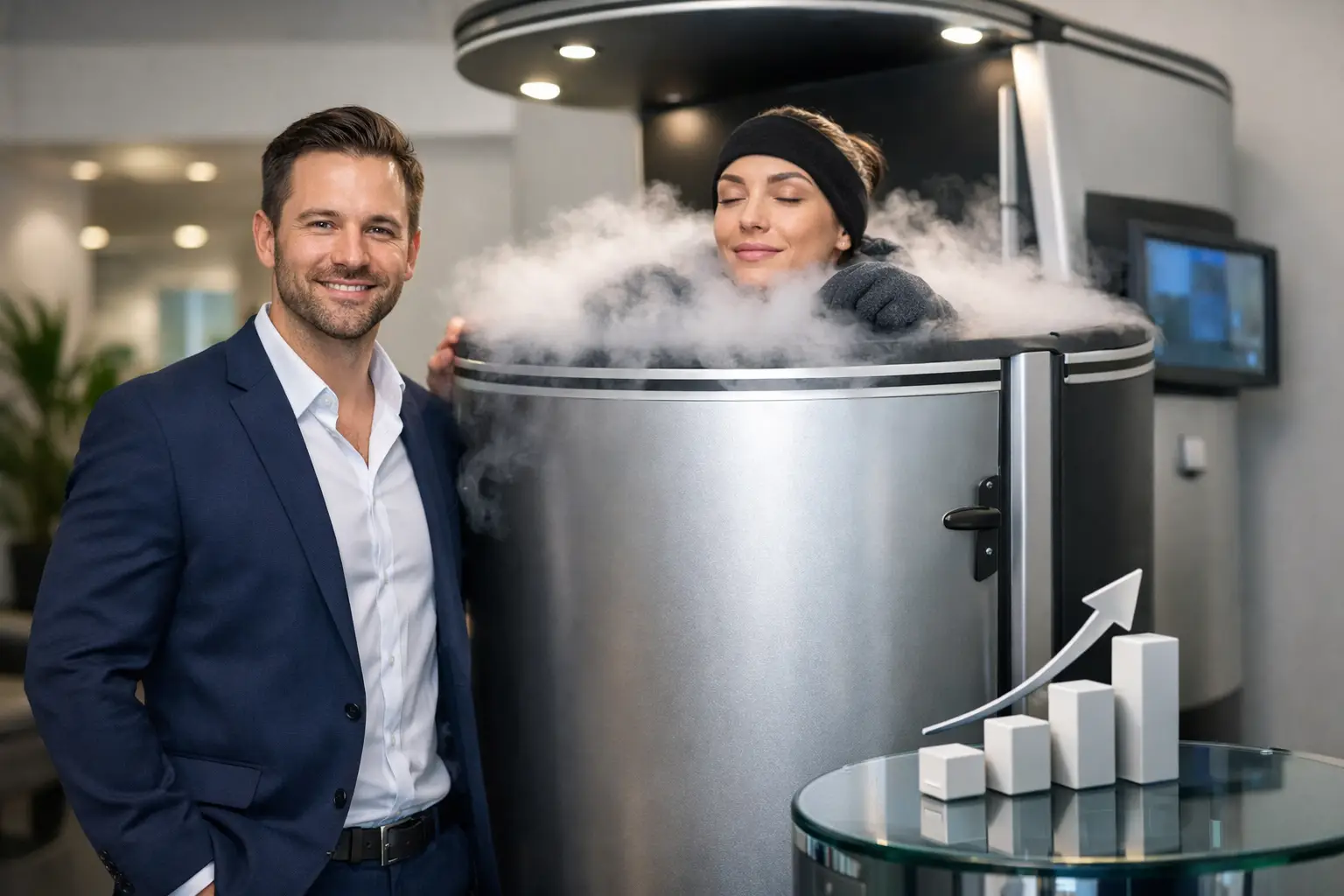
A cryotherapy chamber can be a compelling centerpiece for a recovery studio, med spa, fitness facility, or premium wellness lounge. But knowing how to start cryotherapy business operations is not simply a matter of buying a chamber and opening appointments. The businesses that build momentum treat cryotherapy as a high-value service line: one with thoughtful site planning, trained staff, disciplined safety procedures, and a membership model that encourages repeat visits.
Start With a Business Model, Not a Machine
Cryotherapy can work in several commercial settings, and the right format depends on your existing clientele, local competition, and available square footage. A standalone recovery studio can build its identity around performance enhancement, pain-relief support, and rejuvenation. A med spa may position cryotherapy beside body contouring, red light therapy, compression therapy, and infrared sauna services. Fitness clubs can use it as a premium recovery upgrade that gives members another reason to stay engaged.
Before selecting equipment, define who will buy the service most often. Athletes and active adults may respond to fast recovery-focused sessions and monthly packages. Beauty and wellness clients may be more interested in circulation support, skin appearance, energy, and a high-end self-care experience. Corporate wellness, sports teams, and concierge memberships can create additional demand, but they usually require a stronger sales process and flexible scheduling.
Your financial model should account for more than session revenue. Estimate monthly membership income, single-session sales, retail opportunities, staffing, lease costs, utilities, marketing, insurance, maintenance, and payment processing. Cryotherapy often performs best as a recurring-revenue service rather than a one-time experience. A client who uses a chamber once may be curious. A client on a structured membership can become a reliable source of predictable revenue.
Choose the Right Cryotherapy Equipment and Setup
Equipment selection affects client experience, operating costs, staffing needs, and the type of facility you can build. Whole-body cryotherapy systems commonly use either electric refrigeration or nitrogen-based cooling. Neither is automatically the better choice. The practical decision comes down to your market, location, ventilation capacity, operating preferences, throughput needs, and budget.
Electric cryotherapy chambers can appeal to operators who want a self-contained system without liquid nitrogen handling. They may require more planning around electrical capacity, heat management, and equipment placement. Nitrogen-based systems can offer a different operating profile, but require careful gas supply planning, storage, ventilation, oxygen monitoring, and staff protocols. Review local fire, building, and occupational safety requirements before committing to a location or chamber type.
A premium chamber should also support the experience clients expect from a modern wellness business. Consider chamber design, internal space, user controls, session monitoring, emergency-stop features, accessibility, service availability, warranty coverage, and the manufacturer’s training resources. A lower acquisition price can become expensive if the unit is difficult to maintain, has limited support, or creates a less polished experience for paying clients.
For operators building a broader recovery environment, cryotherapy pairs naturally with compression therapy, red light therapy, PEMF, infrared sauna, dry floatation, and halotherapy. The goal is not to crowd a room with equipment. It is to create service pathways that make sense. A client may book cryotherapy after training, then add compression for recovery. Another may choose red light therapy and cryotherapy as part of a recurring rejuvenation routine.
Build Safety Into the Operating Plan
Safety is part of the product. Clients are trusting your team with a powerful temperature-based wellness experience, so casual procedures are not enough. Establish a written operating manual before your first appointment and train every team member to follow it consistently.
Your protocols should cover client screening, informed consent, contraindications, session preparation, protective clothing, supervision, emergency procedures, equipment inspection, cleaning, and incident documentation. Ask clients about relevant health conditions, medications, pregnancy status, circulation concerns, cold sensitivities, and other factors identified by your equipment manufacturer and medical or legal advisors. When a client is not an appropriate candidate, the correct business decision is to decline the session.
Avoid promising to diagnose, treat, cure, or prevent medical conditions. Cryotherapy marketing can focus on wellness, recovery support, circulation, energy, and a refreshed feeling, while remaining careful about health claims. If your business includes medical services or works with a physician, obtain qualified legal and compliance guidance for your state and the claims your team can make.
The facility itself needs equal attention. Confirm power requirements, ventilation specifications, flooring, room clearances, noise, heat load, nitrogen storage requirements where applicable, emergency access, and local permits. Involve a qualified contractor early. Retrofitting a space after delivery can delay opening and add avoidable expense.
Price for Value and Repeat Visits
Pricing should reflect your market, equipment quality, staffing model, and the experience surrounding the session. Competing only on a low introductory price may fill the schedule briefly, but it can also make it difficult to fund qualified staff, equipment maintenance, and a premium environment.
A practical menu usually includes a single session for first-time visitors, multi-session packages for committed users, and monthly memberships for clients who want frequent recovery or wellness access. Keep the offer easy to understand. If clients need a spreadsheet to compare options, your menu is too complicated.
Use introductory offers strategically. A first-session promotion can reduce hesitation, but the front desk should have a clear next step: a package, membership, or complementary service recommendation. The strongest conversion moment is immediately after a positive session, when the client is already thinking about how they feel and when they can return.
Bundling can improve both average ticket value and retention. For example, a recovery membership may include a set number of cryotherapy sessions plus compression appointments. A premium wellness package might combine cryotherapy with red light therapy or infrared sauna access. The best bundle depends on your clientele and equipment mix, so monitor usage closely instead of assuming every service belongs together.
Design a Client Experience Worth Sharing
Cryotherapy is visual, fast, and memorable. That gives your business a marketing advantage, provided the customer journey feels polished from booking through follow-up. Your facility should look clean, modern, and intentional. Clients should understand what will happen before they arrive, what to wear, how long the visit will take, and what staff will ask during screening.
Train staff to explain the experience with confidence rather than hype. They should be able to describe the session, answer common questions, set realistic expectations, and identify when a manager or health professional should be consulted. Friendly expertise makes an advanced wellness technology feel approachable.
Your launch marketing should focus on education and local visibility. Short videos that show the chamber, explain the appointment flow, and introduce your team can reduce uncertainty. Invite local trainers, sports organizations, beauty professionals, and wellness influencers for structured preview sessions. Track where first-time clients come from, then invest more in the partnerships and campaigns that actually produce memberships.
Do not overlook retention communication. A simple post-visit message can thank clients, reinforce care instructions, and prompt their next booking. Membership clients benefit from usage reminders, especially when they have fallen out of routine. Consistent visits are better for client relationships and better for business stability.
Measure What Makes the Business Sustainable
Opening day is only the beginning. Review utilization by hour and day, conversion from introductory visit to package or membership, average revenue per client, membership churn, no-show rate, labor cost per session, and equipment downtime. These numbers tell you whether your business has demand or merely attention.
If utilization is low, the answer may be stronger local marketing, better sales training, different operating hours, or a more compelling bundle. If demand is high but margins are thin, revisit pricing, staffing, and membership structure before adding more equipment. Growth should be driven by proven client behavior, not by a crowded service menu.
A full-service equipment partner can make a meaningful difference during this process. Sun Spa Wellness supports commercial buyers with premium wellness equipment, financing options, service resources, and the guidance needed to build a more confident purchasing plan.
The most successful cryotherapy businesses do not sell cold exposure alone. They create a credible, repeatable recovery and rejuvenation experience that clients can fit into their routines - and that gives them a clear reason to come back next week.
