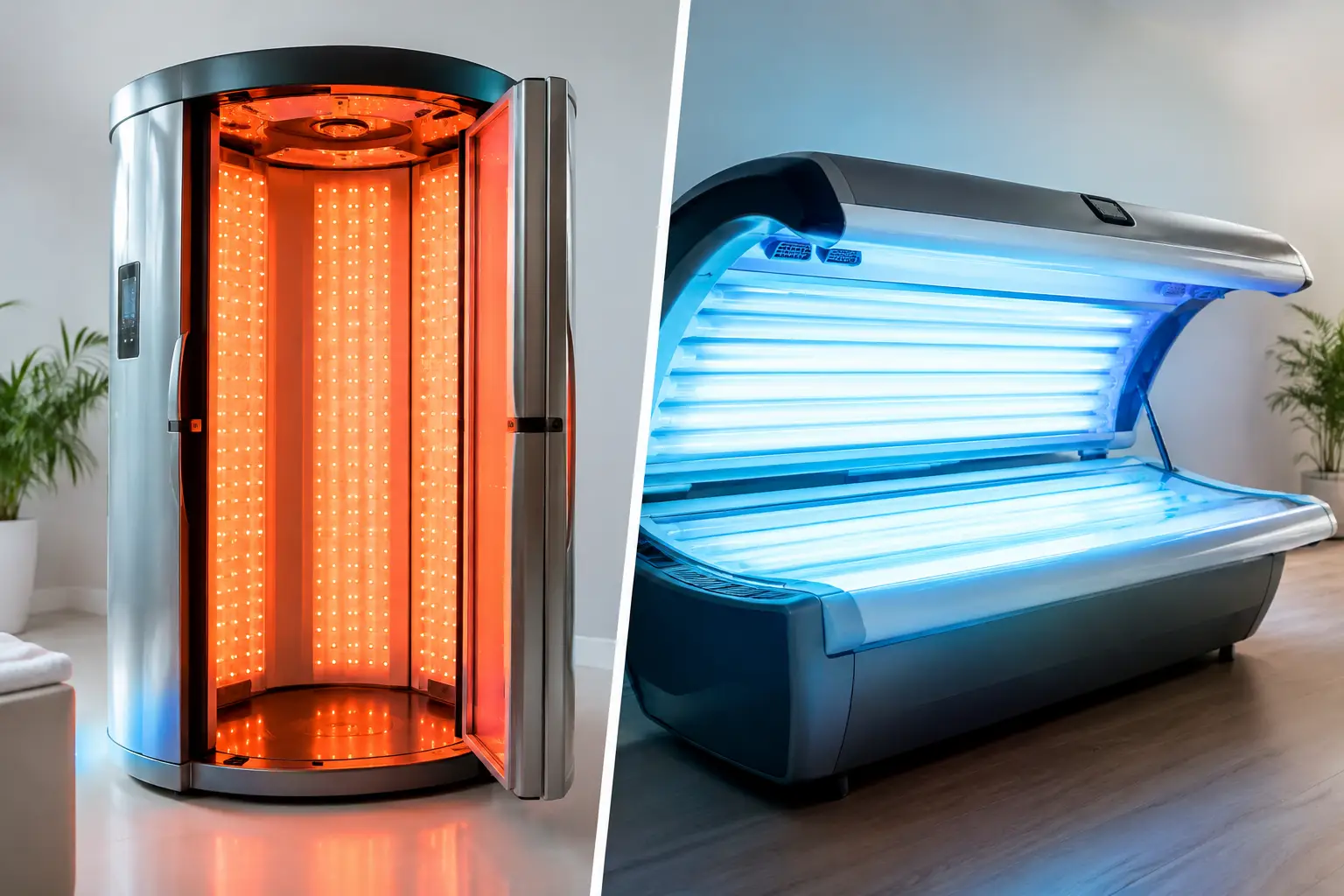
A new tanning system can change the way clients perceive your salon or wellness space before they ever book a session. The decision between LED versus UV is not simply about choosing newer technology. It is about selecting the experience, results, revenue model, and long-term operating profile that fit your clientele.
UV tanning remains familiar, proven, and highly requested by clients seeking visible cosmetic color. All-LED solariums offer a different category of service, centered on light-based skin appearance, relaxation, and wellness-oriented experiences without UV exposure. For operators and luxury homeowners, the strongest choice depends on what you want the equipment to accomplish.
LED Versus UV: The Core Difference
UV tanning equipment uses ultraviolet light to stimulate melanin production in the skin, creating a cosmetic tan. Traditional tanning beds and stand-up units are designed around this outcome, with lamp configurations, facial systems, cooling, audio, and ergonomic features influencing the session experience.
All-LED solariums use visible light wavelengths rather than ultraviolet light. Their purpose is not to create a UV tan. Instead, they are commonly positioned around rejuvenation-focused light sessions, a refreshed-looking complexion, relaxation, and a premium wellness ritual. Depending on the unit, LED systems may combine red, near-infrared, blue, or other visible wavelengths to create a distinctive service category.
That distinction matters commercially. A UV unit serves guests who want tanning color. An LED solarium serves guests who want a non-UV light experience, often as part of a broader beauty, recovery, or self-care routine. Some businesses benefit from offering both, because the audiences can overlap without having identical goals.
When UV Tanning Is the Right Investment
For established tanning salons, UV equipment remains a direct answer to consistent consumer demand for cosmetic tanning. Premium systems can elevate a familiar service through stronger design, comfort features, intelligent controls, cooling, sound, and efficient session management.
UV tanning is often the better fit when your business already has a strong tanning membership base, a seasonal color-driven customer profile, or a location where traditional tanning is a core service. It can also make sense for homeowners who specifically want the convenience of a professional-grade tanning experience without leaving home.
The business case should go beyond the purchase price. Consider throughput, room size, electrical requirements, replacement lamp planning, ventilation, maintenance access, and the level of service support available after installation. A lower upfront cost is not always the lower-cost choice if the system compromises client comfort, reliability, or your ability to command premium pricing.
Operators should also maintain clear client education and follow applicable regulations, manufacturer instructions, and exposure guidelines. UV equipment is a specialized category that requires responsible operation, trained staff, and appropriate policies.
What clients value in premium UV equipment
Clients rarely describe a great tanning session in technical terms. They remember how the equipment felt. Spacious interiors, cooling airflow, easy controls, high-end finishes, music integration, and a clean, well-maintained environment can separate a premium salon from a basic tanning room.
For commercial operators, this experience supports retention. A system that looks advanced and feels comfortable can justify higher-tier memberships, upgrades, and package pricing. For residential buyers, those same features turn a utility room or home spa into a genuinely elevated wellness environment.
Where All-LED Solariums Create Opportunity
LED solariums can help businesses broaden their service menu beyond conventional tanning. They are particularly compelling for med spas, recovery studios, beauty concepts, fitness facilities, and upscale wellness centers that want a light-based offering without positioning it as UV tanning.
The appeal is strategic as well as experiential. A non-UV LED service can introduce a new reason for clients to visit between other appointments. It can complement facials, body contouring, red light therapy, infrared sauna sessions, compression therapy, or recovery-focused services. In a residential setting, an all-LED solarium can serve as a centerpiece for a home wellness suite built around relaxation and appearance-focused self-care.
LED systems can also appeal to customers who are not interested in cosmetic tanning but are drawn to the atmosphere and perceived rejuvenation benefits of a professionally designed light session. That wider audience can make the category valuable in markets where a traditional tanning-only model may feel limiting.
Still, LED should not be marketed as a substitute for a UV tan. Clients need clear expectations. A visible-light session may support a refreshed, radiant appearance, but it does not produce the same melanin-based cosmetic color associated with UV tanning.
The operational case for LED
For many owners, the LED conversation begins with differentiation. An all-LED solarium is visually striking, modern, and easier to position within a premium wellness story. It can help a facility look less like a traditional tanning salon and more like a destination for beauty, recovery, and performance enhancement.
Operating considerations may differ from lamp-based UV systems. LED technology is generally associated with long component life, but every model has its own service schedule, electrical needs, warranty terms, and environmental requirements. Buyers should evaluate the complete ownership picture, including installation, training, preventive maintenance, technical support, and the availability of replacement components.
Equipment quality matters here. A visually impressive unit is only a smart investment if it is built for reliable daily use, fits your space, and can be supported over time.
How to Choose Based on Your Business Model
The best purchase starts with the customer journey you intend to create. A high-volume tanning salon may prioritize UV equipment with premium upgrades and a mix of price points. A med spa may find stronger value in an LED solarium that complements skin-focused and wellness services. A recovery studio could use LED as part of a broader membership built around rejuvenation, relaxation, and performance support.
If you operate a hybrid concept, the answer may be both. UV systems can serve color-focused clients, while LED creates a separate non-UV experience for members who want a wellness-oriented light session. The two categories should have distinct messaging, pricing, and consultation language so clients understand what each service is designed to deliver.
For homeowners, the decision is more personal. Choose UV if cosmetic tanning is the central goal and you are prepared to operate the system responsibly. Choose LED if you want a premium, non-UV addition to a home spa focused on relaxation and light-based rejuvenation. Space, electrical capacity, ventilation, and professional installation should be addressed early, not after the equipment has been selected.
Questions to Ask Before You Buy
Before committing to any tanning or LED system, clarify the role it will play in your operation. Ask whether it solves a clear client need, creates a marketable new service, and supports the price point you want to achieve. Evaluate the physical footprint, delivery path, power requirements, and service access with the same care you apply to the equipment's aesthetics.
Also consider the support behind the purchase. High-performance wellness equipment is a capital investment, not a disposable fixture. Financing options, installation coordination, preventive maintenance, repair resources, trade-in opportunities, and experienced product guidance can have a meaningful effect on ownership confidence.
A thoughtful equipment partner can help you compare models based on real operating goals rather than specifications alone. Sun Spa Wellness works with commercial and residential buyers who need that broader perspective, whether they are adding a single flagship unit or building a complete wellness environment.
The right system is the one that gives your clients a reason to return and gives your business a service worth promoting. Define the outcome first, then choose the technology that delivers it with confidence.
