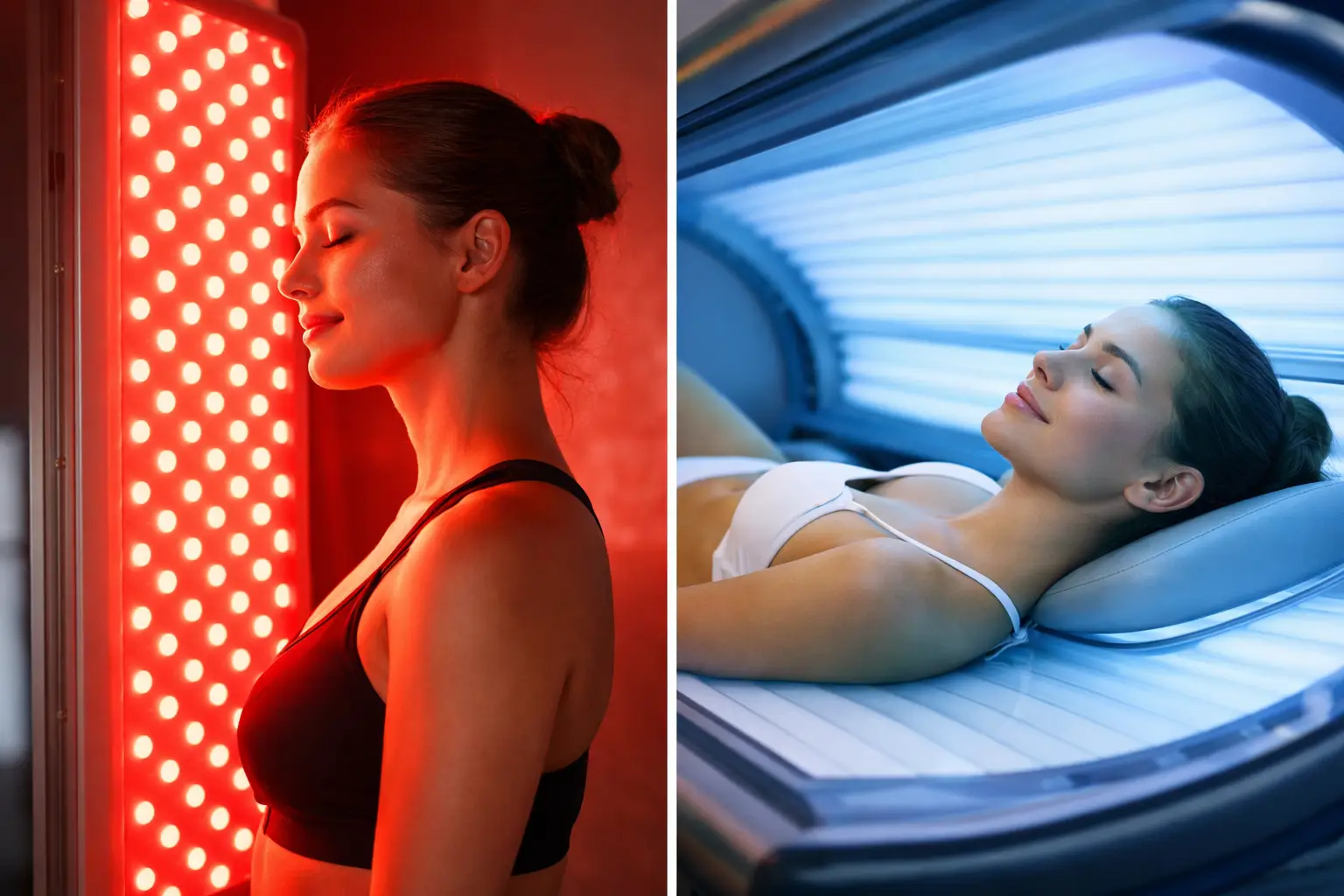
A client may walk into a wellness center asking for a healthy glow, but the equipment that creates color is not the equipment designed to support rejuvenation or recovery. That distinction is the starting point for red light therapy vs tanning. While both services use light-based technology and can be offered in a premium wellness environment, their mechanisms, intended outcomes, and business roles are fundamentally different.
For salon owners, med spa operators, recovery studios, and home wellness buyers, the right choice depends on the result you want to deliver. UV tanning systems are built to create visible pigmentation. Red light therapy systems are designed to expose the body to specific wavelengths of red and near-infrared light without UV exposure, supporting a wellness-focused experience centered on skin appearance, relaxation, and recovery.
Red Light Therapy vs Tanning: The Core Difference
Traditional tanning uses ultraviolet light. UVB exposure stimulates melanin production, while UVA contributes to the oxidation of existing melanin and produces a faster visible tan. The result is cosmetic color, typically developed through a controlled session schedule and supported by appropriate skin-type assessment, exposure timing, and eye protection.
Red light therapy uses visible red light and, in many systems, near-infrared light. These wavelengths do not create a tan because they do not stimulate melanin in the same way UV light does. Instead, they are commonly used in photobiomodulation applications, where light energy is delivered to the skin and underlying tissue as part of a rejuvenation, recovery, or relaxation routine.
This is not a minor technical distinction. A customer seeking bronzed skin needs a UV tanning solution. A customer who wants a non-UV wellness service, a complementary recovery session, or a skin-focused addition to their routine may be better suited to red light therapy.
What Results Can Clients Expect?
Tanning produces a visible change in skin color. Depending on the equipment, lamp configuration, client skin type, and exposure plan, results may be immediate or develop gradually over multiple visits. Advanced tanning beds and stand-up systems can provide a high-end session with features such as facial lamps, cooling, audio, contoured acrylics, and smart controls that elevate the guest experience.
Red light therapy does not bronze the skin. Its appeal is more gradual and wellness-oriented. Clients often seek sessions to support the appearance of smoother, more radiant-looking skin, as well as post-workout relaxation and recovery routines. Near-infrared wavelengths are especially popular in recovery-focused settings because they are associated with deeper tissue exposure than visible red light.
Results vary by person, consistency of use, device specifications, and the goal of the session. Operators should avoid presenting red light therapy as a substitute for medical care or promising a specific clinical outcome. A strong service menu positions it accurately: as a premium, non-UV light wellness experience that may complement skincare, fitness, recovery, and relaxation programs.
Safety and Exposure Considerations
UV tanning and red light therapy require different conversations around safety. With tanning, responsible operation means following manufacturer exposure schedules, evaluating skin type, requiring approved eyewear, maintaining equipment correctly, and educating clients about UV exposure. Tanning is a cosmetic service with real exposure considerations, and professional operators should make informed-use practices part of the customer experience.
Red light therapy is non-UV, so it does not carry the same UV tanning purpose or UV exposure profile. That does not mean every red light session is appropriate for every person. Clients with photosensitivity, those using medications that increase light sensitivity, and individuals with specific medical concerns should consult a qualified healthcare professional before use. Protective eyewear and manufacturer protocols should also be followed where required.
For commercial operators, clear intake procedures and staff training protect both the client experience and the business. Premium equipment performs best when it is paired with confident, consistent operating standards.
Can Red Light Therapy and Tanning Be Offered Together?
Yes, but they should be presented as distinct services rather than interchangeable options. A salon may offer UV tanning for clients who want cosmetic color and red light therapy for clients interested in a separate rejuvenation or recovery-focused session. This creates a broader menu without confusing the outcomes.
Some facilities also build packages around the client journey. A fitness or recovery studio may position red light therapy alongside compression, infrared sauna, cryotherapy, or PEMF sessions. A tanning salon may add red light therapy to appeal to clients who want a non-UV option or an elevated wellness membership. In a residential setting, a homeowner may choose tanning equipment for appearance and a dedicated red light system for year-round recovery and skin wellness routines.
The key is straightforward messaging. Red light does not replace tanning if the desired result is a tan. Tanning does not replace red light therapy if the customer wants a non-UV light treatment focused on wellness and rejuvenation.
Equipment Selection for Commercial Operators
Choosing between these categories should start with demand, floor plan, staffing, and revenue strategy. A tanning business with an established color-focused clientele may benefit from upgrading to premium UV systems that improve comfort, performance, and visual impact. Modern tanning equipment can create a stronger first impression while supporting higher-value session tiers and memberships.
A wellness center or med spa may see greater opportunity in red light therapy, particularly when recovery, skin enhancement, and non-UV services are central to its positioning. Full-body red light systems can become a compelling standalone service or a high-margin add-on to an existing treatment plan.
For businesses expanding into both categories, consider practical details before purchasing: electrical requirements, room dimensions, ventilation, client throughput, service access, warranty support, and ongoing maintenance. Equipment is a capital investment, not just a new feature on a menu. The best system is one that fits your operating model, attracts the right client, and can be marketed with confidence.
Sun Spa Wellness helps commercial and residential buyers evaluate professional-grade tanning and wellness equipment with financing, service, maintenance, and trade-in support in mind. That full lifecycle perspective matters when selecting technology intended to perform for years, not just launch day.
Choosing the Right Option for Home Wellness
Residential buyers often have more freedom to build a personalized wellness environment, but the same question applies: what outcome matters most? If your priority is a cosmetic tan at home, a professional-quality tanning bed or booth is the relevant category. Space, power requirements, ventilation, and responsible-use practices should guide the decision.
If your priority is recovery support, a relaxing light-based ritual, or skin-focused rejuvenation without UV, red light therapy may be the better fit. It can also work naturally alongside other home wellness investments, including infrared sauna, massage and compression systems, or a dedicated recovery room.
For buyers considering both, separate systems generally offer greater clarity and control. Each technology can be selected for its specific performance strengths instead of compromising on the intended experience.
The Better Choice Depends on the Promise You Make
Red light therapy and tanning occupy different lanes, but both can have a place in a high-performance beauty and wellness business. Tanning delivers cosmetic color. Red light therapy delivers a non-UV experience centered on rejuvenation, relaxation, and recovery support. Treating them as separate, valuable services makes it easier for clients to choose and easier for your business to market the result.
Build your equipment plan around the experience you want people to remember: a confident tan, a restorative reset, or a premium wellness destination that gives them a reason to return.
