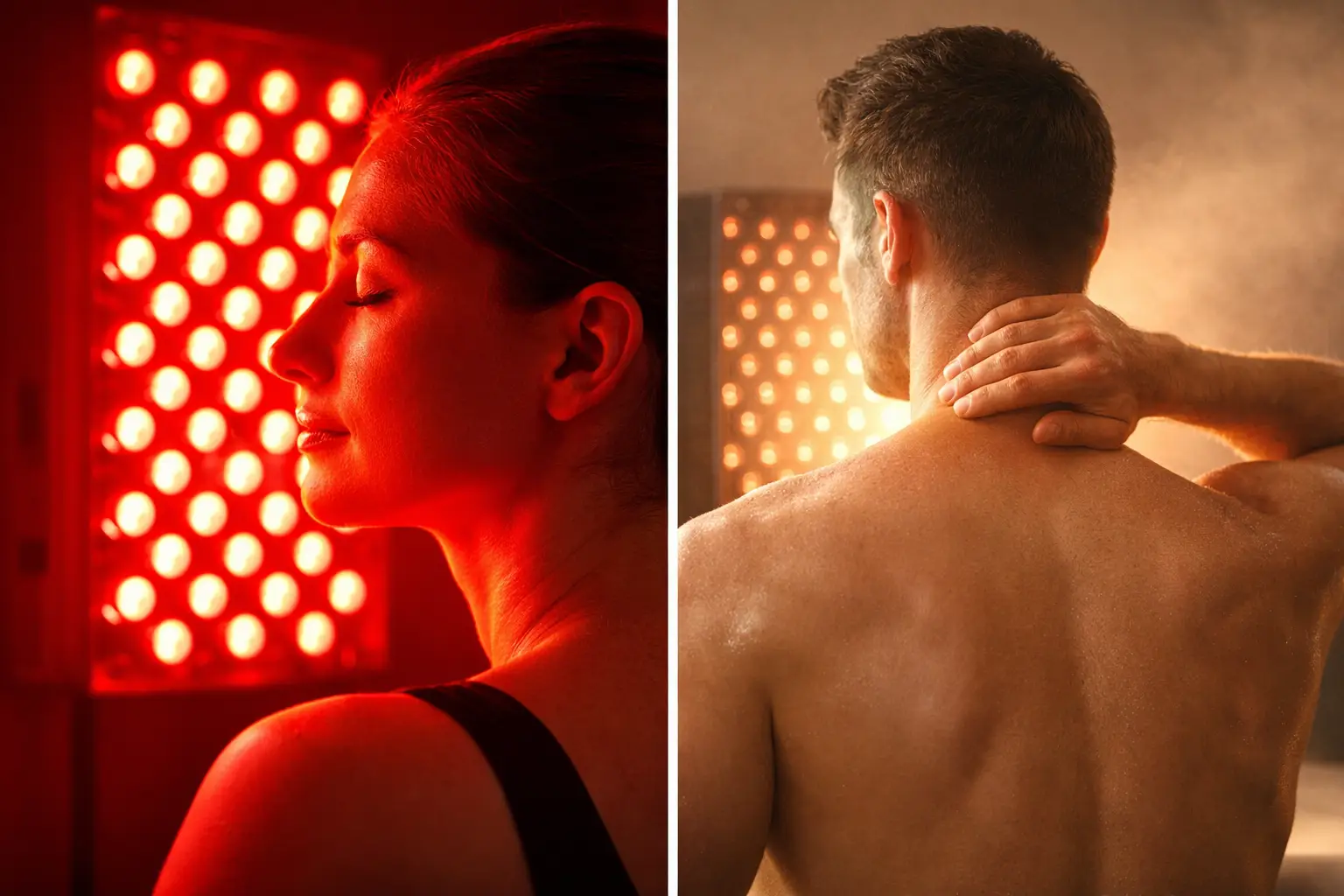
If you are comparing red light vs infrared, you are probably not asking a physics question. You are trying to decide which technology belongs in your spa, recovery studio, salon, or home wellness space - and whether the results justify the investment.
That distinction matters because red light and infrared are often grouped together in marketing, even though they do different jobs in a treatment environment. Both sit within the light spectrum. Both are used in wellness and recovery equipment. But when buyers assume they are interchangeable, they can end up choosing a system that sounds impressive without actually matching their goals.
Red light vs infrared: the core difference
The simplest way to understand red light vs infrared is depth and purpose. Red light is visible to the eye and typically operates in wavelengths that interact more directly with the skin’s surface and upper layers. Infrared is invisible and penetrates deeper into the body, where it is commonly used for heat, circulation support, muscle recovery, and relaxation.
In practical terms, red light is often associated with skin-focused outcomes such as rejuvenation, tone, and texture. Infrared is more commonly associated with deeper tissue effects, warmth, comfort, recovery support, and detox-oriented experiences depending on the system.
That does not mean one is better. It means the right choice depends on what you are trying to deliver.
What red light is best known for
Red light therapy has earned attention in beauty, anti-aging, and wellness because it supports treatments that feel modern, noninvasive, and easy to add to an existing menu. In a commercial setting, that matters. Clients understand the language of skin enhancement and visible rejuvenation quickly.
Professional red light systems are typically chosen for services centered on cosmetic improvement and wellness support. Buyers often look at red light when they want to offer treatments that may help improve the appearance of fine lines, support healthier-looking skin, and complement body and facial services already on the menu.
For salon owners and med spa operators, red light can be attractive because it is approachable. It does not carry the same learning curve as some more specialized technologies, and it pairs well with existing beauty and recovery services. For residential buyers, it fits the growing demand for professional-grade home wellness equipment that supports routine self-care without adding a complicated protocol.
There is also a design advantage. Red light systems often present well on the floor. The visual impact is immediate, which can help in customer education and perceived value.
What infrared is best known for
Infrared tends to show up in conversations around saunas, recovery equipment, and deeper body-focused wellness experiences. Rather than emphasizing visible skin-level light, infrared is commonly used for its ability to generate penetrating warmth and support a broader sense of physical recovery and relaxation.
This is why infrared is popular in categories like infrared saunas and recovery environments. Buyers are usually thinking about muscle comfort, circulation, stress reduction, detox support, and performance recovery. In a fitness or recovery studio, those benefits can have strong commercial appeal because they speak to repeat use. A client who feels noticeably better after a session is often easier to retain than one chasing subtle cosmetic changes.
For affluent home buyers, infrared also carries lifestyle value. It fits the premium at-home wellness trend because it combines a high-end experience with practical use cases like post-workout recovery and daily relaxation.
Still, not all infrared equipment is the same. Near-infrared, mid-infrared, and far-infrared can be used differently depending on the equipment category and intended outcome. That is one reason serious buyers should evaluate the system, not just the buzzword.
Why the confusion happens
The confusion around red light vs infrared usually starts with the fact that both technologies are part of the same broader conversation around photobiomodulation, energy-based wellness, and noninvasive recovery. Manufacturers may also combine red light and near-infrared in the same device, which can blur the distinction for buyers.
That combination can be a strength. A system that uses more than one wavelength may support a wider range of treatment goals. But it also makes clear positioning more important. If your business wants to market skin rejuvenation, that message should stay front and center. If your goal is recovery, detox, or deep relaxation, the equipment should support that promise in a way clients can feel and understand.
In other words, technology matters, but service positioning matters just as much.
How commercial buyers should think about the decision
If you run a spa, salon, med spa, or recovery business, the best choice usually comes down to revenue fit. Not scientific theory - revenue fit.
Red light makes sense when your audience is motivated by appearance, anti-aging, skin wellness, and noninvasive beauty services. It can help expand treatment offerings without requiring major changes to your business model. It also works well in spaces where aesthetics, comfort, and quick client understanding drive bookings.
Infrared makes sense when your business is centered on recovery, relaxation, detox support, athletic performance, or whole-body wellness experiences. It often aligns well with memberships, package sales, and repeat sessions because clients build it into routines.
Some operators do best with both, especially when they serve overlapping audiences. A med spa may want red light for cosmetic services and infrared for broader wellness recovery. A high-end wellness center may use infrared saunas as an anchor experience while adding red light systems to broaden service variety.
The trade-off is capital allocation. Adding multiple technologies can strengthen your menu, but only if each piece of equipment has a clear role, enough demand, and the floor space to perform.
What home buyers should consider
Residential buyers usually approach red light vs infrared from a different angle. The question is less about service menu expansion and more about lifestyle fit.
If your priority is skin appearance, anti-aging support, and a professional beauty-tech feel at home, red light may be the more natural choice. If your priority is recovery after exercise, daily heat therapy, relaxation, and a larger whole-body wellness ritual, infrared may be the stronger investment.
Space matters here too. A red light panel or bed-style system has a different footprint and experience than an infrared sauna. So does usage style. Some homeowners want a short session they can fit into a morning routine. Others want an immersive wellness environment they can use in the evening or after training.
The right answer often comes down to what you will use consistently. Premium equipment only performs if it becomes part of your routine.
Should you choose red light, infrared, or both?
There are three honest answers.
Choose red light if your main goal is skin-focused rejuvenation, beauty enhancement, and a treatment that is easy to position around visible self-care outcomes.
Choose infrared if your main goal is deeper warmth, recovery support, relaxation, and body-focused wellness experiences.
Choose both if you want a more complete wellness offering and have a clear plan for how each technology fits your business or home environment.
That last option can be compelling, especially for premium buyers. A well-designed wellness space rarely depends on a single modality. It uses complementary technologies that support different outcomes across beauty, recovery, and relaxation.
The smartest way to evaluate equipment
Do not stop at the label. Ask what the equipment is built to do, who it is built for, how it fits your space, and how easy it will be to position for repeat use. Wavelength claims matter, but so do build quality, design, service support, and long-term reliability.
For commercial buyers, the operational questions are just as important as the wellness benefits. Will clients understand the service? Will it stand out in your market? Can staff explain it with confidence? Does it support package sales, memberships, or premium pricing?
For home buyers, the practical questions are simpler but still important. Will it fit your daily routine? Does it align with your top goals? Is it built to a professional standard rather than a short-term consumer trend?
That is where an experienced equipment partner adds real value. Sun Spa Wellness works with buyers who are not just shopping for a feature list. They are building a business, upgrading a facility, or investing in a home wellness environment that needs to perform over time.
Red light and infrared are both strong technologies. The better choice is the one that matches your outcomes, your audience, and the experience you want to create. When those pieces line up, the equipment does more than sound advanced - it becomes a smart asset.
