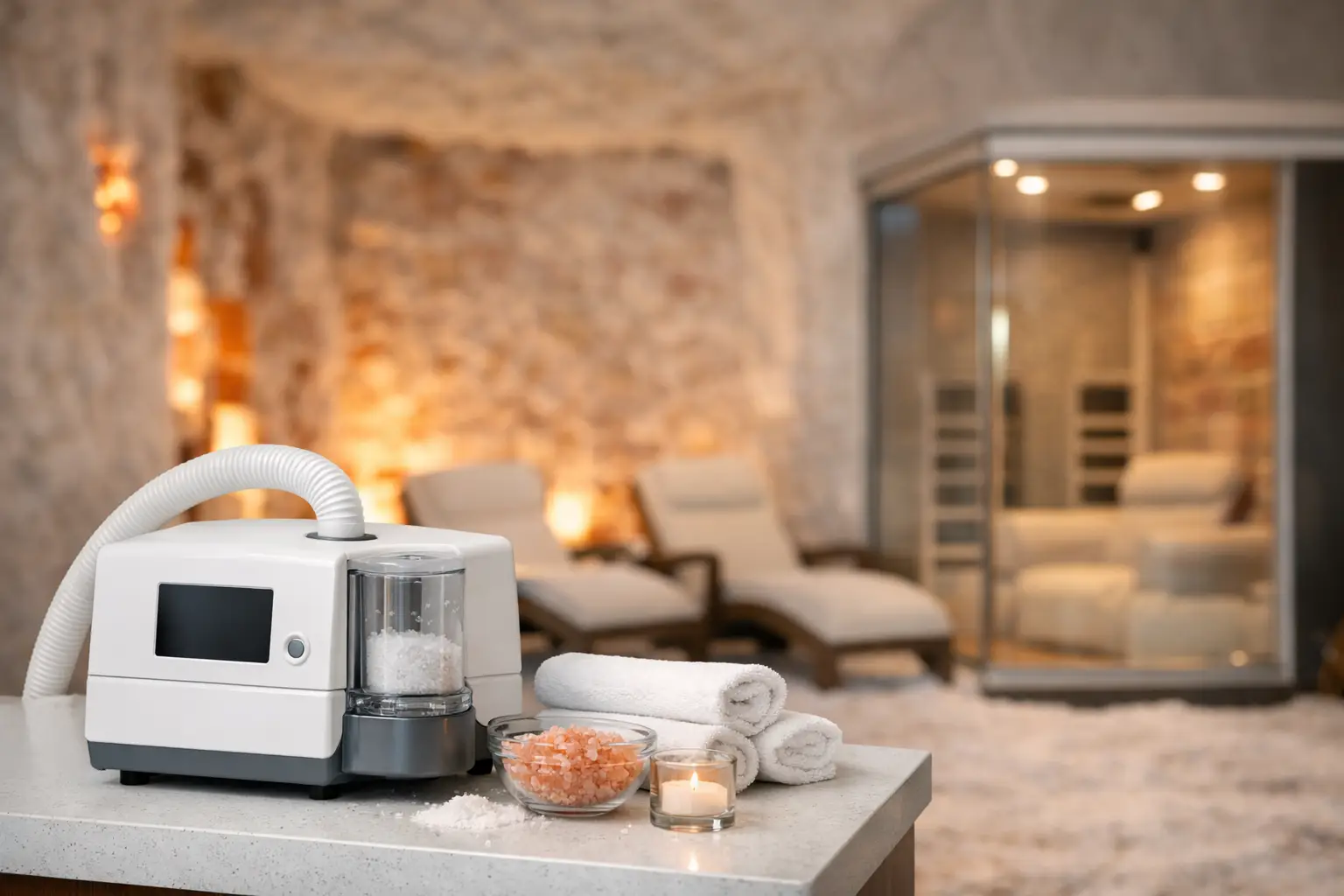
When a spa menu starts to look interchangeable, clients notice. Halotherapy equipment for spa settings gives operators a way to add a premium wellness service that feels current, easy to market, and aligned with recovery, relaxation, and respiratory support.
For commercial buyers, that matters. A salt room or salt booth is not just another add-on treatment. It can help position your business as a more advanced wellness destination, create a low-touch service option, and open the door to memberships, packages, and multi-service visits. For residential buyers, it brings a professional-grade ritual into the home without the footprint or complexity of larger wellness systems.
Why halotherapy equipment for spa businesses stands out
Halotherapy has strong appeal because clients immediately understand the concept. Dry salt therapy feels clean, natural, and restorative. In a market crowded with facials, massage, and beauty treatments, it offers something that bridges spa relaxation and recovery-focused wellness.
That crossover is valuable. A med spa may present halotherapy as part of a broader rejuvenation experience. A recovery studio may pair it with infrared sauna, compression therapy, or red light therapy. A traditional day spa can use it to elevate quiet-room experiences and attract guests looking for stress relief with added wellness benefits.
The business case is just as important as the client appeal. Salt sessions are typically straightforward to deliver once the room and equipment are set up correctly. Staffing demands can be lighter than more hands-on treatments, and the service can fit a wide range of session lengths. That makes halotherapy especially attractive for operators who want a premium offering without adding a highly labor-intensive treatment.
What halotherapy equipment actually includes
The centerpiece of most systems is the halogenerator. This is the component that grinds pharmaceutical-grade salt into fine dry particles and disperses them into the treatment space. Equipment quality matters here because particle size, output consistency, and reliability directly affect the client experience.
Beyond the halogenerator, a full installation may include room finishes, salt wall elements, ventilation planning, seating, controls, and design features that support both comfort and maintenance. Some spas choose a dedicated salt room built for groups. Others install compact salt booths or convert an existing treatment area into a private halotherapy space.
That is where buyers need to think beyond the machine itself. The best halotherapy equipment for spa use is not just about producing salt aerosol. It is about how the system fits your physical space, session volume, aesthetic standards, and operating model.
Salt room, salt booth, or retrofit?
A group salt room usually works well for spas and wellness centers that want a strong visual statement and higher session capacity. It can become a signature feature and support guided relaxation, couples sessions, or add-on access for members.
A salt booth can be a smart option for businesses with limited square footage or a more recovery-focused layout. It tends to require less buildout and may allow faster deployment. The trade-off is that it may not deliver the same immersive design impact as a full salt room.
A retrofit can make sense if you already have underused treatment space. That said, retrofits depend heavily on ventilation, finishes, and room dimensions. A lower upfront build cost can disappear quickly if the room needs extensive modification.
How to evaluate halotherapy equipment for spa ROI
Buyers often make the mistake of looking only at acquisition cost. With premium wellness equipment, return comes from a mix of utilization, perceived value, and operational fit. Halotherapy is no different.
Start with capacity. How many clients can the room serve per day, and at what average session price? Then look at package potential. Salt therapy is rarely strongest as a one-off service. It performs better when it is bundled with sauna sessions, recovery programs, skincare packages, or monthly memberships.
Client retention also plays a role. Services that feel easy to repeat tend to support recurring revenue, especially when they are relaxing and time-efficient. Halotherapy often checks both boxes. If a client sees it as part of a broader self-care or recovery routine, they are more likely to come back consistently.
There is also the branding effect. Premium equipment can raise the perceived value of the entire business, even among guests who do not book that service on the first visit. A well-designed salt room can help your spa look more modern, more specialized, and more destination-worthy.
Cost questions that deserve a straight answer
Some operators want the most visually impressive room possible. Others need a system that reaches profitability quickly. Those goals are not always the same.
A larger room may create stronger market impact, but it also brings higher buildout costs and greater pressure to keep seats filled. A smaller setup may produce a better early return if your traffic is still growing. It depends on your market, pricing strategy, and existing client base.
Maintenance and support matter too. Specialty wellness equipment should come with clear service guidance, replacement part access, and realistic operating expectations. Downtime on a premium service can hurt both revenue and reputation.
Features that matter more than buyers think
Consistency is the first priority. If particle distribution is uneven or sessions vary too much from one day to the next, the treatment becomes harder to market and harder to standardize.
Ease of operation is next. Staff should be able to manage settings, session timing, and routine maintenance without unnecessary complexity. Complicated equipment may sound impressive during a demo, but if it slows down operations, it becomes a problem.
Design integration matters as well. In a spa environment, visual presentation is part of the service. The equipment and room should reflect the standard of the rest of your business. Clients notice lighting, finishes, noise levels, seating comfort, and the overall feeling of the space.
Finally, think about supplier support. High-ticket wellness equipment is rarely a one-time transaction. Financing options, service access, installation guidance, and long-term maintenance support can have as much impact on ownership experience as the original purchase itself.
Best-fit uses for commercial and home buyers
For commercial operators, halotherapy works best when it is part of a larger wellness story. It pairs naturally with recovery services, detox-focused offerings, relaxation experiences, and premium self-care memberships. If your business already serves clients interested in stress relief, respiratory comfort, skin wellness, or athletic recovery, the fit can be strong.
For residential buyers, the decision is more personal. The question is less about revenue and more about frequency of use, available space, and how committed the household is to a home wellness routine. A professionally designed setup can be a compelling addition to a luxury home spa, but the right configuration depends on whether the goal is daily use, occasional relaxation, or a more complete wellness suite.
Sun Spa Wellness serves both types of buyers, which matters because the purchase path is different for each. Commercial clients need a business-ready equipment strategy. Residential clients need confidence that they are bringing in professional-grade technology that fits their space and lifestyle.
Common mistakes to avoid before you buy
One mistake is choosing based on appearance alone. A beautiful salt room can help sales, but if the system is difficult to maintain or undersized for your traffic, the shine wears off fast.
Another is underestimating room planning. Halotherapy performance depends on more than placing equipment in an empty space. Airflow, finishes, room dimensions, and client comfort all influence the final result.
Some buyers also fail to think through positioning. If staff cannot clearly explain who the service is for, how sessions work, and what to pair it with, utilization often lags. Premium equipment performs best when the sales story is simple and repeatable.
The last mistake is treating support as optional. A lower upfront price may look attractive, but it can become expensive if training, maintenance, or troubleshooting are limited. For capital equipment, long-term reliability is part of the product.
Choosing the right halotherapy equipment for spa growth
The right system is the one that matches your business model, your space, and the experience you want clients to remember. For some spas, that means a statement-making salt room that anchors the wellness floor. For others, it means a compact setup that adds a profitable service without major renovation.
Either way, the opportunity is bigger than a trend. Clients are looking for wellness services that feel restorative, modern, and worth repeating. Halotherapy fits that demand when the equipment is high quality, the installation is planned well, and the service is positioned as part of a premium experience.
If you are considering halotherapy, think like an operator first and a shopper second. The best purchase is not the one that simply fits the budget. It is the one that strengthens your brand, supports daily use, and keeps delivering value long after the install is finished.
