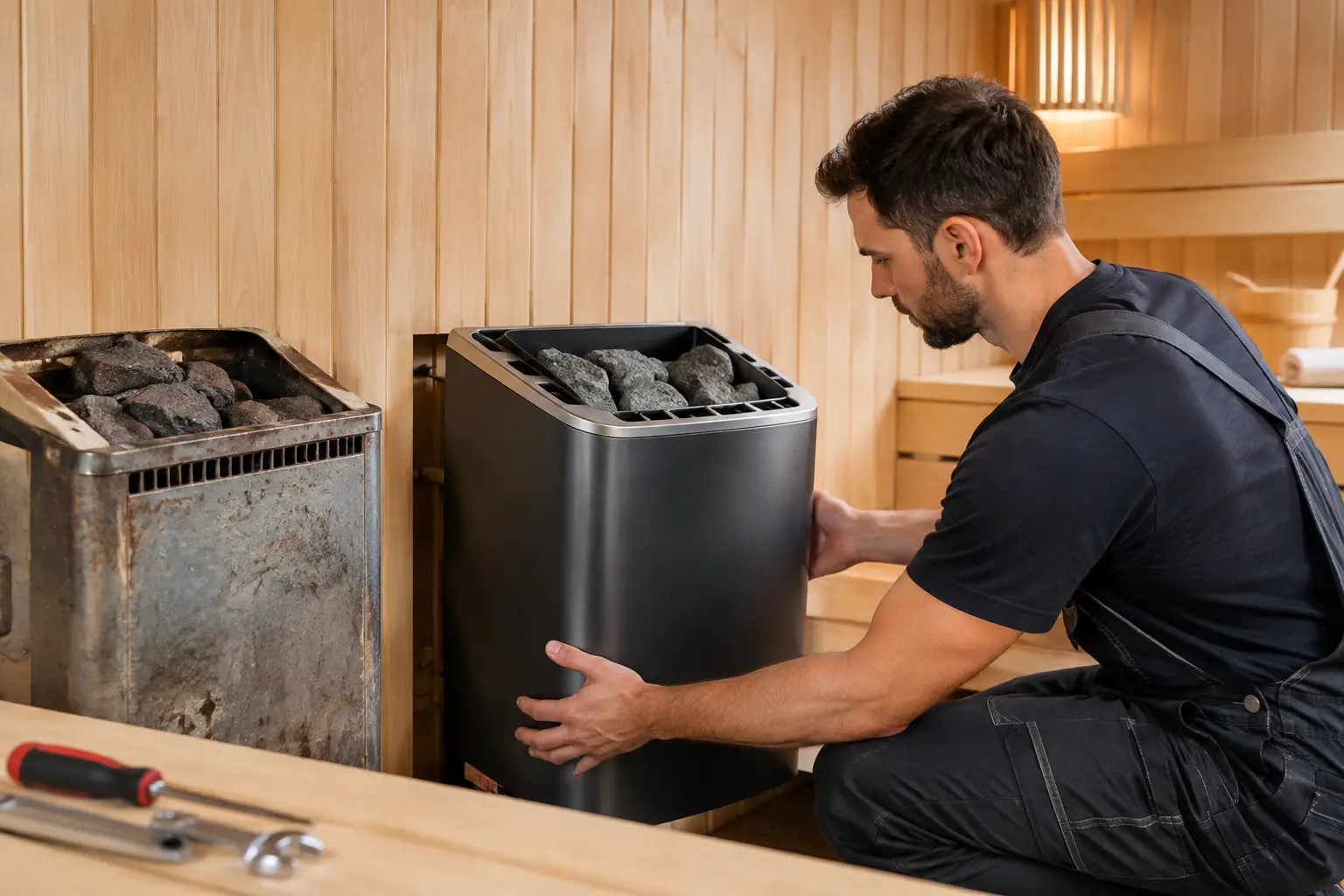
A sauna can look immaculate and still underperform because its heater is no longer doing its job. When heat-up times stretch, temperatures fluctuate, stones stop producing satisfying steam, or a unit begins tripping breakers, sauna heater replacement becomes more than a maintenance decision. It is an opportunity to restore the performance, reliability, and premium experience your guests or household expect.
For a commercial spa, salon, fitness facility, or recovery studio, a failing heater can create service interruptions and affect client confidence. For a home sauna owner, it can turn a restorative daily ritual into an unreliable appliance. The right replacement begins with a clear diagnosis, then pairs the new heater with the room’s size, construction, electrical supply, and intended use.
When Is Sauna Heater Replacement the Right Call?
Some heater issues can be repaired economically. A worn contactor, damaged sensor, failed heating element, or faulty control may have a straightforward fix, particularly on a newer unit with readily available parts. A qualified sauna technician or licensed electrician can inspect the heater, controls, wiring, and power supply to identify the actual source of the issue.
Replacement often makes more business sense when repairs are recurring, parts are discontinued, corrosion is extensive, or the heater no longer heats consistently. Commercial operators should also consider the cost of downtime. A repair that keeps an older unit operating for a few more months may be less valuable than a dependable upgrade that protects appointments, memberships, and staff time.
Common signs that merit a professional evaluation include:
- The sauna takes significantly longer than usual to reach operating temperature.
- The heater shuts off unexpectedly, trips a breaker, or displays recurring error codes.
- Temperatures swing widely or the room cannot maintain heat during normal use.
- Heating elements are visibly damaged, stone trays are corroded, or components show heat-related deterioration.
- Replacement parts are difficult to source or repairs are becoming frequent.
Do not continue operating a heater with exposed wiring, burning odors, damaged electrical connections, or persistent breaker trips. These are safety concerns, not performance inconveniences.
Size the New Sauna Heater for the Room, Not the Old Unit
One of the most expensive mistakes in sauna heater replacement is ordering the same kilowatt rating as the outgoing heater without confirming whether it was properly sized in the first place. A heater that is too small runs longer, struggles to recover between sessions, and can place unnecessary strain on components. An oversized heater can heat too aggressively, cycle inefficiently, and create a less controlled experience.
Sauna heater sizing starts with interior volume, usually calculated in cubic feet by multiplying the room’s length, width, and height. From there, account for factors that increase heat loss. Glass doors, windows, uninsulated walls, masonry, tile, stone, and unusually high ceilings may require additional capacity. The manufacturer’s published sizing guidance should drive the final selection because heater designs and installation requirements vary.
The distinction between a traditional sauna and an infrared sauna matters here. Traditional electric sauna heaters warm the room and stones, producing the high-heat environment associated with classic Finnish-style bathing. Infrared cabins use radiant panels and operate differently. A traditional heater should only replace another traditional heater in a sauna designed for that system. Converting between formats is a larger design and electrical project, not a simple equipment swap.
For commercial installations, think beyond the room’s dimensions. Peak demand, session turnover, guest behavior, and operating hours all influence the ideal equipment choice. A recovery studio with back-to-back reservations may benefit from a heater and control package built for frequent cycling and dependable recovery. A residential sauna used by one or two people each evening may prioritize quiet operation, design, and convenient controls.
Verify Electrical Capacity Before You Buy
Most traditional sauna heaters require a dedicated electrical circuit, with voltage, amperage, wire gauge, disconnect requirements, and breaker size specified by the manufacturer. A higher-capacity replacement may require electrical upgrades, especially in older homes and commercial suites where panel capacity is already committed to other equipment.
This is not a do-it-yourself wiring project. Electrical work should be completed by a licensed electrician familiar with local code requirements and the heater manufacturer’s installation instructions. If the sauna is in a commercial setting, permitting, inspection, accessibility considerations, and landlord approval may also apply.
Confirm the control configuration at the same time. Some heaters include integrated controls, while others require a compatible external control panel. Remote-start features, scheduling, temperature limits, and safety interlocks can be valuable, but only when the selected components are approved to work together.
Select a Heater That Matches the Sauna Experience
A replacement heater should deliver more than a temperature reading. It should support the type of sauna experience you want to offer.
Traditional wall-mounted heaters are a practical fit for many residential rooms and lower-volume commercial saunas. They are space-efficient, familiar to users, and available across a range of capacities. Floor-standing heaters can be better suited to larger rooms, high-use settings, or installations where a greater stone capacity is desired. More stone generally means a softer, more sustained steam experience when water is applied, though it may also affect warm-up characteristics and available floor space.
Design is worth considering, especially in premium residential projects and guest-facing wellness environments. The heater is often a visual centerpiece, and a thoughtfully selected unit can reinforce the room’s overall quality. Still, appearance should follow compatibility. Prioritize correct sizing, approved clearances, service access, and electrical requirements before choosing a finish or shape.
Commercial buyers should also look at practical serviceability. Ask how easily heating elements can be accessed, whether replacement parts are supported, and how the manufacturer handles warranty service. Equipment that is slightly more expensive upfront may be the better investment if it reduces downtime and simplifies long-term maintenance.
Installation Details That Protect Performance and Safety
A new heater performs only as well as its installation. Manufacturer-specified clearance from walls, benches, guards, ceilings, and combustible surfaces is mandatory. Ventilation must also be correct. A sauna needs airflow to remain comfortable, manage moisture, and heat as designed. Blocking vents in an effort to hold heat can create a stale environment and may interfere with performance.
Stone loading deserves attention. Use only sauna stones approved for the heater, arrange them loosely to allow airflow, and replace cracked or deteriorated stones as needed. Packing stones too tightly can restrict air circulation and contribute to overheating. Ordinary landscaping rock is not an acceptable substitute because it may crack or fracture under repeated heat exposure.
Controls, temperature sensors, and safety devices must be positioned exactly as specified. Moving a sensor because it looks cleaner or is easier to reach can cause inaccurate readings and unsafe operation. A professional installer will verify the full system after installation, including heating response, control accuracy, safety shutoff behavior, and electrical connections.
Preserve the Investment After Replacement
A new heater should be supported by a simple maintenance routine. Commercial teams should include sauna checks in opening and closing procedures: inspect the room for visible damage, confirm the control is functioning, and remove any items left on or near the heater. Staff should understand that towels, oils, plastic accessories, and cleaning supplies do not belong on the unit.
Periodic service should include checking stone condition, examining the heater exterior and guard, and having electrical components reviewed by a qualified professional when performance changes. Follow the manufacturer’s guidance for cleaning. Harsh chemicals can damage finishes and introduce unpleasant odors when the sauna heats.
For business owners, document service dates, repairs, and warranty information. This creates a useful maintenance record, helps identify recurring issues early, and supports more informed capital planning across your wellness equipment portfolio.
A Better Upgrade Decision Starts With the Right Questions
Before approving a sauna heater replacement, confirm the sauna’s interior dimensions, construction materials, existing electrical specifications, desired heat-up time, control preferences, and expected daily use. Bring in a qualified installer before placing an order if any of those details are unclear. That early step can prevent a mismatch that costs more to correct later.
Sun Spa Wellness works with commercial and residential buyers who expect professional-grade wellness equipment to perform as well as it looks. Whether the priority is a refined home retreat or a revenue-producing sauna service, the best replacement is the one engineered for the room, installed correctly, and supported for the long term.
A sauna heater should fade into the background once the session begins. When the room heats evenly, the steam feels right, and the controls work without hesitation, guests and homeowners can focus on what the sauna is meant to deliver: restoration, relaxation, and a dependable wellness ritual.
