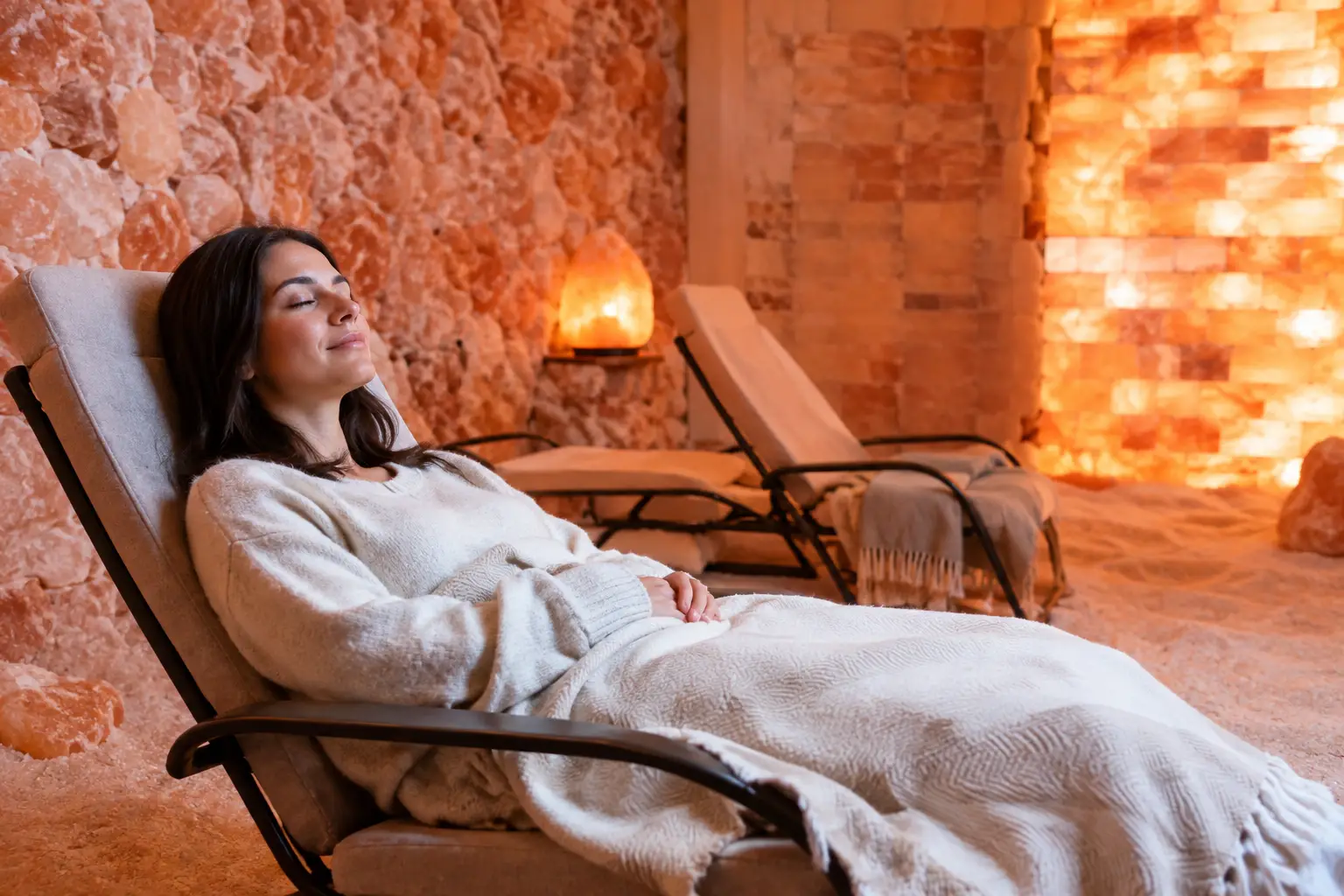
A salt room can look like a design feature, but its real value comes from the technology behind the wall finishes. So, how does halotherapy work? In active dry salt therapy, a halogenerator disperses a controlled amount of microscopic salt particles into the air, creating a calm, spa-ready environment designed to support relaxation, respiratory comfort, and skin-focused wellness routines.
For wellness operators, halotherapy is not simply a room covered in salt. It is a differentiated service with a low-touch treatment format, a strong visual presence, and broad appeal across recovery-minded clients, families, athletes, and guests seeking a quiet reset. For home buyers, it brings a professional-style wellness ritual into a dedicated personal space.
How Does Halotherapy Work?
Halotherapy, often called dry salt therapy, uses finely milled sodium chloride. A professional halogenerator grinds pharmaceutical-grade salt into very small dry particles and moves them into a treatment room through a controlled airflow system. Clients sit comfortably and breathe normally during a typical session, usually lasting 20 to 45 minutes.
The particles are much smaller than table salt crystals. Their size allows them to remain suspended in the air long enough to be inhaled and to settle lightly on the skin. In a properly designed active salt room, the operator can manage factors such as particle output, session length, airflow, and room conditions to create a consistent client experience.
The experience is intentionally simple. There is no water, steam, or direct-contact treatment required. Guests relax in lounge chairs, read, meditate, or simply sit in the salt-infused environment. Some commercial settings pair halotherapy with guided breathwork, red light therapy, infrared wellness offerings, or recovery lounge services, although each modality should remain clearly explained as its own experience.
What Dry Salt Therapy May Support
Salt has long been associated with coastal air and mineral-rich environments. In a dry aerosol format, sodium chloride is valued for its ability to absorb moisture and for properties that may help support a cleaner-feeling respiratory environment. Many clients choose halotherapy to complement their wellness routines when they are dealing with seasonal discomfort, dry-air irritation, post-workout recovery needs, or a desire for skin and relaxation support.
A session may leave clients feeling as though their breathing is clearer or their skin feels less congested. Those outcomes vary widely. Halotherapy is best positioned as a noninvasive wellness service, not as a replacement for medical care or a treatment for disease.
That distinction matters for operators. Strong marketing focuses on the experience clients can understand: a quiet setting, dry salt aerosol, restorative downtime, and a premium wellness ritual. Avoid guaranteeing medical outcomes for asthma, COPD, eczema, psoriasis, infections, or other diagnosed conditions. Clients with respiratory disease, severe allergies, open wounds, or active illness should speak with a qualified healthcare professional before participating.
Active Salt Rooms vs. Passive Salt Rooms
Not every salt room delivers halotherapy in the same way. The difference between an active and passive room can affect both client expectations and the business case for the installation.
An active salt room includes a halogenerator that produces and disperses dry salt aerosol during the session. This is the format most closely associated with dry salt therapy because it actively manages the presence of microscopic salt particles in the room air. For a spa, salon, recovery studio, or wellness center, that equipment-driven approach can support a more defined service protocol and a clearer premium offering.
A passive salt room uses salt blocks, salt décor, or a salt-covered wall without a halogenerator. It can be visually striking and may create a peaceful atmosphere, but the salt remains largely on the surfaces rather than circulating through the air in therapeutic-sized particles. Passive rooms can work well as relaxation spaces, yet they should not be marketed as equivalent to active dry salt therapy.
For commercial buyers, this is a practical investment consideration. A beautiful salt wall can elevate the room’s aesthetics. A professional halogenerator is what makes the room an active halotherapy environment.
What Happens During a Halotherapy Session?
A well-run session should feel easy from the client’s perspective. Guests typically enter a dry, temperature-controlled room and sit in comfortable seating while the system operates. The air may have a faint clean or mineral-like quality, but there should not be visible clouds of salt or an overpowering smell.
Some people notice a mild tickle in the throat, a dry mouth, or an occasional cough at first. This can happen when dry salt particles interact with moisture in the airways. Drinking water after a session is a sensible comfort practice. Clients should also expect that salt may settle lightly on clothing or hair, particularly in rooms with higher output settings.
Operators benefit from clear pre-session guidance. Explain that the treatment is dry, non-contact, and relaxation-based. Ask clients to remove shoes if that is part of the room protocol, arrive with clean, dry skin, and avoid bringing food or drinks into the treatment area. These small details protect the finish of the room and maintain a more premium experience.
Why Equipment Quality Matters
Halotherapy is a technology-supported wellness service. The room design matters, but equipment performance matters more. A professional system should be sized to the room, engineered for consistent salt grinding and dispersion, and installed with attention to ventilation, surfaces, cleaning procedures, and humidity control.
Humidity is especially important. Dry salt therapy relies on dry aerosolized salt. Excess moisture can cause salt to clump, affect dispersion, and create unnecessary maintenance concerns. The room should be planned as a dedicated environment rather than treated as a decorative add-on to an existing wet spa area.
Commercial operators should also consider throughput. A multi-seat salt room may create recurring revenue through individual sessions, memberships, packages, and add-on treatments. A smaller private suite can support a higher-touch service model and may be easier to integrate into a med spa or recovery studio floor plan. The right choice depends on local demand, available square footage, staffing model, and the rest of the wellness menu.
For residential buyers, a compact active salt space can deliver a refined at-home experience without requiring a large commercial build-out. The priority is still proper system selection and room preparation. Premium wellness equipment performs best when the environment is designed around its operating requirements.
Building a Halotherapy Service Clients Understand
The most successful halotherapy programs make the value immediately clear. Clients should know whether they are booking an active dry salt session, how long it lasts, what to wear, and what they can reasonably expect to feel. Clear communication builds trust and reduces confusion with steam rooms, saunas, or salt-water treatments.
Halotherapy can also strengthen a broader service menu. It offers a calm counterpoint to performance-focused modalities such as compression therapy, cryotherapy, red light therapy, and infrared sauna sessions. Rather than competing with those offerings, it can extend the time clients spend in a wellness facility and give them another reason to return between more intensive appointments.
At Sun Spa Wellness, the strongest equipment decisions begin with the end experience: the clients you want to attract, the services you want to pair, and the operational standards you need to maintain. A salt room is most effective when it is treated as a real business asset, supported by the right technology, design, and service plan.
For clients, halotherapy should feel uncomplicated: step into a calm space, breathe normally, and take time away from a demanding day. For an operator or homeowner, the opportunity is in making that simple experience feel consistently elevated every time the door closes.
