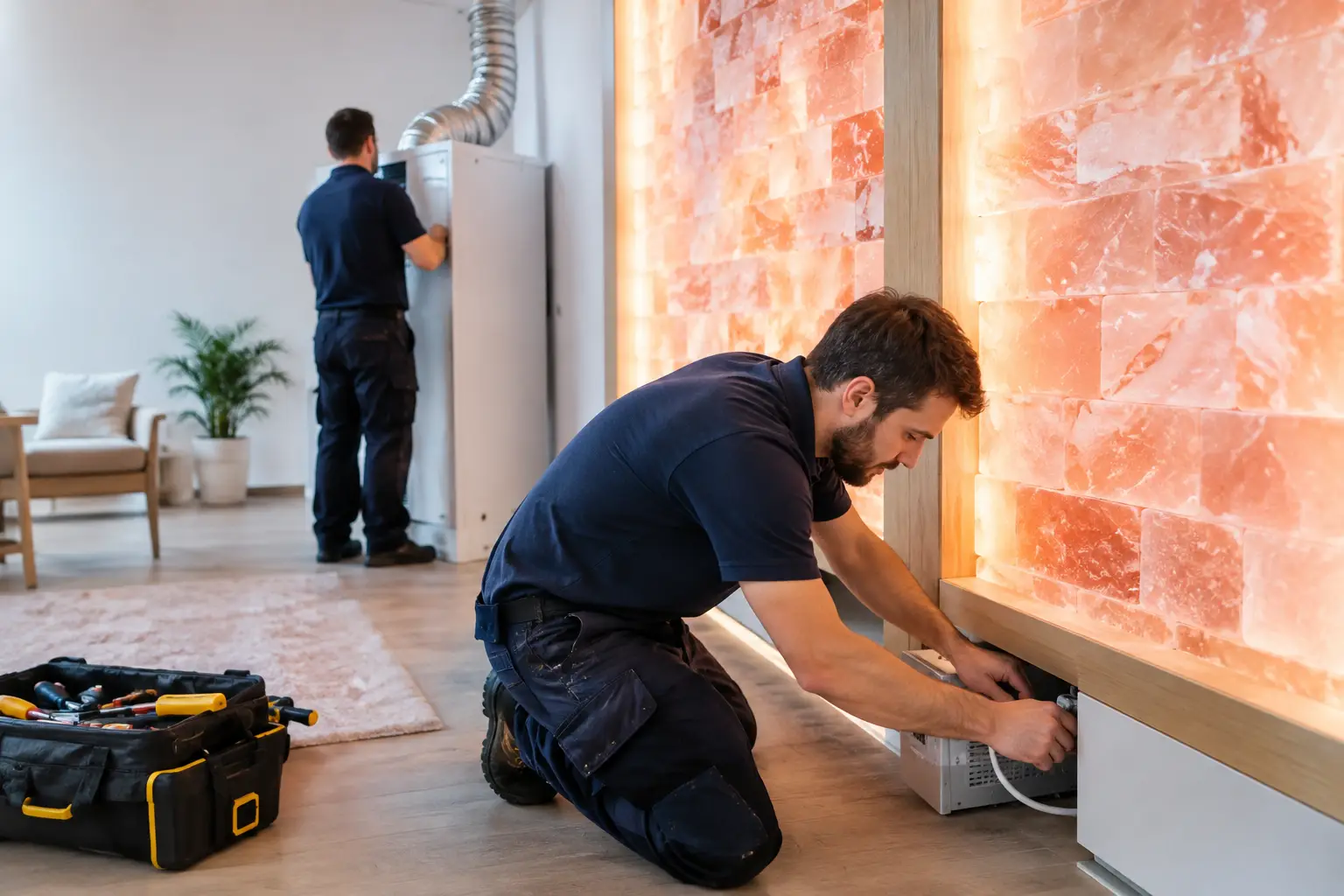
A halotherapy room can become a high-value recovery and relaxation offering, but its performance starts long before the first session. Knowing how to install a halotherapy system correctly means treating the project as a controlled salt-aerosol environment, not simply placing a halogenerator in a finished room. Room materials, airflow, electrical access, and daily cleaning plans all affect equipment longevity and the client experience.
For commercial operators, installation also determines how confidently the service fits into the schedule, staffing model, and revenue plan. For residential buyers, it determines whether a beautiful home wellness room remains easy to maintain. The right approach protects the investment while creating the calm, premium environment clients and guests expect.
Start With the Right Halotherapy Room Plan
The first decision is not where to mount the equipment. It is whether the room is designed for active dry salt therapy or primarily for salt décor. A true halotherapy system uses a halogenerator to grind pharmaceutical-grade dry salt into fine particles and disperse them into the air. Salt walls, salt bricks, and decorative salt features can elevate the look of the room, but they do not replace the function of a properly sized halogenerator.
Define the room’s intended use before selecting equipment. A compact one- or two-person residential space has different requirements than a commercial salt lounge serving multiple guests per session. Consider the room’s cubic footage, seating capacity, session length, client turnover, and whether the space will be dedicated to halotherapy or combined with another modality.
Commercial rooms should also be planned around operations. Leave sufficient clearance for guest entry, cleaning, equipment access, and future service. If the room will be part of a recovery studio, med spa, or salon, position it where noise, traffic, and moisture from nearby services will not compromise the experience.
Select a Protected, Low-Moisture Location
Dry salt performs best in a dry, temperature-controlled room. Avoid installing a halotherapy system inside a steam room, shower area, wet sauna, or any space with recurring humidity. Moisture can cause salt to clump, reduce aerosol performance, and accelerate corrosion on equipment and room components.
Choose a location with stable indoor temperatures and minimal outside-air intrusion. A room that shares an exterior wall, frequently opens to the outdoors, or sits next to a pool area may require additional insulation and moisture control. If humidity is a concern, resolve it before the system arrives rather than expecting the halogenerator to overcome poor room conditions.
Prepare Surfaces for Salt Exposure
Salt aerosol is intentionally circulated through the room, so every surface must be selected with that reality in mind. Unprotected metal, standard HVAC grilles, porous fabrics, and low-quality finishes may deteriorate faster in a salt environment. This is one of the most common areas where a visually appealing room becomes a long-term maintenance issue.
Use corrosion-resistant materials wherever possible. Nonporous wall finishes, sealed flooring, marine-grade or powder-coated hardware, and durable seating surfaces make cleaning more manageable. If you are adding salt walls or decorative panels, confirm that the structure behind them is properly supported and that electrical components are safely isolated.
Wood can be used for a warm, spa-forward aesthetic, but it should be appropriate for the environment and finished correctly. The same applies to lighting fixtures, door hardware, speakers, and ventilation covers. A premium halotherapy room is built around details clients may never notice, such as protected fasteners and accessible service panels.
Do not install carpeting. Salt residue is easier to manage on sealed flooring that can be vacuumed and wiped according to the equipment manufacturer’s guidance. Upholstered furniture is also a trade-off: it can look luxurious, but it requires more frequent care and may retain salt particles over time.
Electrical and Equipment Placement Requirements
A halogenerator needs a dedicated, properly grounded electrical connection that matches the manufacturer’s voltage and amperage specifications. Do not rely on extension cords, overloaded circuits, or shared outlets that support high-draw equipment. Arrange electrical work with a qualified electrician and follow all applicable local building and electrical codes.
Place the unit where it can deliver salt aerosol effectively while remaining accessible for salt loading, inspections, and service. The exact placement depends on the system design. Some units are mounted outside the treatment room and deliver aerosol through a wall port, while others are installed within the space. External placement can help protect the unit from direct salt exposure and preserve a cleaner room aesthetic, but it requires careful ducting and wall penetration planning.
Keep the equipment away from direct water sources, heat-producing devices, and areas where clients could bump, block, or tamper with it. If the system includes controls outside the room, locate them where staff can start and monitor sessions without disrupting guests.
Plan Lighting, Seating, and Guest Comfort Early
Install lighting and furnishings after the equipment layout is confirmed. Warm, dimmable lighting supports the relaxation experience, while overly complex fixtures can create unnecessary cleaning challenges. Recessed or well-protected lighting is often easier to maintain than ornate fixtures with exposed metal components.
Seating should match the room’s capacity without restricting aerosol circulation or access to doors and vents. Commercial operators may prefer recliners or zero-gravity chairs that support longer sessions and a premium recovery positioning. Residential buyers may prioritize a smaller footprint with two comfortable lounge chairs. In either setting, comfort matters, but cleanability and durability matter just as much.
Manage Airflow Without Diluting the Treatment
Airflow is one of the most technical parts of halotherapy installation. The room needs enough circulation to distribute dry salt particles consistently, yet excessive ventilation can pull particles out before a session is complete. This balance depends on the halogenerator model, room size, duct configuration, and the building’s existing HVAC system.
Avoid tying the room directly into a standard return-air path without professional evaluation. Salt aerosol moving through untreated shared ductwork can affect components outside the treatment room and may spread residue into adjacent areas. In many installations, a dedicated approach to supply, exhaust, or controlled air exchange is the better choice.
Work with qualified HVAC and installation professionals to confirm that vents, returns, and exhaust routes support the equipment manufacturer’s requirements. The goal is controlled distribution during the session and effective room refresh between sessions. For a commercial salt room with back-to-back appointments, that turnaround strategy has a direct impact on scheduling and revenue.
A door seal may also be necessary to keep the treatment environment stable and prevent salt migration into hallways or nearby treatment rooms. The room should not feel stuffy, but it should be intentionally managed rather than left to the building’s default airflow.
How to Install a Halotherapy System: Commissioning Steps
Once the room, electrical connection, and airflow strategy are complete, the system should be commissioned according to the manufacturer’s instructions. This is not the time to estimate settings based on room appearance. Proper setup confirms that the unit is functioning as designed for the actual room volume.
Begin by inspecting the installation for accessible power, secure mounting, clear air pathways, and protected finishes. Load only the type and grade of salt specified for the halogenerator. Using the wrong salt or introducing moisture-contaminated salt can interfere with grinding performance and may damage internal components.
Run an initial test cycle with the room empty. Listen for abnormal noise, verify control operation, and confirm that aerosol delivery is occurring through the designated outlet. Depending on the system, the installer may need to adjust output levels and session duration based on room size and intended occupancy.
For a commercial location, document the final settings, cleaning procedure, and staff operating steps. Every team member should know how to start a session, check salt supply, identify an error alert, clean the space correctly, and escalate service needs. A consistent operating routine protects both the client experience and the equipment.
Build Maintenance Into the Business Model
Halotherapy is a relatively low-labor service once installed correctly, but it is not maintenance-free. Salt residue should be managed routinely, and the halogenerator should be serviced according to its manufacturer schedule. Daily attention is far less costly than allowing buildup, moisture, or clogged components to create downtime.
Commercial operators should account for maintenance when setting service pricing and session turnaround times. Include a short reset period between appointments for ventilation, surface care, and a visual equipment check. Residential owners should establish the same habit, especially if the room is used frequently.
Keep spare approved salt on hand, store it in a dry location, and maintain a record of service dates. Sun Spa Wellness can help buyers evaluate professional-grade equipment alongside the installation and support considerations that protect a premium wellness investment.
A well-installed halotherapy room should feel effortless to the guest: quiet, comfortable, clean, and purpose-built for recovery. That polished experience comes from planning the space with the same care you bring to the equipment itself.
