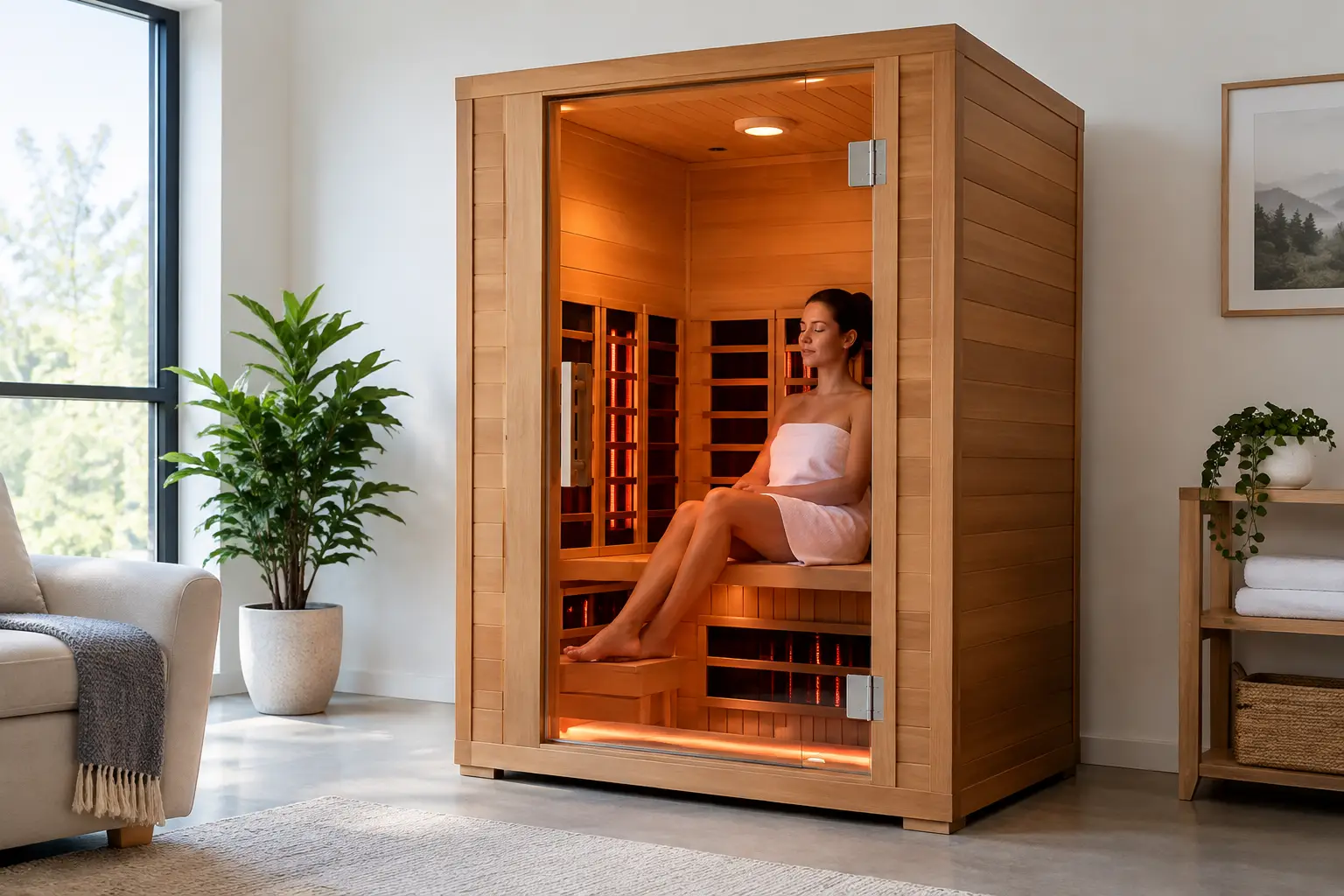
A meaningful infrared sauna performance review starts after the showroom first impression. Premium woodwork, colored lighting, and a polished control panel can make a strong case, but buyers should focus on the factors that determine daily results: heat delivery, comfort, construction quality, reliability, and the ability to support a profitable service or consistent home wellness routine.
For a recovery studio, spa, salon, or fitness business, an infrared sauna is also a revenue-producing asset. For a homeowner, it is a long-term investment in relaxation, recovery, and a more complete wellness environment. In both cases, the strongest unit is not automatically the hottest or the largest. It is the model that reaches a comfortable working temperature efficiently, holds up to repeated use, fits the intended space, and provides features your clients or household will actually use.
What Infrared Sauna Performance Really Means
Infrared saunas heat the body more directly than a traditional steam or electric sauna, which heats the surrounding air first. That difference shapes the experience. Most users find infrared sessions more tolerable at lower ambient temperatures, commonly in a range of roughly 110 to 150 degrees Fahrenheit depending on the system, room size, and operating conditions.
Performance is not simply a matter of reaching the highest number on a display. A well-performing sauna should warm evenly, feel comfortable across the body, recover predictably between sessions, and avoid frustrating cold zones. It should also make it easy for the user to manage session length, temperature, lighting, and entertainment features without interrupting the experience.
For commercial operators, consistency matters as much as peak capability. If one client has an excellent session while the next enters a room that has not recovered properly, the treatment loses credibility. A quality system should support a repeatable experience across a busy day, with controls and materials designed for frequent operation.
Heat Quality and Warm-Up Time
The first question in any infrared sauna performance review is whether the heating system performs as promised in the environment where it will be installed. Ambient room temperature, ceiling height, exterior walls, electrical supply, and cabin placement all affect warm-up time and maximum operating temperature.
A smaller one-person cabin may be ready for a comfortable session sooner than a larger multi-person unit. That does not make it better. Larger cabins are built for a different job: accommodating couples, families, or paid appointments where spaciousness and client comfort can justify a longer warm-up period. Commercial buyers should consider whether the sauna will run continuously during operating hours or be scheduled between appointments. That operational detail affects both model selection and energy planning.
Even heat distribution is more valuable than a single powerful panel. Full-spectrum and multi-zone systems may be appealing to buyers who want a more customizable experience, but placement matters more than marketing language alone. Look for thoughtful panel coverage around the back, sides, legs, and, where applicable, front of the body. A sauna that feels balanced at the shoulders, lower back, and legs will typically deliver a more satisfying session than a cabin with one intensely hot area and several underheated zones.
Heater Technology, EMF Claims, and Comfort
Heater type is one of the most discussed categories in the infrared market. Carbon heaters generally offer broad, gentle coverage. Ceramic heaters can feel more intense and may produce higher localized surface heat. Full-spectrum systems are designed to provide near, mid, and far infrared wavelengths, often appealing to buyers seeking flexibility in their wellness routine.
There is no universal winner. The best choice depends on the desired session style, budget, and user expectations. A recovery-focused studio may prioritize broad coverage, adjustable output, and a comfortable experience that encourages repeat bookings. A residential buyer may value a particular spectrum configuration, compact footprint, or faster session readiness.
EMF and ELF specifications deserve a careful, practical review. Reputable manufacturers should provide clear testing information and explain where measurements were taken. Buyers should be cautious of broad claims without supporting details, particularly when comparing readings taken at different distances or under different conditions. Low readings can be a meaningful purchase consideration for many wellness customers, but they should be evaluated alongside heater performance, electrical design, and overall build quality.
Comfort also comes down to ergonomics. Bench depth, backrest angle, interior headroom, door swing, and entry height can determine whether a client relaxes or spends 30 minutes shifting position. This is especially important for commercial spaces serving a broad range of body types and mobility levels.
Construction Quality Is a Performance Feature
An infrared sauna cabinet is exposed to repeated heat cycles, moisture from perspiration, cleaning routines, and regular opening and closing. Material quality is not a cosmetic detail. It affects odor, comfort, durability, and the long-term appearance of the installation.
Look for quality wood species, smooth interior finishes, solid bench support, well-fitted doors, and hardware that feels substantial rather than decorative. Wood selection can influence aroma and visual style, while the quality of assembly influences how well the cabin remains aligned after years of use. For commercial settings, surfaces should be practical to clean between appointments without requiring complicated maintenance.
Insulation and panel fit are also easy to overlook. A sauna that leaks heat through poorly fitted panels or a loose door can use more energy and struggle to maintain a stable session environment. In a home, that can mean slower performance and higher operating costs. In a business, it can create unnecessary downtime and a less polished guest experience.
Controls, Features, and Client Experience
Digital controls should feel intuitive enough that first-time users can begin a session with minimal instruction. At a minimum, users should be able to set time and temperature clearly. Premium systems may add preheat functions, saved settings, chromotherapy lighting, Bluetooth audio, charging access, and app-based controls.
These features can elevate perceived value, particularly in a high-end home gym, med spa, or recovery lounge. Still, they should support the core treatment rather than distract from it. A complicated touchscreen that requires staff intervention is less useful than a simple, dependable control system that clients understand immediately.
For commercial operators, consider the complete client journey. Can a team member reset the room quickly? Is the control placement convenient? Does the lighting support a calm, premium atmosphere? Is there enough interior space for towels, hydration accessories, and comfortable entry? These details can influence reviews, repeat visits, and the price a business can confidently charge for an infrared session.
Capacity, Electrical Requirements, and Placement
Capacity ratings can be optimistic. A two-person sauna may physically seat two adults, but the experience can be noticeably different from a larger cabin designed for two people to stretch out. If spaciousness is part of your brand promise, allow room beyond the minimum occupancy rating.
Before choosing a model, confirm dimensions with the door fully open, required clearance around the unit, ceiling height, ventilation recommendations, and the path into the building. A high-performance sauna is of little value if it cannot be moved through a stairwell, positioned safely, or serviced conveniently after installation.
Electrical requirements should be reviewed before purchase, not on delivery day. Smaller units may operate on a standard household circuit, while larger or commercial-grade systems may require dedicated higher-voltage service. A qualified electrician can verify capacity, circuit requirements, and local code considerations. Planning this early protects the installation schedule and prevents expensive surprises.
Operating Costs and Long-Term Value
Infrared sauna energy use is typically more manageable than many buyers assume, but cost depends on unit size, insulation, session frequency, local utility rates, and preheat habits. A compact home sauna used several times per week will have a very different cost profile from a multi-person commercial cabin operating for hours each day.
Long-term value should include more than monthly electricity. Assess warranty coverage, manufacturer reputation, replacement-part availability, service access, and the expected demands of your environment. A lower initial price can lose its advantage quickly if the unit has limited support, difficult-to-source components, or inconsistent performance under regular use.
For business buyers, the financial question is more direct: will this sauna improve retention, create package opportunities, increase average revenue per visit, or differentiate the facility from nearby competitors? Sun Spa Wellness helps buyers evaluate premium wellness equipment with those operational outcomes in mind, not just the purchase price.
Infrared Sauna Performance Review: A Smarter Buying Standard
The best infrared sauna is one that performs reliably in your actual setting, not just in a product brochure. Evaluate the heat experience, construction, controls, electrical needs, capacity, support structure, and how the unit fits your business model or home routine. Be realistic about the wellness benefits as well. Many users value infrared sessions for relaxation, post-workout recovery support, and a sense of rejuvenation, but a sauna is not a substitute for medical diagnosis or treatment.
Choose a system that makes regular use easy. When the cabin is comfortable, dependable, and properly matched to the space, it becomes more than a beautiful amenity - it becomes a wellness ritual clients return to and homeowners protect time for.
