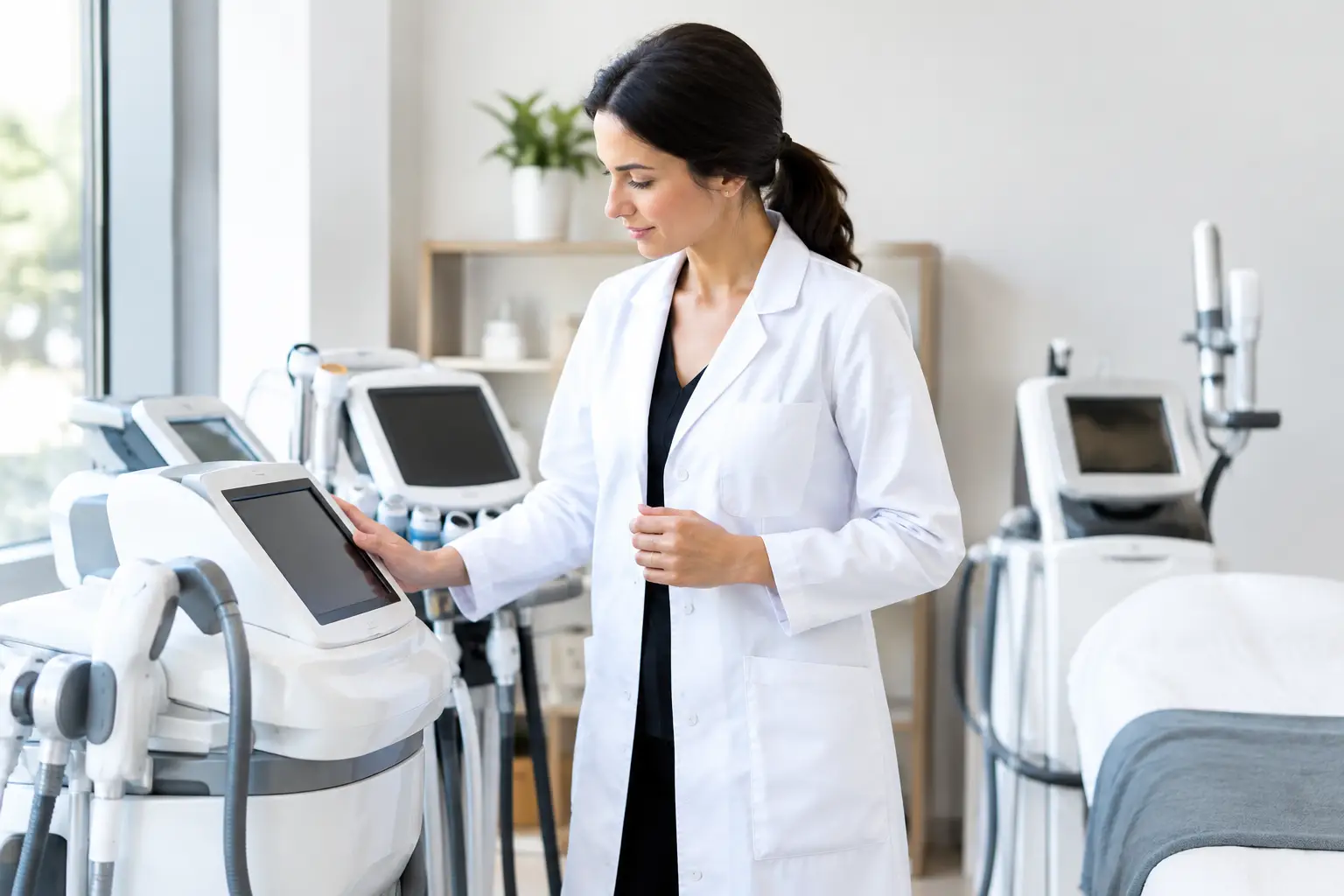
A premium device can look exceptional on a showroom floor and still become an expensive mistake if it does not fit your client demand, treatment model, or facility capacity. This medical spa equipment selection guide is built for owners who want equipment that strengthens their menu, supports measurable business growth, and gives clients a reason to return.
The right investment is rarely about buying the newest technology in a category. It is about choosing equipment that aligns with the outcomes your market will pay for, the workflow your team can deliver consistently, and the revenue plan that makes the investment worthwhile.
Start With the Service Opportunity, Not the Device
Before comparing specifications, define the service gap you intend to fill. A recovery-focused studio may benefit most from red light therapy, cryotherapy, compression therapy, PEMF, or dry floatation. A beauty-driven med spa may prioritize body contouring, skin-focused light therapy, or premium tanning systems. A luxury wellness center may build demand around infrared sauna, halotherapy, hyperbaric oxygen, and relaxation experiences.
The strongest equipment decisions begin with a clear answer to one question: what will this allow us to offer that clients cannot easily get elsewhere? That distinction matters more than a long feature list.
Review your current menu and client conversations. If clients are already asking about post-workout recovery, pain-management support, detox experiences, body shaping, or rejuvenation, those requests can indicate an immediate opportunity. If the service is completely new to your audience, plan for a longer education cycle and a more deliberate marketing launch.
For residential buyers, the same principle applies. Consider the daily wellness routine you actually want to maintain. A home infrared sauna or red light system may deliver more value through frequent use than a larger, more specialized device that requires a dedicated room and extensive setup.
Build a Revenue Model Before You Request a Quote
Equipment should be evaluated as a business asset, not simply a purchase price. A system with a lower upfront cost can be less profitable if it requires heavy staff involvement, has limited client appeal, or carries frequent service needs. Conversely, a higher-end system may justify its investment through premium pricing, stronger retention, and greater visual impact in your facility.
Estimate the service price, expected utilization, operating hours, staffing requirements, consumables, maintenance costs, and financing payment. Then build conservative, realistic, and high-demand scenarios. The conservative model is the one that deserves the most attention. If the equipment only works financially at full capacity, it leaves little room for seasonality, launch delays, or local competition.
For example, a self-guided wellness service such as compression therapy, red light therapy, or dry floatation can create recurring revenue with limited hands-on labor once clients are properly oriented. More operator-dependent body contouring equipment may command a higher treatment price, but it also requires scheduling discipline, trained staff, consultation time, and stronger protocols.
Package design can improve the numbers. Recovery memberships, multi-session body shaping plans, sauna and halotherapy bundles, and add-on services can increase revenue per client while making results-oriented programs easier to sell. The device is only one part of the offer. The program around it often determines whether it becomes a signature profit center.
Match the Technology to Your Client Experience
Premium wellness equipment should feel intentional in your space. Consider how the device fits within the full appointment journey, from consultation and check-in to treatment, recovery, and rebooking.
A cryotherapy chamber can create a powerful performance and recovery statement, but it needs a clear safety process and a location that supports efficient client flow. A dry floatation system can become a compelling relaxation or stress-reduction service, especially when placed in a quiet, private room. Tanning beds and all-LED solariums may appeal to clients seeking cosmetic confidence and a high-design experience, but they also require a thoughtful approach to room layout, ventilation, cleaning, and responsible client education.
Ask how long each session lasts, whether the client changes clothes, what preparation is required, and how much turnover time the room needs. A 20-minute treatment may occupy a room for 35 minutes once cleaning, consultation, and transition time are included. Those details directly affect capacity.
The best-fit equipment also matches your brand position. A high-performance recovery studio may favor sleek, technology-forward systems with clear protocols and fast sessions. A destination spa may place more weight on comfort, ambiance, and multisensory relaxation. A medical aesthetic practice may need equipment that integrates naturally with consultations and structured treatment plans.
Assess Space, Utilities, and Installation Early
Do not wait until the final purchase decision to investigate site requirements. Specialty equipment can involve electrical upgrades, ventilation, plumbing, floor load considerations, door clearances, dedicated circuits, drainage, internet connectivity, or climate control. Some systems require more planning than their footprint suggests.
Measure the entire delivery path, not only the treatment room. Check parking access, entrances, hallways, elevators, turns, ceiling height, and door widths. A device that fits on paper can still create expensive installation complications if it cannot be moved into position safely.
Also consider client privacy and noise. Compression therapy may work well in a shared recovery lounge, while hyperbaric chambers, body contouring, and dry floatation generally benefit from a more private setting. Equipment that generates heat, sound, or significant airflow should be located with both comfort and operational efficiency in mind.
For home wellness environments, involve a qualified electrician or contractor early when needed. Professional-grade equipment should enhance your home routine, not force rushed compromises around power, placement, or ventilation.
Choose Support That Protects Uptime
A high-ticket device is only valuable when it is operational. That makes supplier support, warranty terms, parts availability, service response, installation guidance, and training central to the buying decision.
Ask practical questions before committing. Who handles installation? What training is included for staff? How are service calls managed? Are replacement parts readily available in the United States? Is preventive maintenance recommended? What happens if the device is down during a busy month?
Brand reputation matters here. Recognized manufacturers often offer stronger engineering, more consistent documentation, and a better long-term service path. That does not mean every premium device is automatically right for every business. It means the reliability of the manufacturer and supplier should carry real weight alongside features and price.
Sun Spa Wellness helps buyers evaluate equipment as a complete ownership decision, including financing, service, maintenance, trade-in opportunities, and used-equipment options. That broader support can reduce uncertainty when building a new treatment category or upgrading an established location.
Consider Compliance, Training, and Claims Carefully
Wellness equipment can support recovery, relaxation, circulation, skin appearance, and performance goals, but your marketing language must match the device, your state requirements, and your team’s scope of practice. Avoid promising medical outcomes unless the equipment is cleared, your protocols support the claim, and appropriately qualified professionals are involved.
Staff training should cover client screening, contraindications, sanitation, treatment protocols, emergency procedures, and how to explain realistic expectations. The client experience improves when your team can confidently describe what a service is designed to do, who it may be appropriate for, and when a client should consult a healthcare professional.
This is especially relevant for technologies such as hyperbaric systems, cryotherapy, body contouring, and light-based devices. More advanced technology can create valuable differentiation, but it also demands disciplined operating standards.
Use This Medical Spa Equipment Selection Guide to Compare Options
When several devices appear to solve the same problem, compare them against the factors that affect ownership over time: client demand, revenue potential, treatment duration, labor needs, facility requirements, warranty, maintenance, and brand fit. A simple scorecard can make the trade-offs visible.
Do not let a single feature decide the purchase. A larger chamber, brighter display, or lower price may matter, but not if the system is difficult to service or does not support your desired treatment volume. Similarly, the most advanced model may be excessive if a more focused unit meets your demand and leaves capital available for marketing, room buildout, or a second complementary service.
The best equipment purchase should make your operation more compelling six months from now, not merely more impressive on delivery day. Choose technology your clients will understand, your team will use confidently, and your business can support for years. That is how a premium device earns its place on your floor.
