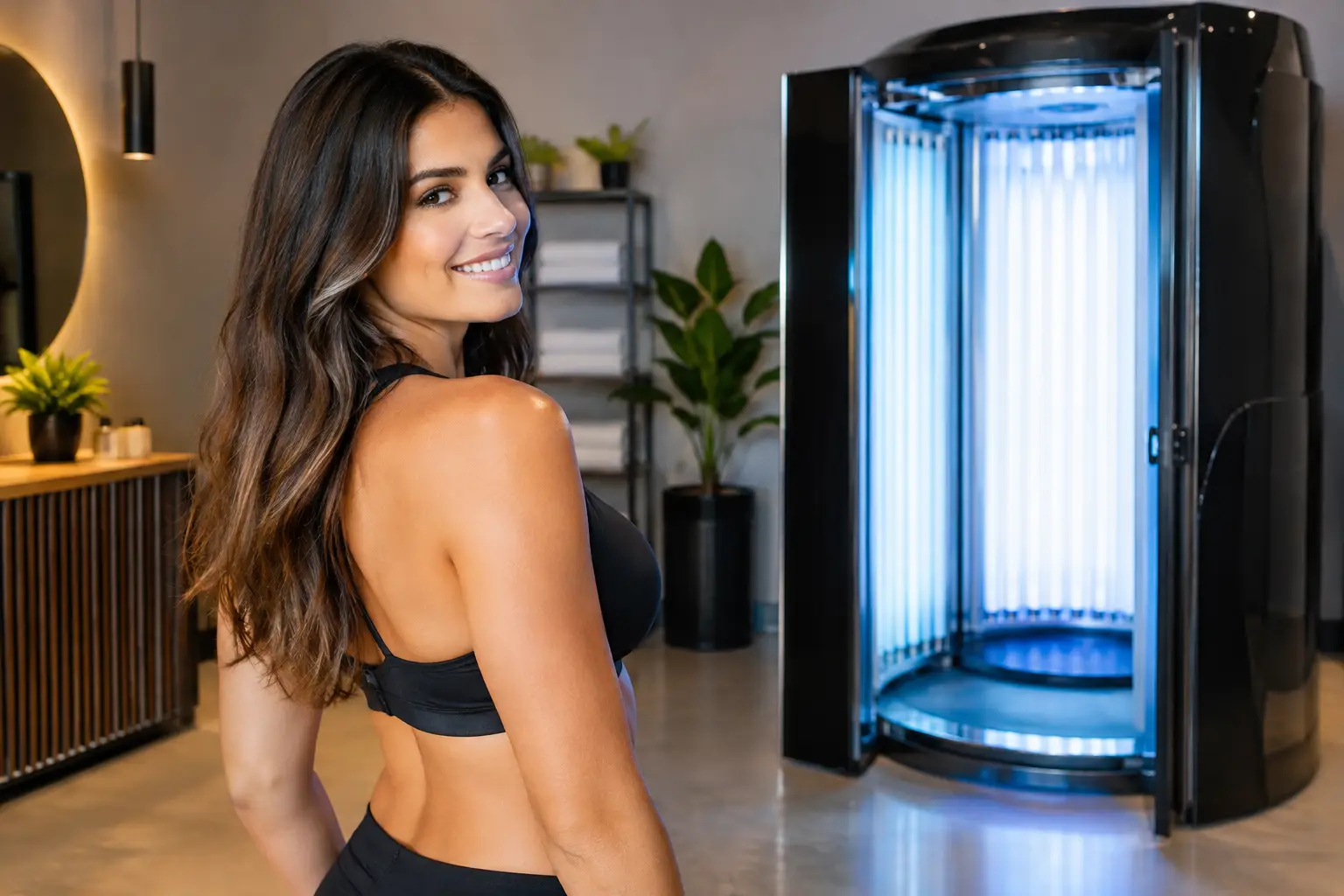
A tanning room that looks like every other tanning room is becoming harder to sell. Clients now compare the experience, the technology, the results they can see, and the way a visit fits into their larger beauty and wellness routine. The most meaningful tanning industry trends reflect that shift: premium studios are moving beyond session-based UV access and building higher-value, technology-led service environments.
For salon owners, spa operators, recovery studios, and residential buyers, this creates a clear opportunity. The right equipment mix can help a business stand apart, increase room productivity, and give clients more reasons to return. It also demands more thoughtful buying decisions. Not every trend belongs in every market, and premium equipment must earn its place through performance, client appeal, reliability, and operational fit.
Tanning Industry Trends Are Moving Beyond Basic Sessions
Traditional tanning remains a relevant category, particularly when supported by modern equipment, informed client guidance, and a polished environment. But the market is no longer defined by a simple choice between entry-level beds and higher-output units. Clients increasingly expect a tailored experience, and operators need equipment that can support stronger pricing than a commodity session model.
That is why high-end systems are gaining attention. Premium UV beds and solariums can bring together refined design, advanced cooling, comfort features, intuitive controls, and enhanced lamp or LED configurations. The difference is not only visual. When the client feels more comfortable and sees a clear distinction between equipment tiers, upgrades become easier to communicate.
For a commercial operator, the goal is to create a menu with a logical value ladder. A basic offering may serve price-sensitive clients, while a premium system supports higher-margin sessions, memberships, and packages. In a residential setting, the calculation is different: buyers may prioritize design, convenience, comfort, and professional-grade performance over per-session revenue. In either case, equipment quality affects the perceived value of the entire wellness space.
LED Is Changing the Premium Tanning Conversation
All-LED tanning technology is one of the most closely watched developments in the category. Its appeal is straightforward: a modern platform, precise technology positioning, and a differentiated experience for clients who are drawn to innovation. LED systems also give operators a compelling reason to refresh a room rather than simply replace an aging piece of equipment with a similar model.
The commercial value depends on positioning. An LED solarium should not be marketed as just another bed. It works best as a premium experience with a clear place in the service menu, a dedicated room presentation, and staff who can explain the features without overpromising. Studios that treat advanced equipment as a signature service can often support stronger package pricing than those that add technology without changing the customer experience around it.
There is a practical trade-off. Advanced systems require a higher upfront investment, and their return depends on local demand, pricing discipline, room utilization, and staff confidence. A busy salon with an established premium clientele may see a faster path to payback than a new operator still building traffic. Financing, maintenance planning, and equipment support are part of the investment decision, not afterthoughts.
Personalization Is Becoming a Revenue Strategy
Clients want choices, but they do not want to feel overwhelmed. The strongest studios are simplifying the decision through guided recommendations rather than presenting a wall of technical specifications. That can include matching a client to a system based on their preferences, comfort priorities, desired service level, and the amount of time they have available.
Personalization also extends to the room itself. Cooling, audio, ergonomic acrylics, privacy, wellness-focused ambiance, and clean design influence whether a client sees a session as a routine errand or a premium self-care appointment. Small details can help protect pricing because they create a tangible difference between a basic offering and an upgraded one.
This does not mean every operator needs a large fleet of machines. In fact, a focused equipment strategy is often more profitable. A studio may benefit more from a carefully selected premium tanning system paired with complementary wellness services than from several undifferentiated units competing for the same client. The best mix depends on the business model, square footage, demographic profile, and local competition.
Wellness Add-Ons Are Expanding Client Value
Tanning is increasingly being positioned alongside broader beauty, recovery, and rejuvenation services. Red light therapy, infrared sauna sessions, cryotherapy, compression therapy, dry floatation, halotherapy, PEMF, and body contouring create opportunities to serve clients whose interests extend beyond cosmetic color.
This trend is especially relevant because it can reduce dependence on one revenue stream. A client who visits for a tanning session may also be interested in relaxation, recovery support, circulation-focused services, or a skin-focused wellness routine. A member who comes in after a workout may discover tanning as part of their beauty regimen. Cross-category traffic gives an operator more ways to build repeat visits and higher average tickets.
The important distinction is clarity. Red light therapy is not tanning, and each modality should be presented accurately according to its intended use and applicable requirements. Bundling works when the services complement one another operationally and when the customer understands what each service is designed to provide. Confusing claims can weaken trust; clear education and thoughtful packages strengthen it.
For many premium studios, the most effective model is a small number of well-defined memberships. Rather than discounting everything, operators can create tiers that provide access to specific equipment categories, priority upgrades, or monthly wellness credits. This approach gives clients flexibility while protecting the value of advanced services.
Equipment Design Now Supports the Brand Experience
A modern tanning or wellness studio is judged before the first session begins. Equipment aesthetics, room layout, lighting, cleanliness, and the flow from check-in to treatment room all influence client confidence. Premium machines with strong visual presence can serve as a marketing asset, particularly in high-visibility locations and social media-driven markets.
Design should still serve operations. A visually impressive unit that is difficult to service, poorly matched to the room, or unsupported by the right electrical and ventilation planning can become an expensive complication. Before purchasing, operators should consider room dimensions, installation access, power requirements, HVAC capacity, ongoing maintenance, and expected service intervals.
This is where working with a full-service equipment partner matters. Sun Spa Wellness supports buyers not only with premium tanning and wellness technologies, but also with financing options, maintenance resources, service support, used equipment access, and trade-in pathways. That broader infrastructure can make it easier to plan a phased expansion instead of forcing every investment into one large purchase.
Smarter Operators Are Measuring More Than Session Counts
The next stage of tanning industry trends is operational, not just technological. Sophisticated operators are looking closely at revenue per room, upgrade rate, membership retention, utilization by equipment tier, and the cost of downtime. A premium system is most valuable when it is actively contributing to a stronger business model.
For example, a high-performing room may generate fewer sessions than a basic room but substantially more revenue because it attracts upgrades and supports premium membership access. Conversely, a top-tier system may underperform if staff members are not trained to introduce it, if its benefits are not visible in the menu, or if its price is disconnected from the local market.
Staff training deserves particular attention. Front-desk teams should be able to explain the differences between service levels in plain language, guide clients toward suitable options, and follow responsible operating protocols. They should not need to deliver a technical lecture. A concise, confident recommendation is more effective than a complicated sales script.
Responsible Operation Remains Non-Negotiable
As wellness expectations rise, clients also expect professionalism. Responsible tanning operations require clear policies, appropriate client screening, sanitation standards, equipment maintenance, staff training, and compliance with applicable federal, state, and local requirements. UV services should always be approached with informed client education and without unsupported health claims.
This is not a barrier to growth. It is part of what separates a premium operator from a low-cost provider. A clean, well-managed facility with dependable equipment and knowledgeable staff builds the confidence that supports memberships, referrals, and long-term retention.
The most successful studios will not chase every new device or redesign their menus each season. They will select technology that fits their market, present it with confidence, and build an experience clients can justify returning to. Whether the next investment is an advanced tanning system, a red light room, or a recovery-focused add-on, the right question is simple: will it make the client experience more distinctive and the business more durable?
